Time Out and CNN crowned a subway stop's name. What's actually there is three neighborhoods whose stories overlapped, and the seam between them.
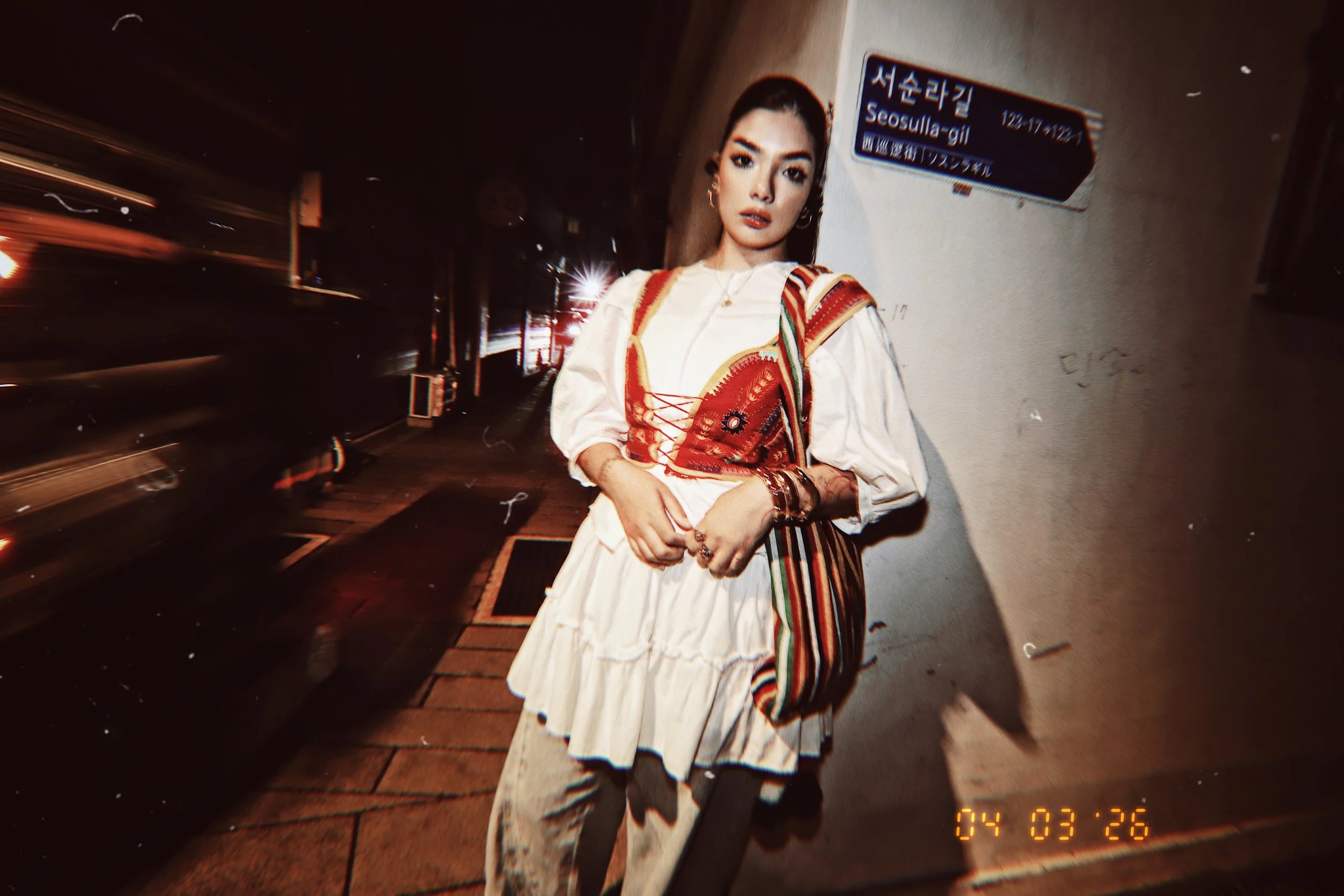
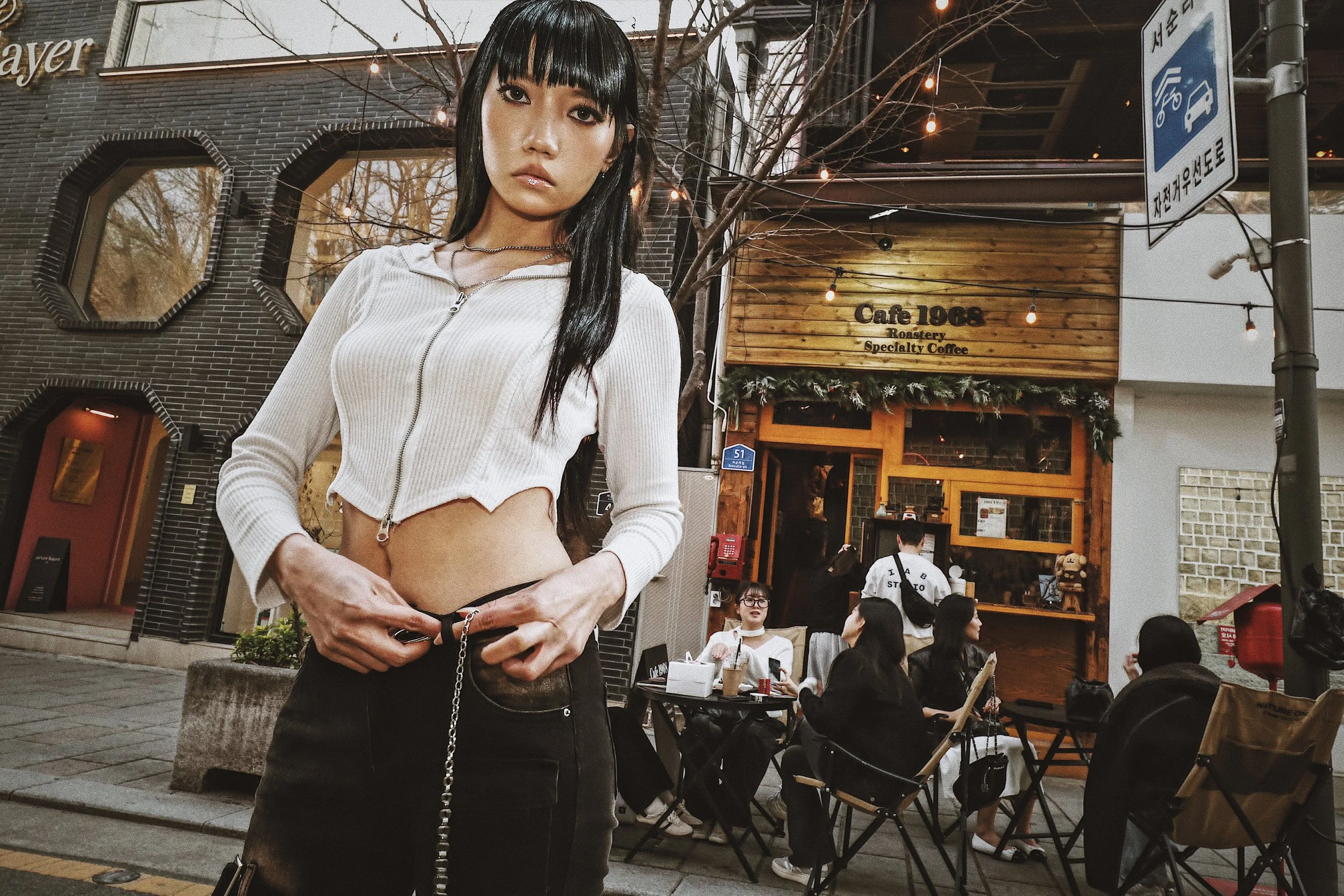
Model @bee.triss in a traje de maga (traditional folk vest) from La Orotava, Tenerife, worn over wide-leg denim and a ruffle blouse, beside the Seosulla-gil (서순라길) street sign. Jongno-gu, Seoul, 2026.
How I Map a Neighborhood Before Shooting It
It's the question I have to answer at the start of every month of my project, Shooting Through Seoul (the Seoul Shootouts). The project has run for more than two years across more than thirty Seoul neighborhoods, one month at a time with different models, and each month needs a boundary before it can have a shoot.
My rule is simple: I take the name people actually use for the place and go with it. I don't draw the boundary from a map or an administrative list. If Seoulites call a place Seongsu or Euljiro or Ikseon-dong, that is the neighborhood, and the month's shoot belongs to it.
That doesn't mean the edges are crisp. They almost never are. Take Euljiro (을지로) and Chungmuro (충무로), two neighborhoods with strong social identities of their own. Ask where one ends and the other begins and even people who have worked in the area for decades will hesitate. Part of the reason is that both are home to the city's old printing houses (insoeso, 인쇄소). Walk from one print shop to the next, or between the services and vendors the trade depends on, and you are moving across what is technically and socially two different neighborhoods without ever passing a marker. The names are solid. The line between them is soft. That is normal, and I expect to find it in any month of the project. What I don't expect is a place that gets ranked as a single neighborhood while having no name anyone actually uses.
Then we shoot through it, and we try to stay inside. That "try" is the method. A model, a camera, and a flash moving through a place is a small disruption, and what the place does with it shows me its rules: where a body slips in unnoticed, where a shopkeeper's attention tightens, where a café turns out to have a policy nobody wrote down. The American sociologist Harold Garfinkel (1967), who developed ethnomethodology, an approach to sociology that studies how ordinary people produce and recognize everyday social order, built his method on this logic. Deliberately breach a taken-for-granted routine, and the rules that normally stay invisible show up in how people respond and repair.
You've seen the popular version. Breaching experiments are fun to watch, which is why amateurs on YouTube have been making them for years as pranks, and lately as "social experiments," to make them sound fancier. They let you see what happens when someone breaks a clearly agreed-upon rule: the person who stands facing the wrong way in an elevator, the stranger who sits down at your table. But they don't take much away from the interaction. We already knew the rule, and now we've watched it get broken. Garfinkel's work as a sociologist begins where the prank ends: finding the cases where breaching reveals an order that was hidden before, a rule nobody could have told you was there until it was pushed.
The rare popular case that does what Garfinkel did is the British comedian Sacha Baron Cohen's mockumentary Borat (2006). Cohen's character arrives at a formal dinner party in the American South with a Black actress and comedian, Luenell, playing a prostitute, and the hosts' hospitality shows its limits, and what sits underneath it, in real time. In the sequel (2020), Rudy Giuliani, then a leading political figure, agrees to an interview in a hotel suite with an actress posing as a TV journalist, and the footage shows him lying back on the bed with his hand down his trousers, apparently preparing for a sexual encounter, until Cohen bursts in and the scene stops before anything happens. (Giuliani has denied any impropriety and said he was tucking in his shirt.) Whatever you make of that dispute, the scene is revealing for the reason a breaching experiment is: he was not in on the gag. The setup stripped away the performance a public figure gives an interviewer and showed what viewers took to be his unguarded conduct when he believed the room was private. Neither scene is only a gag. Each breaks a rule everyone agrees on, and the reaction exposes an order that the participants themselves would not have described beforehand. That is what the prank video can't do and what a breaching experiment is for.
Seoul happens to be a good place to run this one. It is a society a little sensitive about cameras, and about the use of space beyond the uses a place is built for. The phone photo for Instagram is expected; a photographer working with a model is something else. So a model, a camera, and in many cases a flash, moving in and out of every kind of space, draw a response, and the response is informative. It helps that so many of the city's consumption spaces are defined as Instagram backdrops. The line between the photograph a space invites and the photograph it doesn't is unusually easy to read, which lets us map the social rules of using that space pretty cleanly and clearly.
A month of shooting through a neighborhood is a breaching experiment that ends in a map: the social norms of a place, drawn by pushing on them.
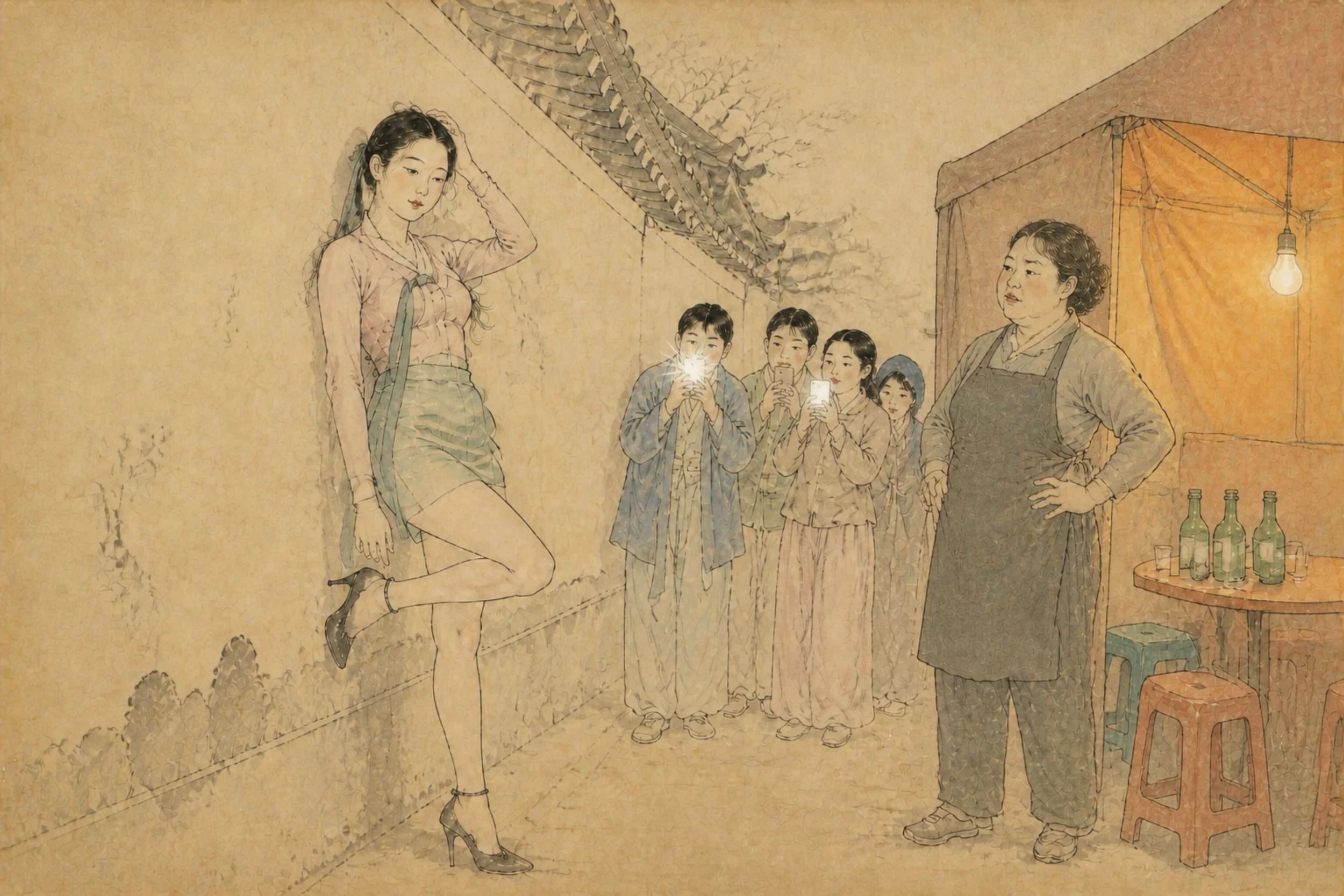
Title: "Refabulation Pungjeong (Scene of Refabulation): The Beauty at the Wall, Admired by Many Phones"
AI-generated, in the manner of the Joseon genre painter Shin Yun-bok (Hyewon), whose Dano Pungjeong (단오풍정) is the model for the title: a model poses against a back-alley wall, a pojangmacha (포장마차) owner glares at her, and onlookers in period dress film the shoot on smartphones, one flash blazing. The anachronism is the point. No real street appears; the scene is assembled from the visual grammar that makes a place "hot" (the model, the backdrop wall, the phones), which is refabulation in miniature. The one figure who treats the alley as a place, the owner, is the one who objects. How a space answers a camera is what a breach reveals.
Jongno broke the rule. There was no social name to take. "Jongno" (종로) is the name of an avenue and of the ward around it, and "Jongno 3-ga" (종로3가) is literally "Jongno, section 3": the third numbered segment (가, ga) of that avenue, and the name of the subway station beneath it. As a name for a place people go to and belong to, it has no meaning in Korean social life. The smaller neighborhoods inside it do: Ikseon-dong, Seosulla-gil, the pojangmacha strip, one particular lane. Those are the names people use, and those are what I ended up shooting through. "Jongno 3-ga" is the name you get from the platform. It is a visitor's name, or a commuter's, not a resident's.
That is where the reasoning in the Time Out and CNN coverage turns specious: plausible on the surface, wrong underneath. For a reader planning where to go, the station name is the obvious label, and everything within walking distance of the exit gets credited to it. But a name that works for arriving doesn't work for dwelling. It's like crowning Williamsburg the coolest neighborhood in the world and calling it "BQE Exit 32": accurate about how you arrive by car, and silent about everything people there would actually call the place. The ranking took the visitor's label, treated it as the place's identity, and then asked why that identity is cool.
[FIG. 3 — PHOTO PLACEHOLDER · THE NAME FROM THE PLATFORM] Fig. 3 – [The Jongno 3-ga (종로3가) station name on a platform pillar, exit sign, or station-wall tile, with or without a model in frame. Jongno 3-ga Station, Seoul, 2026.] [The visitor's name, in its own habitat. A station sign or exit number with Jongno 3-ga (종로3가) legible. If you have a frame of a model walking up from the exit toward the tents or the hanok lanes, even better: it is literally the tourist's route in.]
A Promotion, Not a Discovery
Time Out put Jongno 3-ga at number one on its 2026 list of the world's coolest neighborhoods, a 40-neighborhood ranking spanning 26 countries and territories. The neighborhood had placed third in 2021. Time Out travel editor Grace Beard said it climbed "thanks to the rise in late-evening alfresco dining, indie businesses and shops." That sentence could describe a dozen Seoul neighborhoods without changing a word.
The coverage that followed leaned on two images: the hanok (한옥, traditional tile-roofed house) alleys of Ikseon-dong (익선동) and the pojangmacha (포장마차, tented street-food stall) strip around the subway exits. Both are real. Neither is "Jongno 3-ga." Ikseon-dong is its own legal dong, with its own address, history, and rent curve. The tent-bar strip is a drinking district that predates the hanok boom by decades. They are different stories running next door to each other.
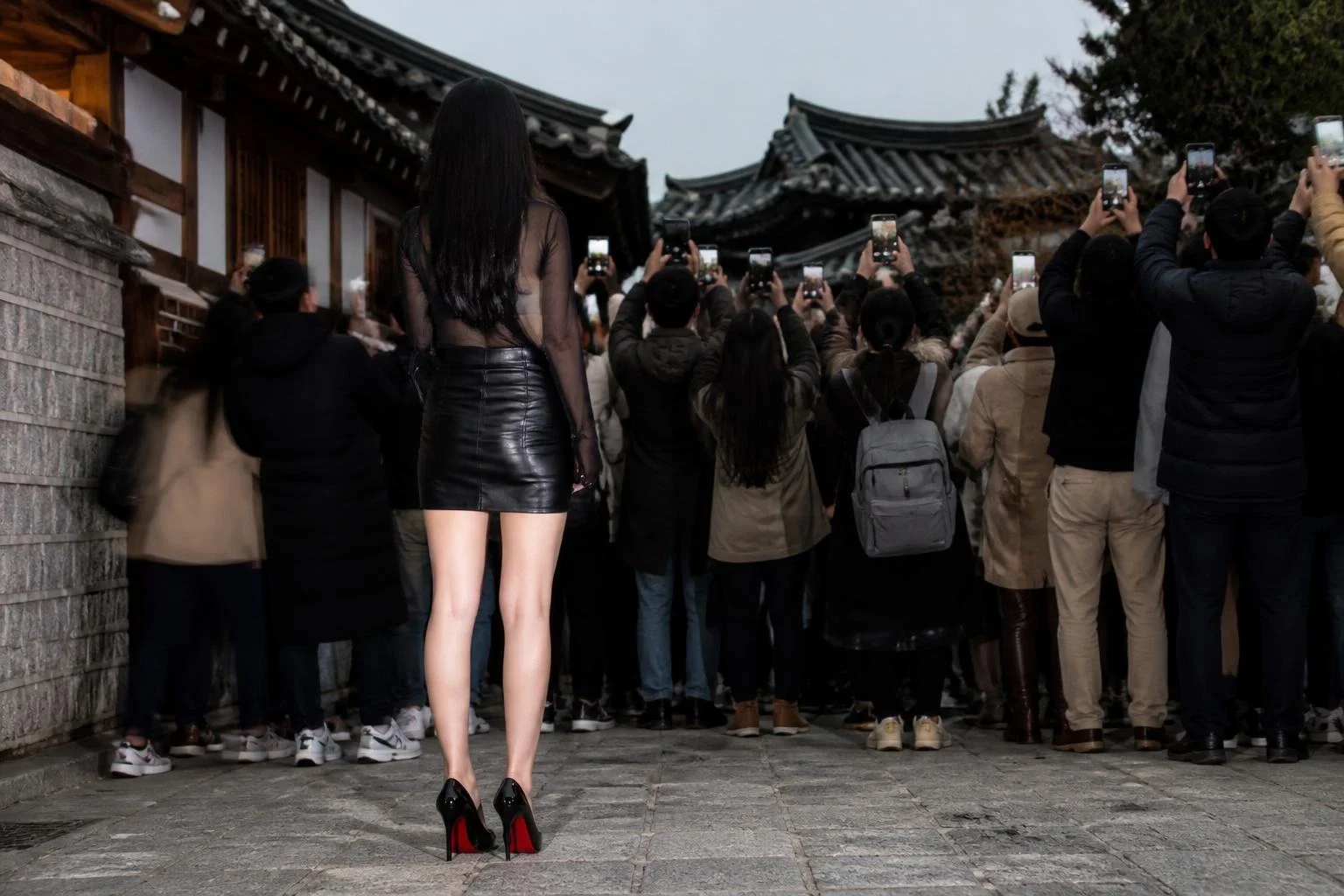
AI depiction of a crowded hanok alley in Ikseon-dong, visitors photographing the buildings and each other, a model among them.
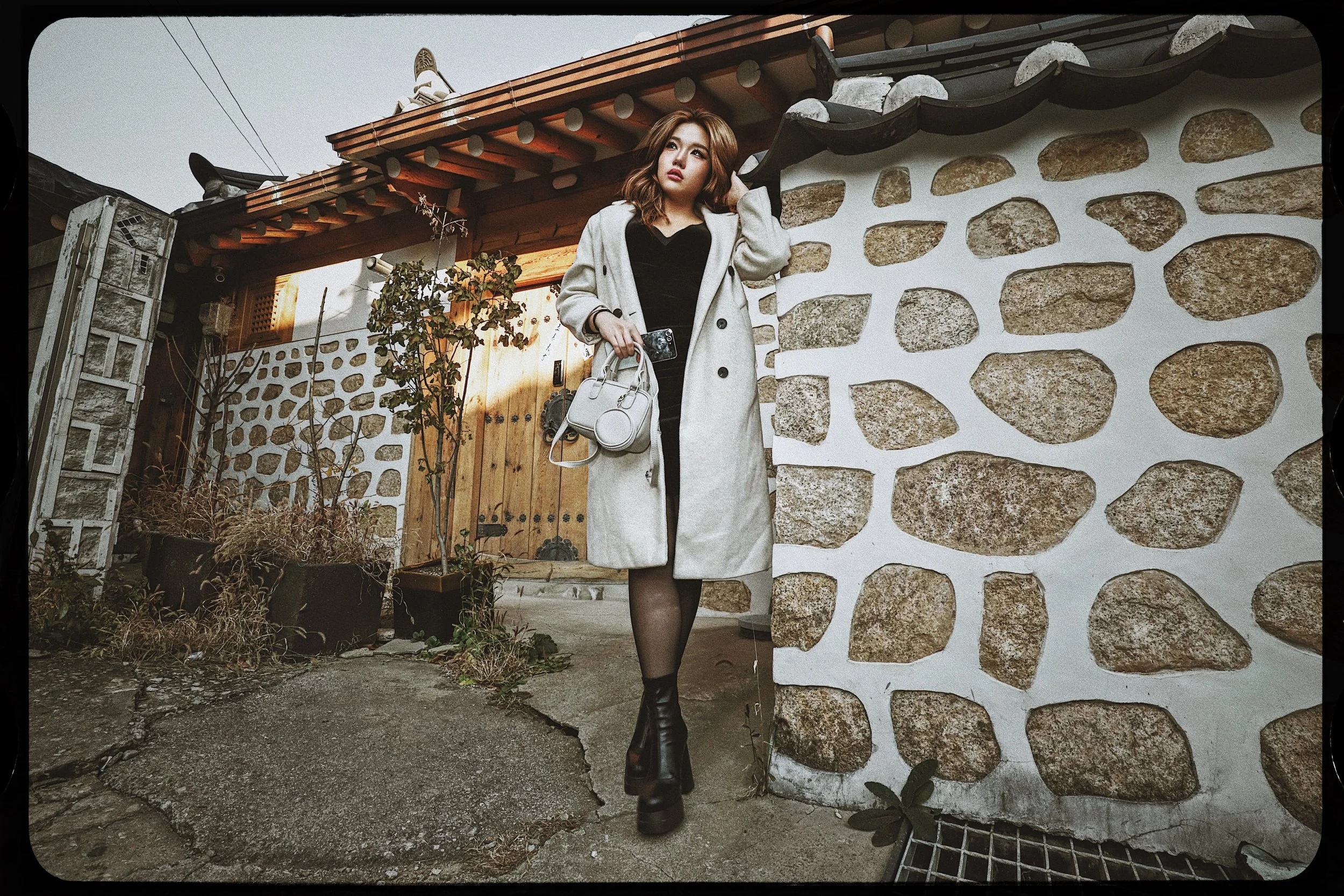
Model Som [@som081223] before a well-kept hanok with a rounded-cobble stone wall (돌담, doldam), the look Bukchon is "supposed" to have: protected, repaired and photographed all day. Cream wool coat, black knit, platform boots. Bukchon, Seoul, late 2025.
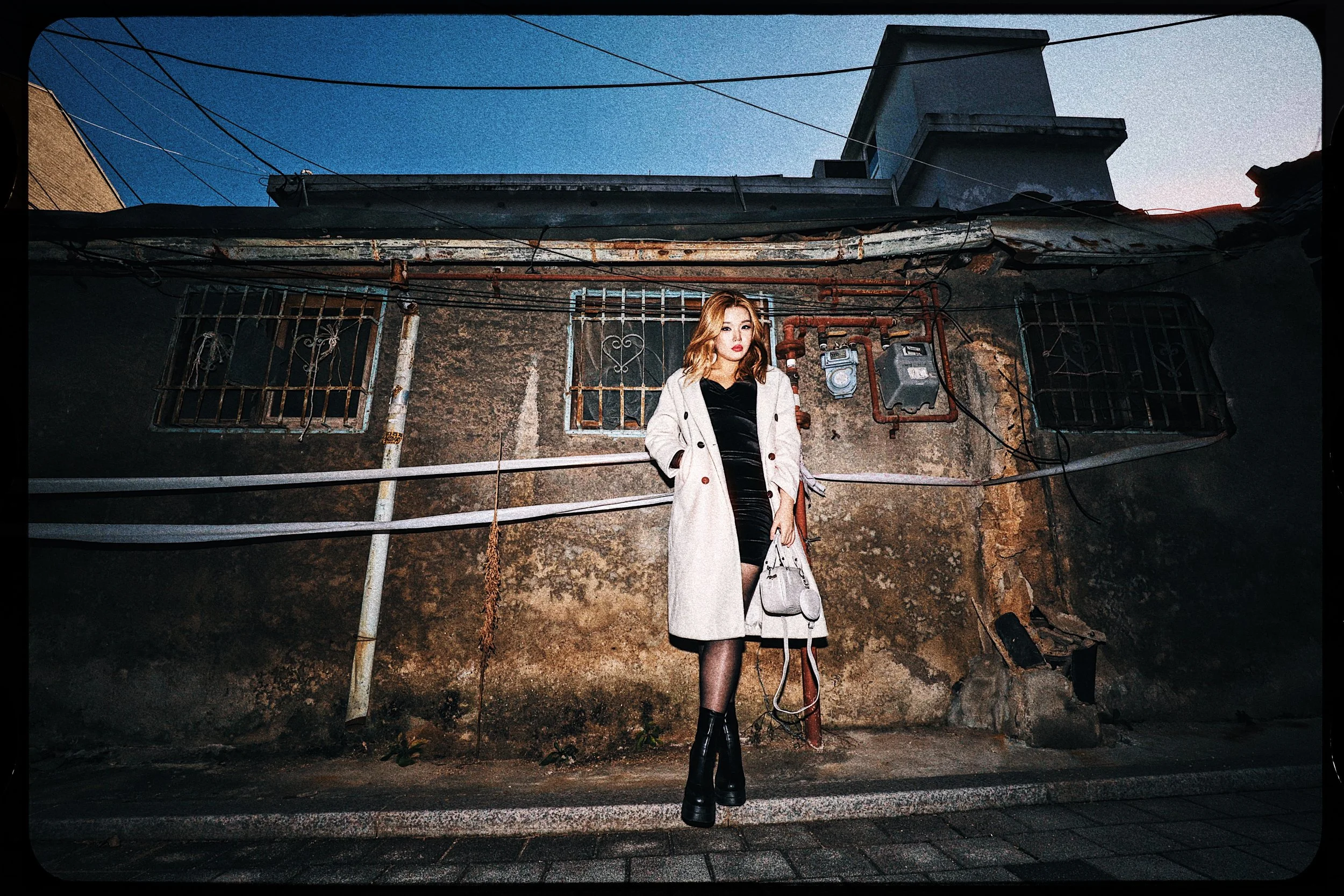
Across the narrow street from the preserved wall, an equally old hanok is left to decay. Model Som [@som081223] in the same coat. Same street, same heritage, different futures. The difference is not history but capital, ownership, timing and luck. Bukchon, Seoul, late 2025.
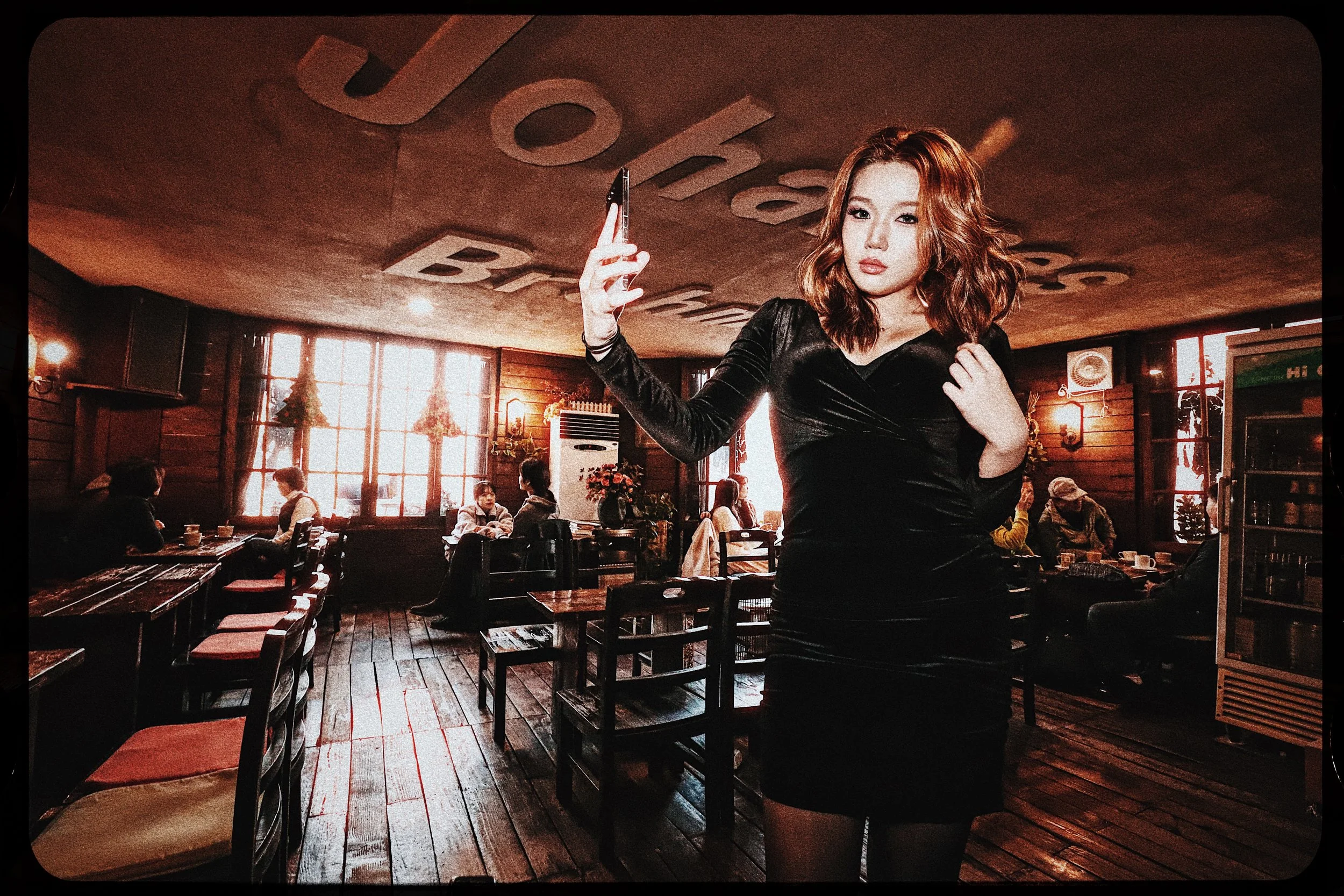
Model Som [@som081223] checking her phone in Brahms Coffee, Anguk-dong, Seoul, late 2025. Brahms opened in 1976 as a music café (음악다방, eumak dabang), a place built for a different kind of connection. The room persists. The connection now runs through the phone.
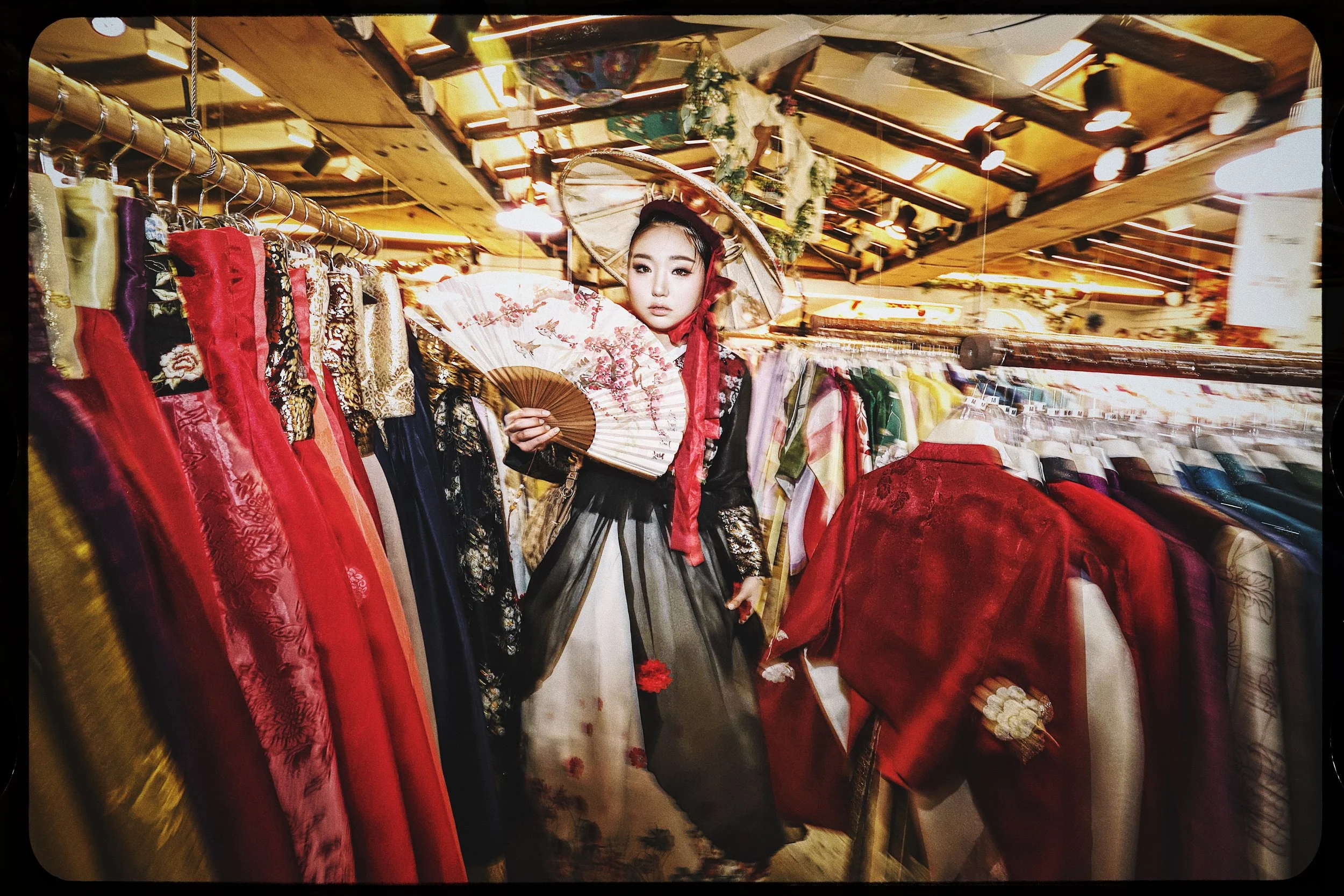
Model Sio [@sio.0.show] navigates racks of rental hanbok in Bukchon, which is adjacent/overlapping with Anguk-ddong (and is in fact on the same street as the Brahms cafe), in fall 2025. It is the past, rented by the hour.

Model Sio [@sio.0.show] in school-uniform styling at KNOTTED, a coffee shop in Anguk-dong, Seoul, late 2025, seated in 割座 (wariza, "girl's sitting") with a lollipop. KNOTTED sits next to a photo-selfie studio, and its sunlit wall made it a hot place after tourists returned to Bukchon: the americano is the price of admission to a photo staging area. A costumed concept from the Iljin (일진) project, not documentary.
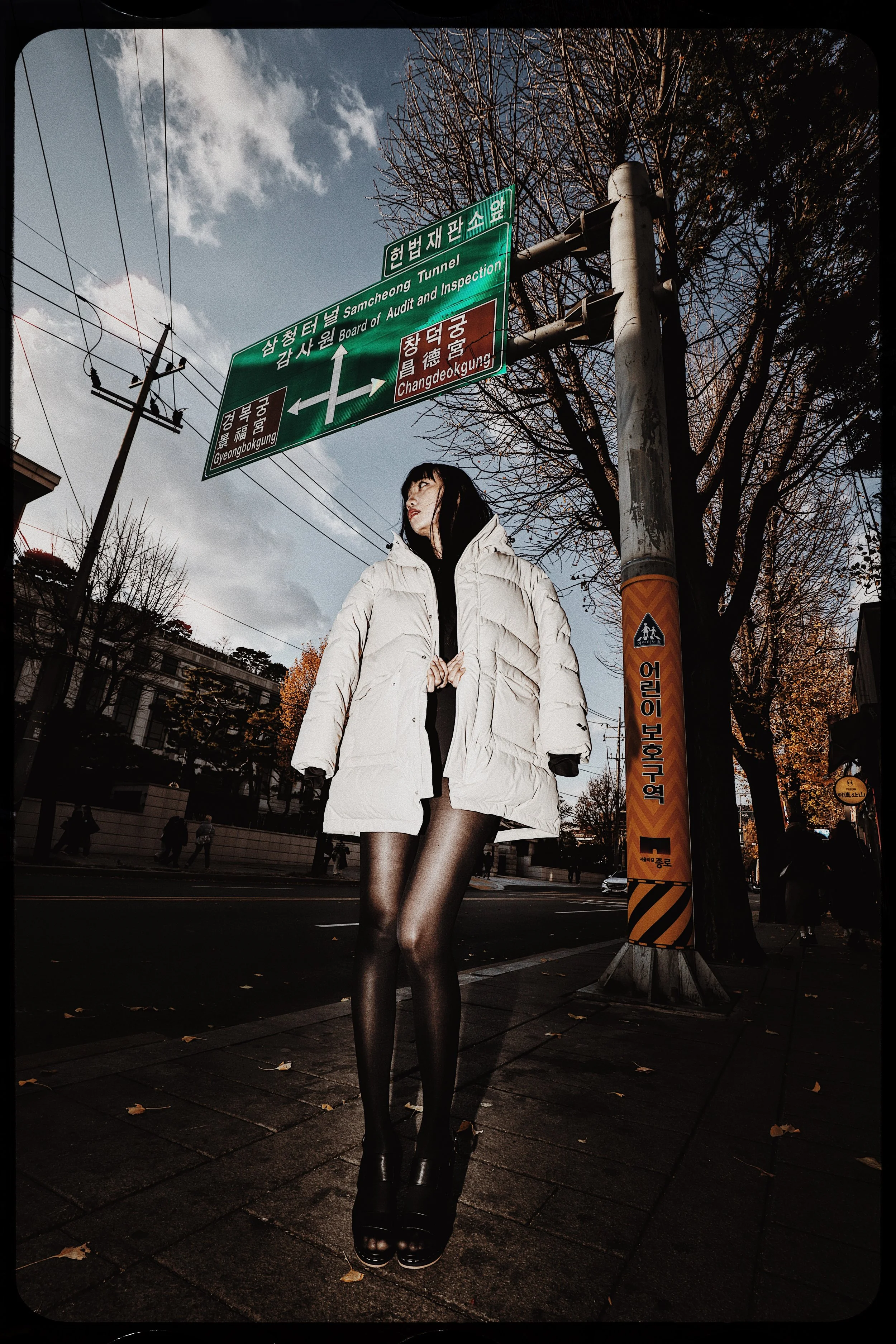
Model [@min_myo14] beneath a road sign, white puffer jacket over black tights, standing as the very waypoint for the overlapping geography of Anguk-dong, Bukchon, and Jongno. [Anguk-dong/Bukchon, 2025]
I don't think Time Out invented a neighborhood out of nothing. I think it noticed something real and reached for the only name that was easily discernible to an uninformed outsider. What it noticed has a name in my own fieldwork: refabulation.
What Refabulation Actually Does
Walk through almost any hot Seoul neighborhood and you can watch it happen. A café opens with a window worth photographing. Then another café, a pop-up, a vintage shop, a bar with a good door. None of them is the neighborhood. Together they add up to something none of them made alone: a vibe, with a name and a story attached.

AI-generated editorial illustration of refabulation: a model seated atop a tower of stacked, neon-lit storefronts and signs, many small interventions piled into one.
That aesthetic accumulation is what I mean by refabulation, a term I take from Allen F. Roberts and Mary Nooter Roberts (2007), two UCLA scholars of African art and culture. They used it for how small creative acts reshape the character of an area, and their example is the Dakar artist Pape Diop, whose graffiti shifted the atmosphere of the Médina and Gueule Tapée neighborhoods at the same time. One practice, two neighborhoods, no respect for the line between them.
In my work on Instafication, the process by which spaces get conceived, designed, and used for their potential to become social-media content, refabulation is the step where a clear sequence turns into a place. Individual spaces get Instafied. They cluster into aesthetic zones. The zones combine until the heat stops belonging to any single café and becomes a property of the whole area's accumulated spatial grammar. A neighborhood doesn't get hot. It gets refabulated: a pile of small acts acquires a name, a mood, and a story the whole pile now tells about itself.
What happens next is the end of the Instafication cycle. Once the refabulation has taken place, everything gels into a discernible aesthetic that people recognize as the look of that neighborhood: you could describe it, and you'd know it from a photograph. And increasingly that is how people come to understand the place, visually, on Instagram, through screens, before they set foot in it. That gelled aesthetic then hardens into the neighborhood's visual brand, the image the place sends out about itself, and the one that gets picked up, repeated, and eventually ranked.
Notice what that sequence doesn't require: a neighborhood boundary. Refabulation travels along lines of taste and attention, not along lines of administrative force. Pape Diop's graffiti didn't stop at the border between two Dakar neighborhoods. Nothing says Seoul's would either.
Scale the logic up and you can see a now-obvious conclusion: that the visual brand of Korea itself comes out of the same process. Different parts of the country, neighborhoods so to speak, expand until their edges overlap, and the overlap develops a discernible look and vibe of its own. In my theory, developed since a 2018 Korea Times column on Korean fashion, this is the work of the interstitium, the anatomical network of fluid-filled spaces between organs that holds the body's structures together and carries signals between them. When the parts of the interstitium expand, the interstitial fluid takes on its own flavor and consistency, and that flavor is what transmits between the constituent parts. What people recognize as "the Korean look" is that fluid, along with its flavor, its distinctive cultural odor. Korea itself has become a hyperobject, and that fluid is what its interfaces have to translate.
Three Refabulations, One Short Walk
Ikseon-dong went first. A block of 1920s hanok sat quietly residential until about 2015, when young women found it, photographed it, and tagged it into one of the most visited alleys in Seoul. I call the engine ladification: organic, consumption-driven transformation led by women's taste rather than developer capital. Rent that was negligible in 2015 reached ₩300,000 per pyeong (평, about 3.3 square meters) by the early 2020s. Ikseon-dong's refabulated story is that the past is available for rent. In the costume studios tucked into its hanok, it literally is, by the hour.
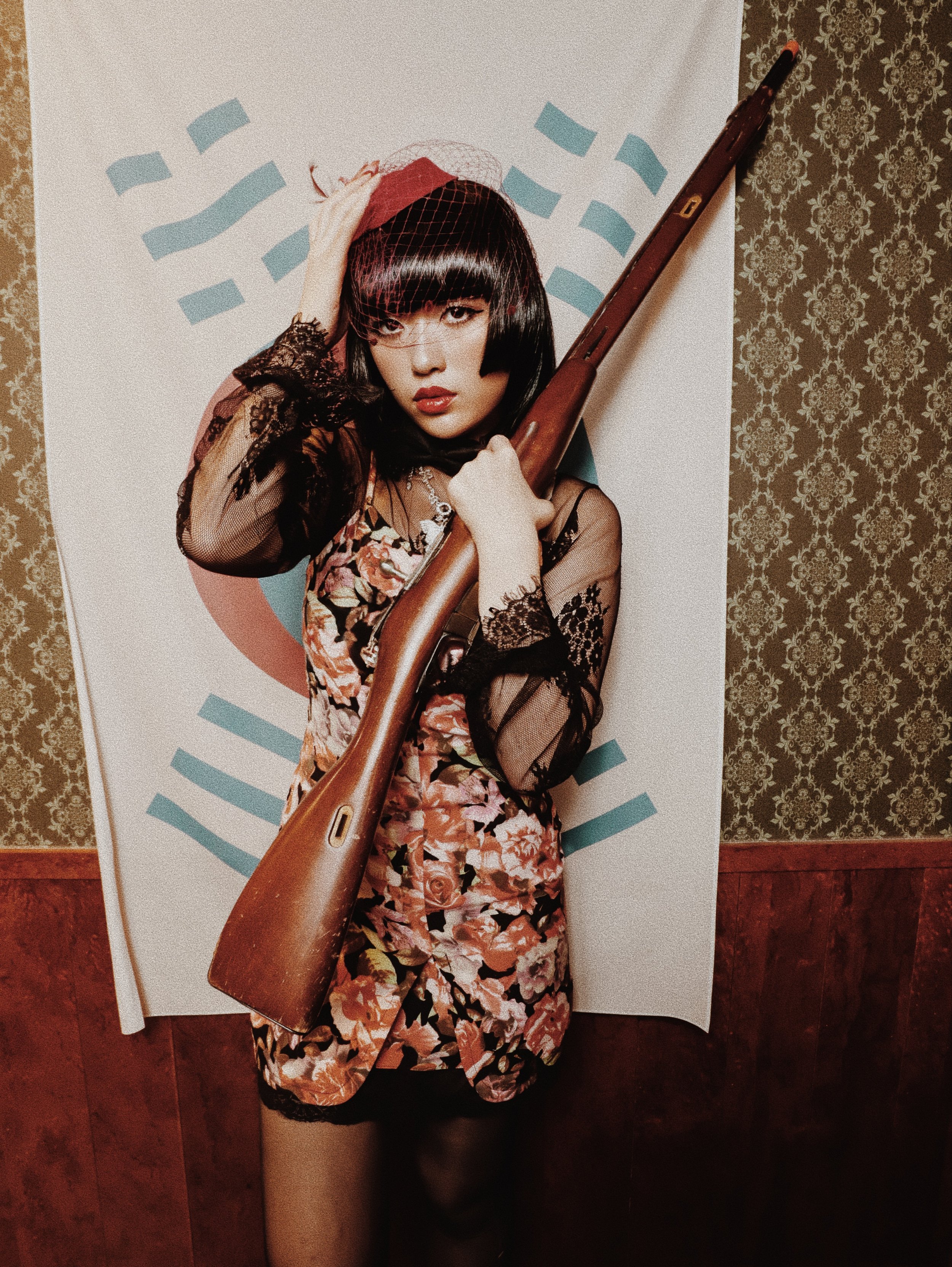
Model [@jingruus] in the now-defunct Ikseon Boutique costume-rental studio in December 2024]. Floral dress under black lace sleeves, red fascinator with a short veil, an antique prop rifle across her shoulder, a Taegeukgi (태극기, Korean national flag) behind her. The studio rents out the 1920s by the hour, and the props include the weapons.
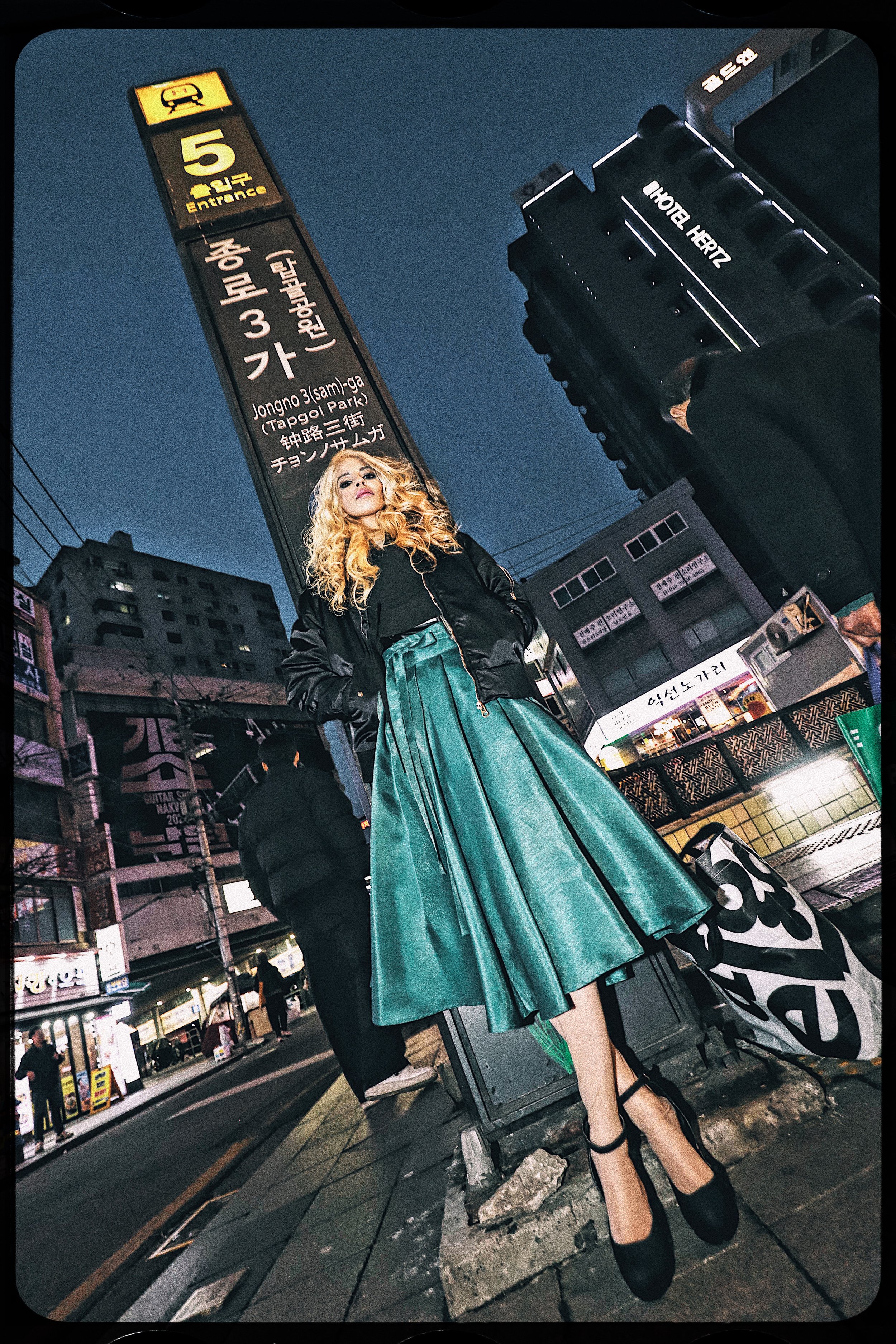
Model [@kimarinkorea] beneath the Jongno 3-ga (종로3가) exit sign, Jongno-gu, Seoul, [year]. The name the ranking used is merely a transit label — the subway stop — marking the street.
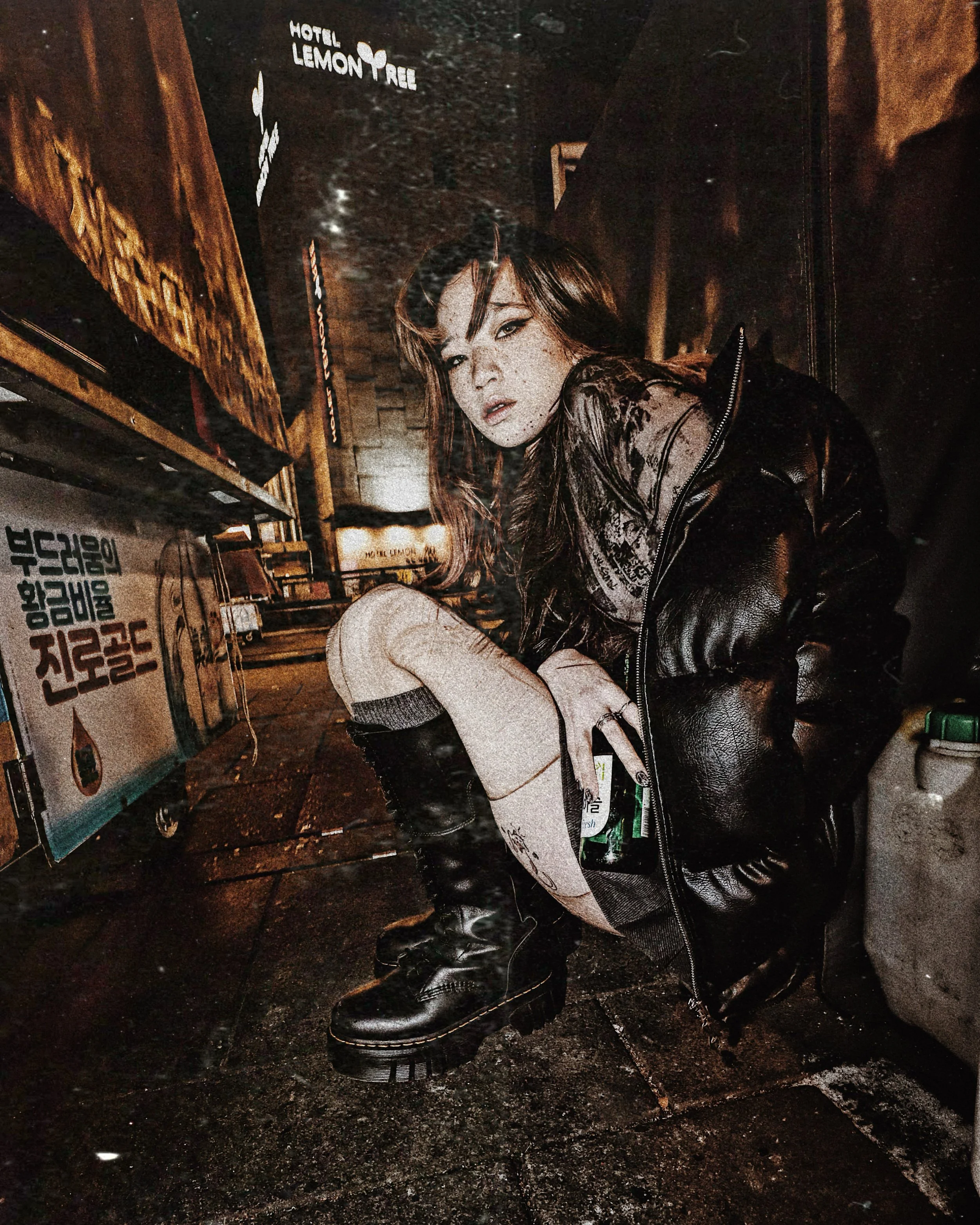
Model [@neko.ethiriel] crouching in a narrow, shuttered alley at night beside a bottle of Chamisul (참이슬) soju, in the shadow of one of the area's most popular tourist love motels. Ikseon-dong, Seoul, [December, 2024].
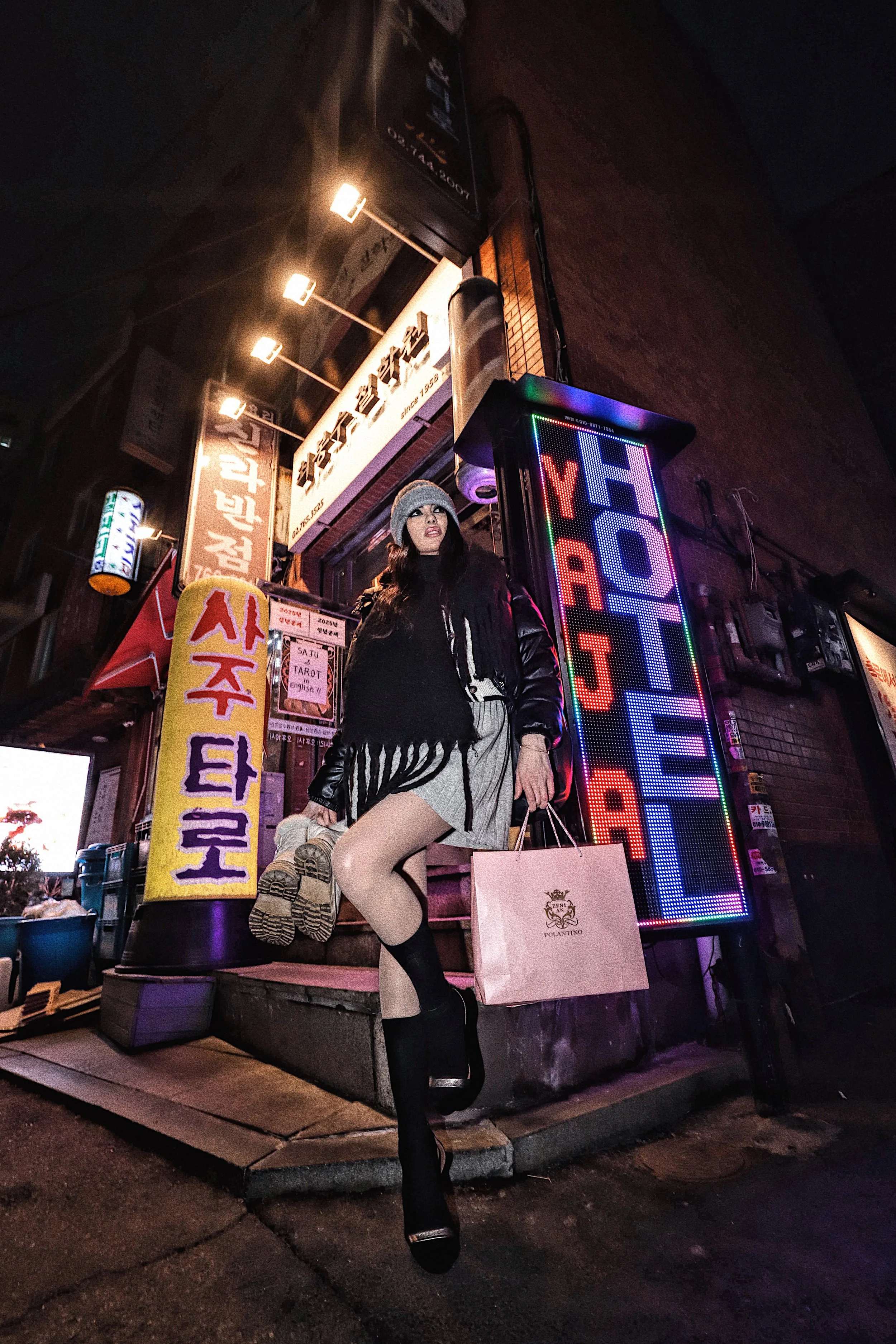
Supermodel [@lunavoce] with a pink shopping bag at the corner of a lane of tarot shops and motels, one alley in from the pojangmacha (포장마차) tents. Jongno 3-ga area, Seoul, 2024.
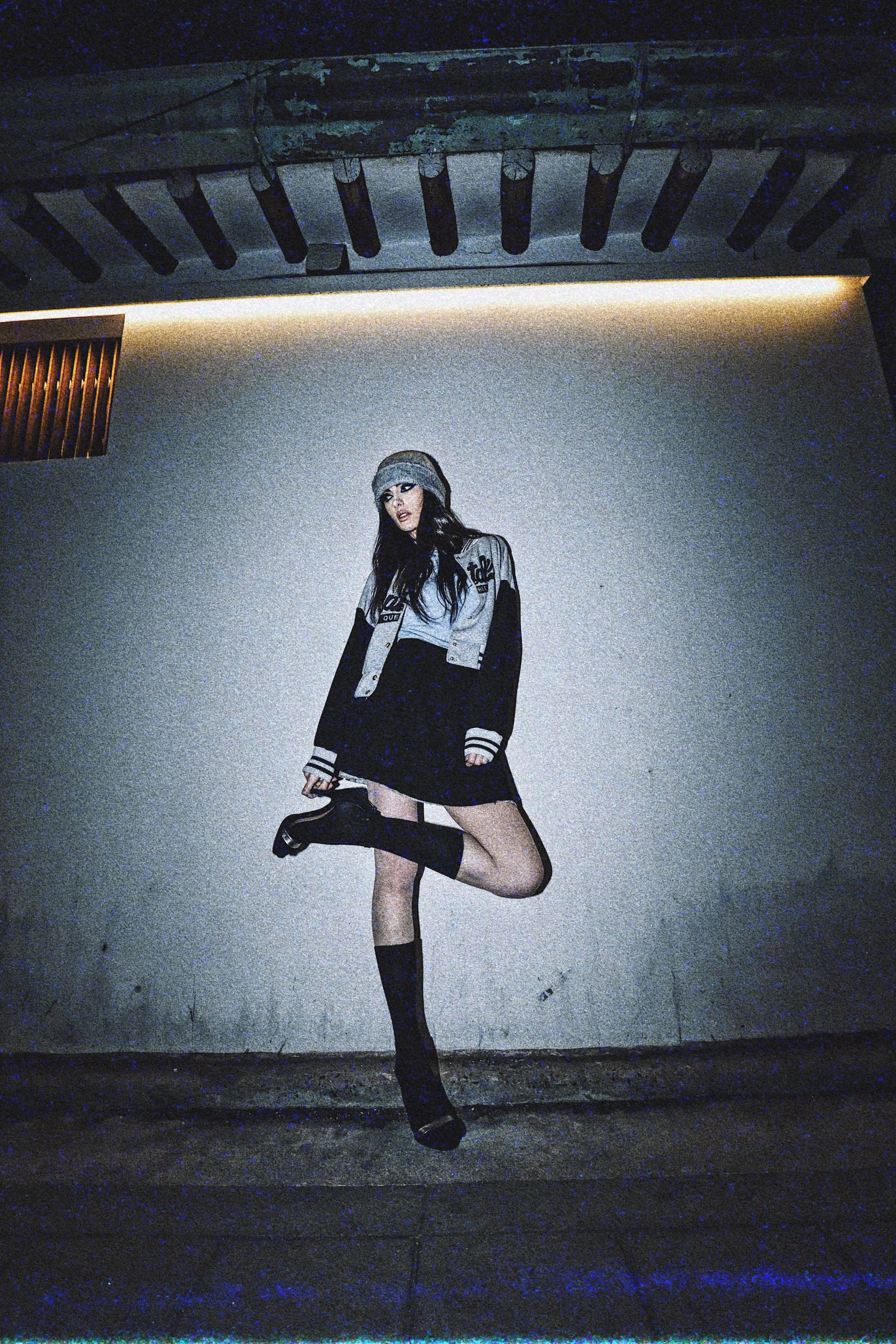
Supermodel [@lunavoce] poses around the corner from the previos photos against a hanok’s white wall under traditional, wooden eaves.
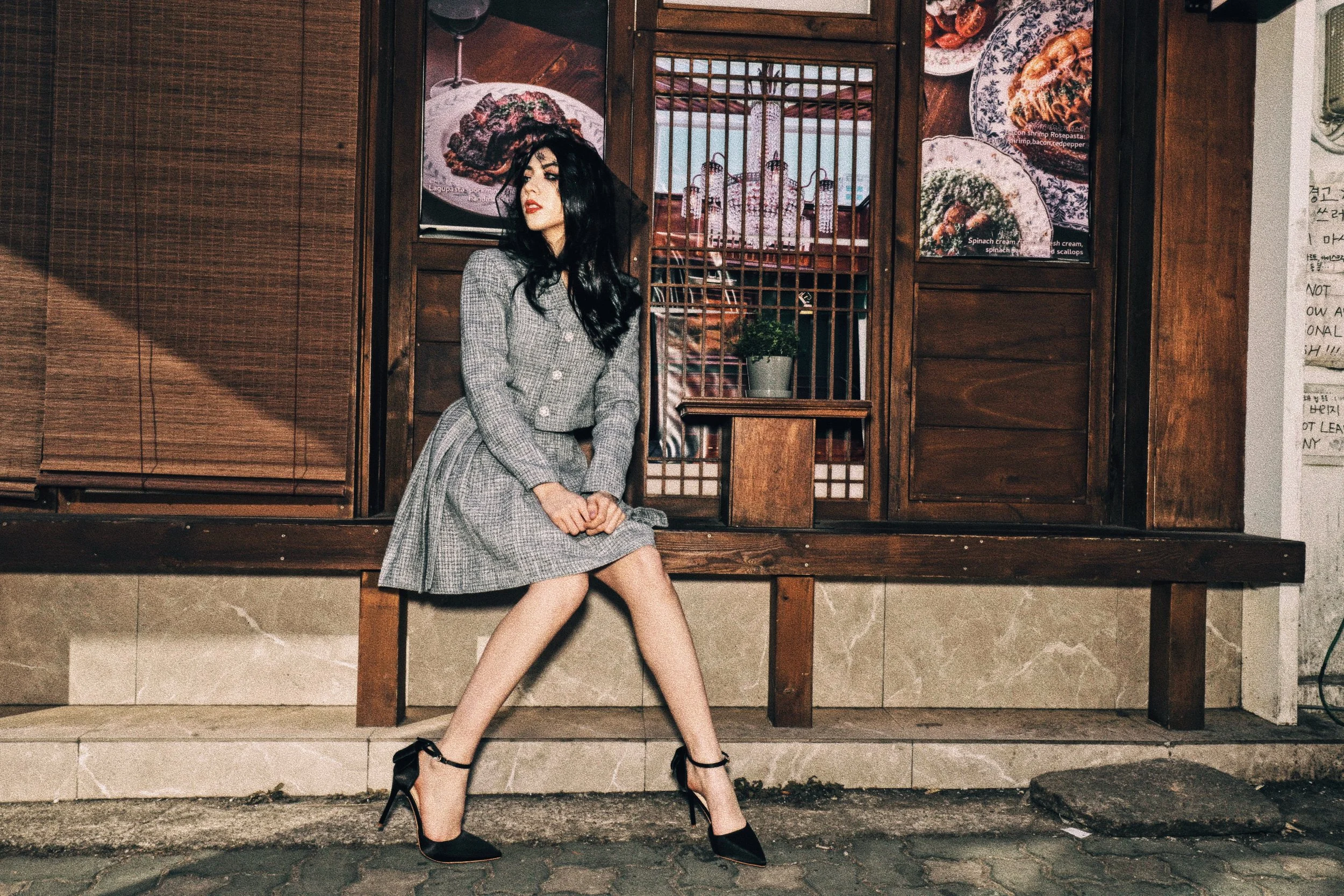
Model Mexitan @mexitangirl in a hanbok-inspired look from the hanbok brand Tetero Salon (@teterosalon), seated at the wooden door of a working restaurant with its food posters still up. A hanbok brand's photo shoot, staged against a place that never asked to be a set. [Neighborhood], Seoul, [year].
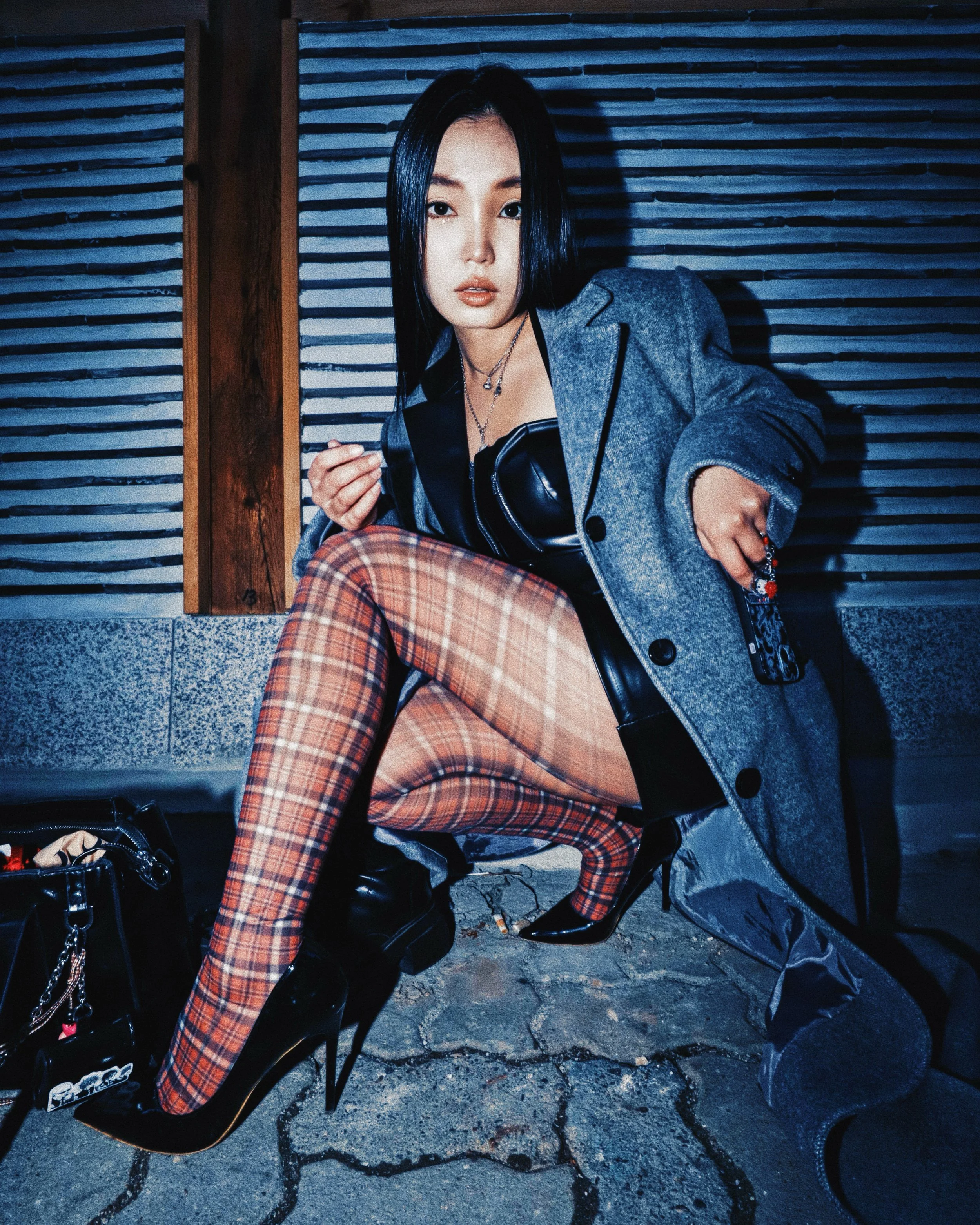
Model @haku_mirri in Romantic Tiger (@romantic_tiger_official) plaid tights, crouched in black stilettos and a grey wool coat over a black leather corset dress, phone in hand, against the layered wall of a hanok on irregular stone paving. Ikseon-dong, Seoul, early 2025.
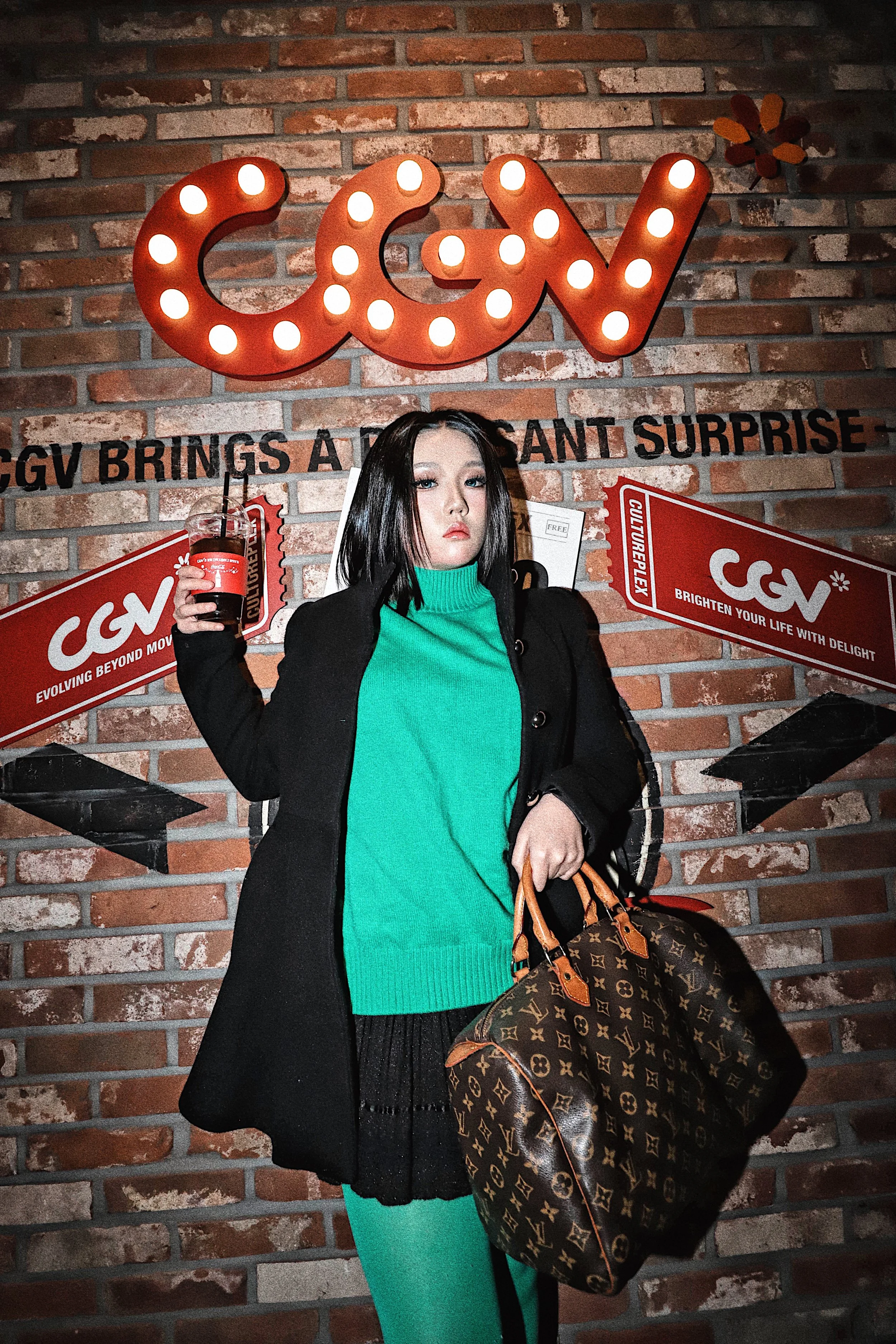
Model Som @som081223 in a green turtleneck, black coat and green tights, an iced americano in one hand and the iconic Louis Vuitton Speedy bag in the other, beneath the red-bulb sign of CGV Piccadilly 1958 (피카디리1958), Jongno 3-ga, Seoul, 2025. Piccadilly was one of Jongno's "big three" cinemas with Dansungsa and Seoul Cinema, and the bag-and-americano pairing is the 된장녀 (doenjang-nyeo, "bean-paste girl") uniform, here set against a cinema now run by a corporate brand.
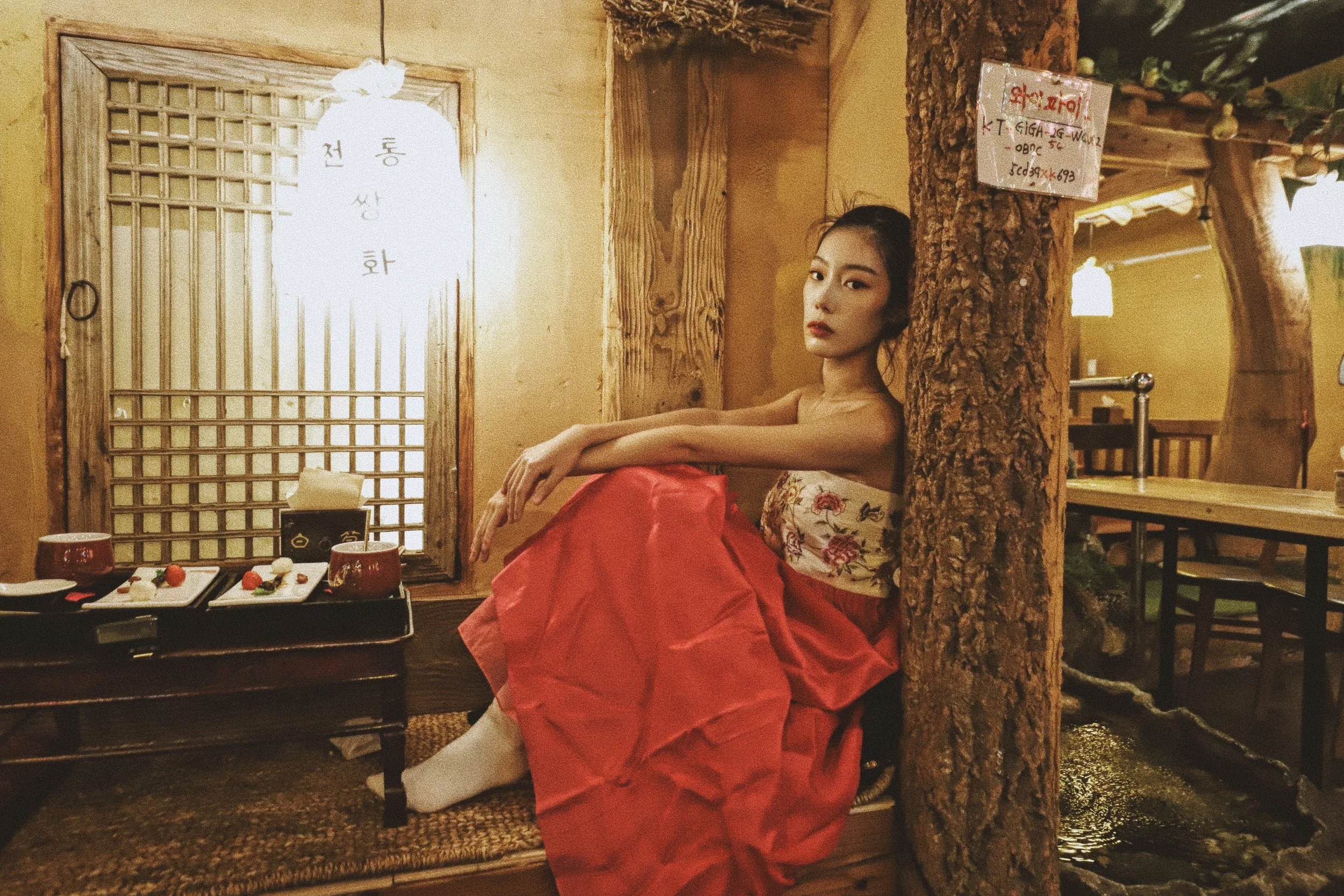
Model @bai.nn_ in a replica of Lee Young Hee’s “Clothing of the Wind” (바람의 옷), the bare-shouldered hanbok that debuted in Paris in 1993, inside The Sangwha Coffee (더쌍화커피, Deo Ssanghwa Keopi), just outside a Jongno 3-ga exit and next to Tapgol Park, the old men’s watering hole. Jongno 3-ga, Seoul, 2025.
Seosulla-gil is the relay. When Ikseon-dong's rents priced out its small jewelers and hand-drip coffee bars, they moved one block over, to a lane of print shops and craft workshops running along the wall of Jongmyo (종묘), the UNESCO-listed royal ancestral shrine. A legal limit on building heights along that wall has kept the street's scale, and so far its rents, from running away. Its refabulated story is different from Ikseon-dong's: pastness as atmosphere. On the third floor of Cafe 1968 sits an elevated platform styled like an anbang (안방, the inner room of a Joseon-era home), furnished with a CRT television that doesn't broadcast and a Park Chung-hee-era Korean-language textbook that doesn't teach. Outside, 600 years of actual stone. Inside, the feeling of history, freed from any particular history and sold by the latte.
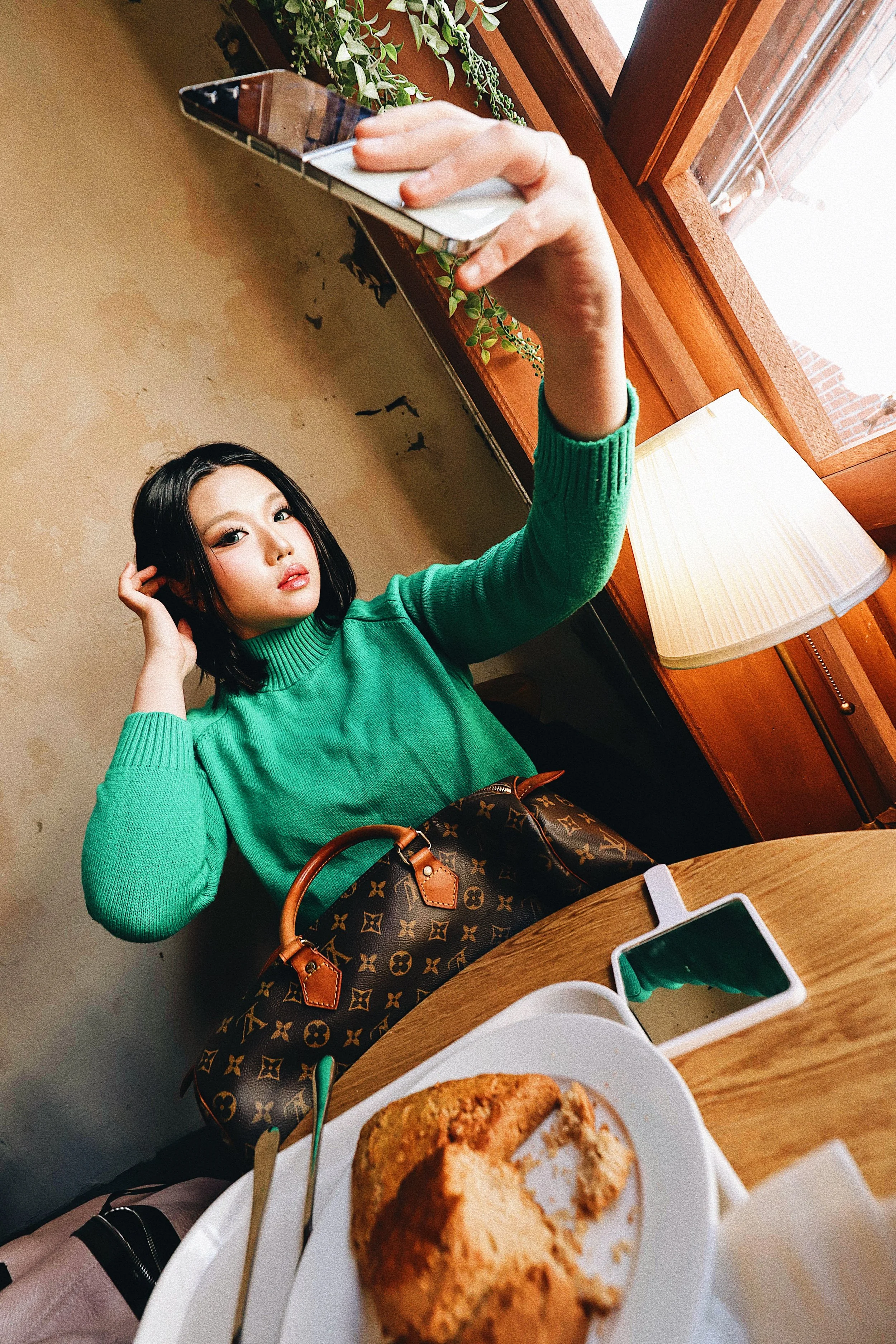
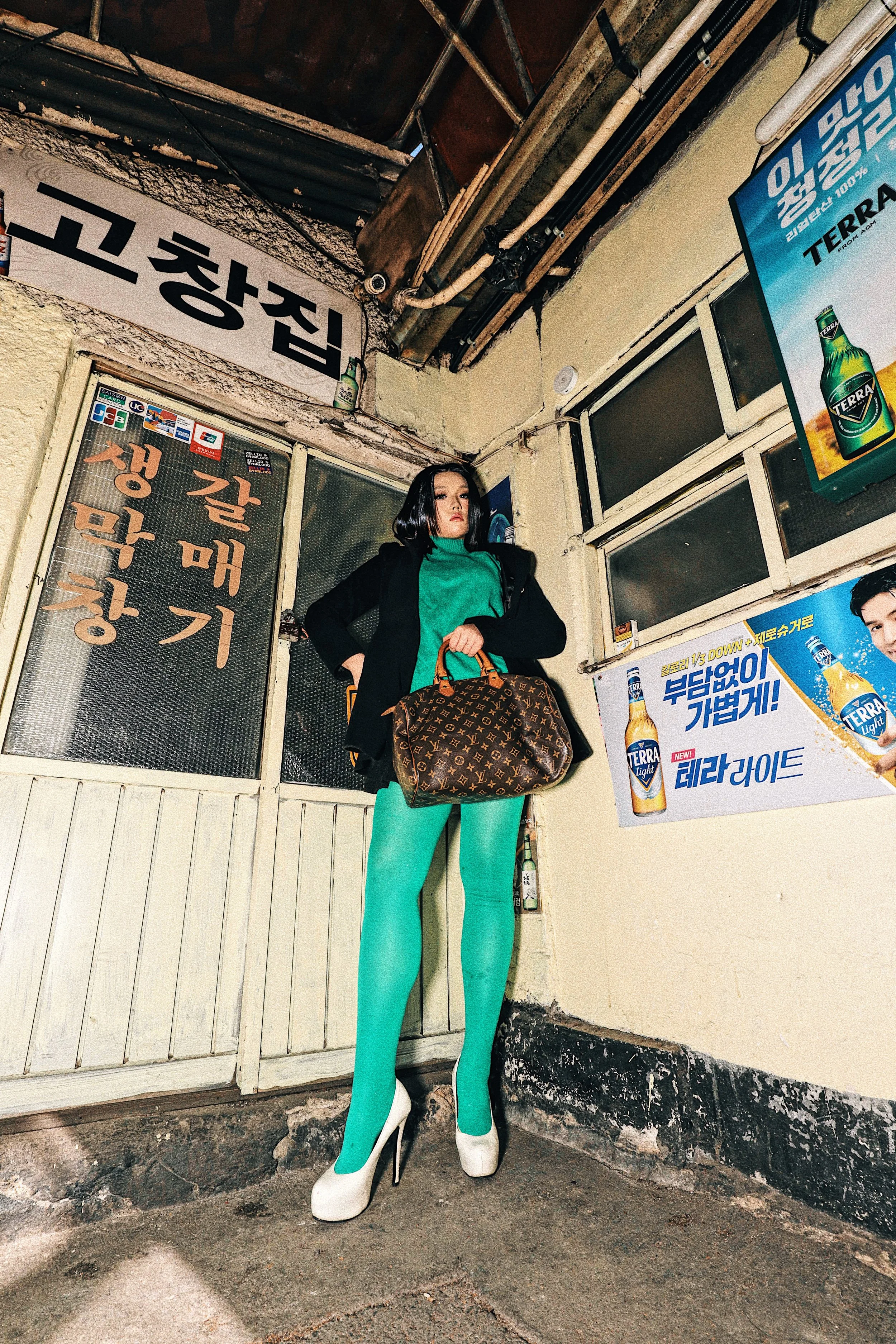
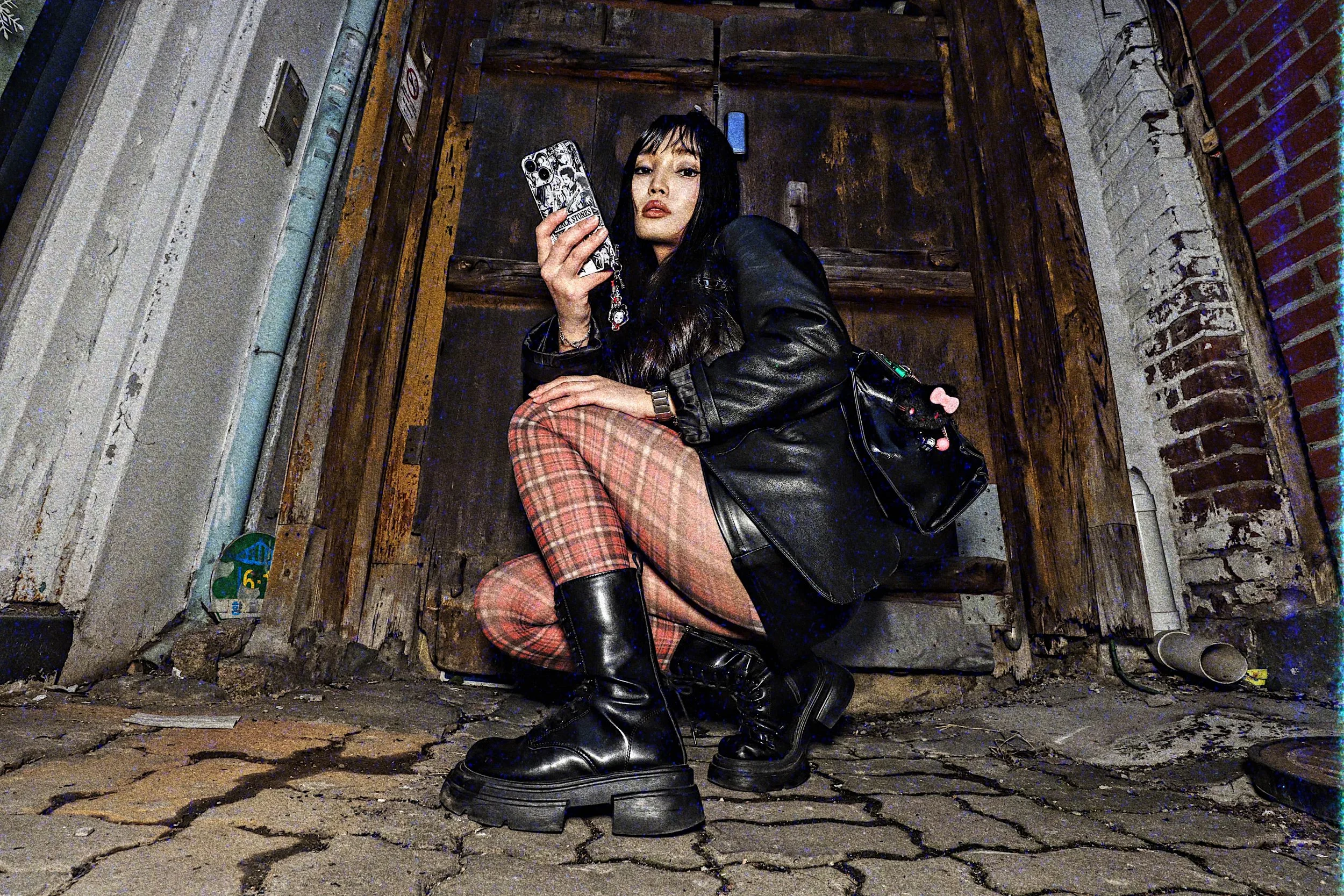
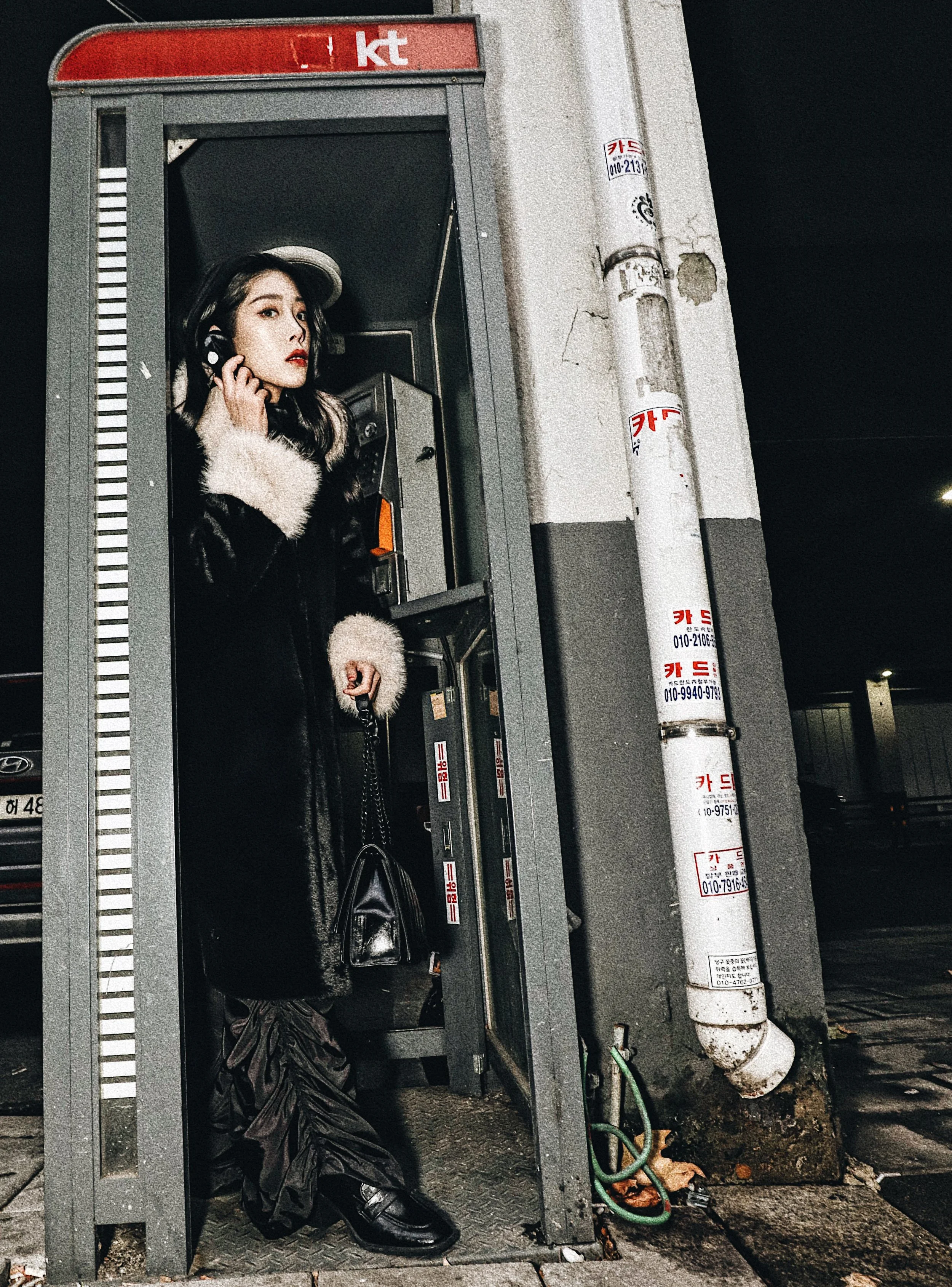
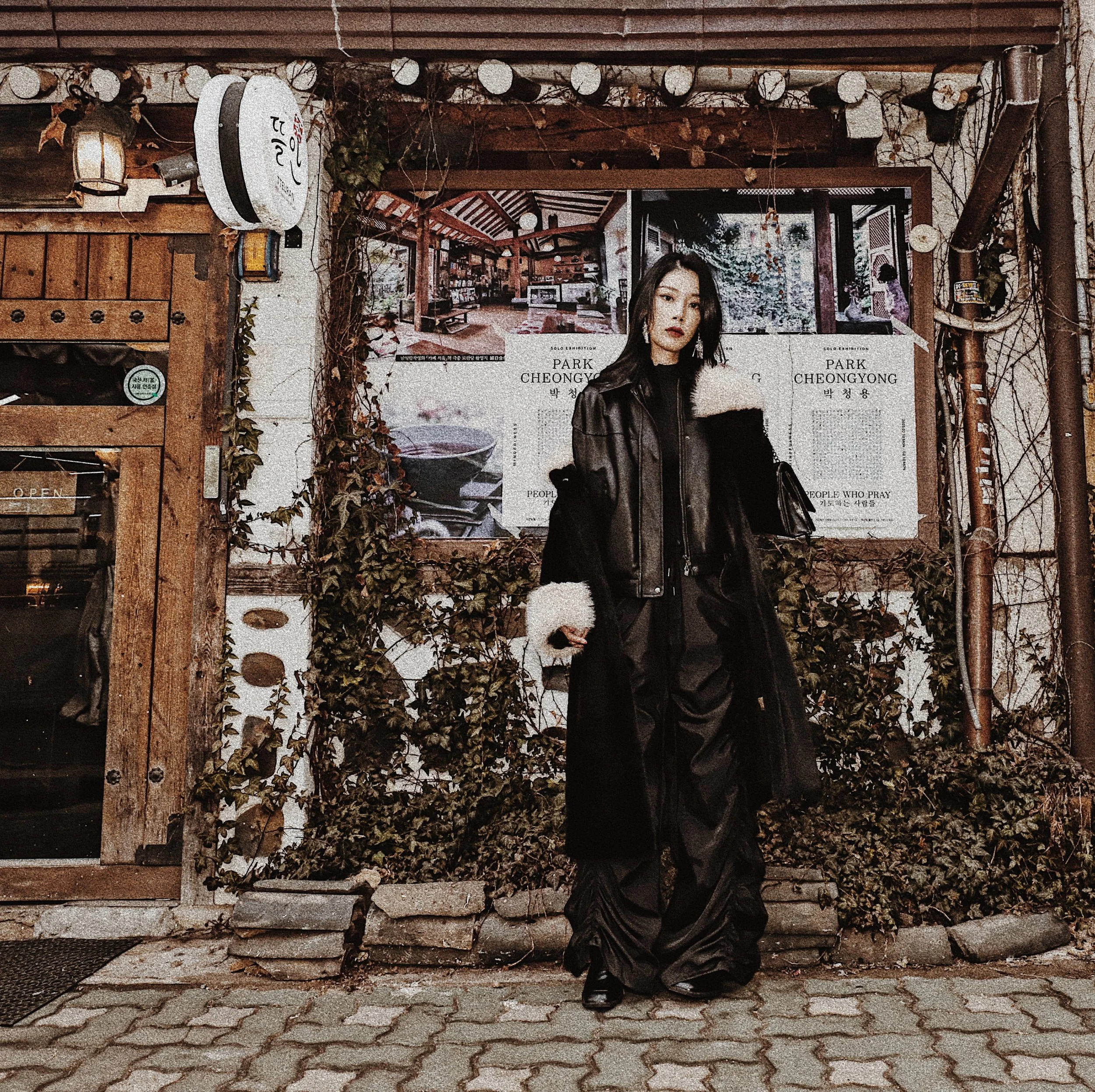
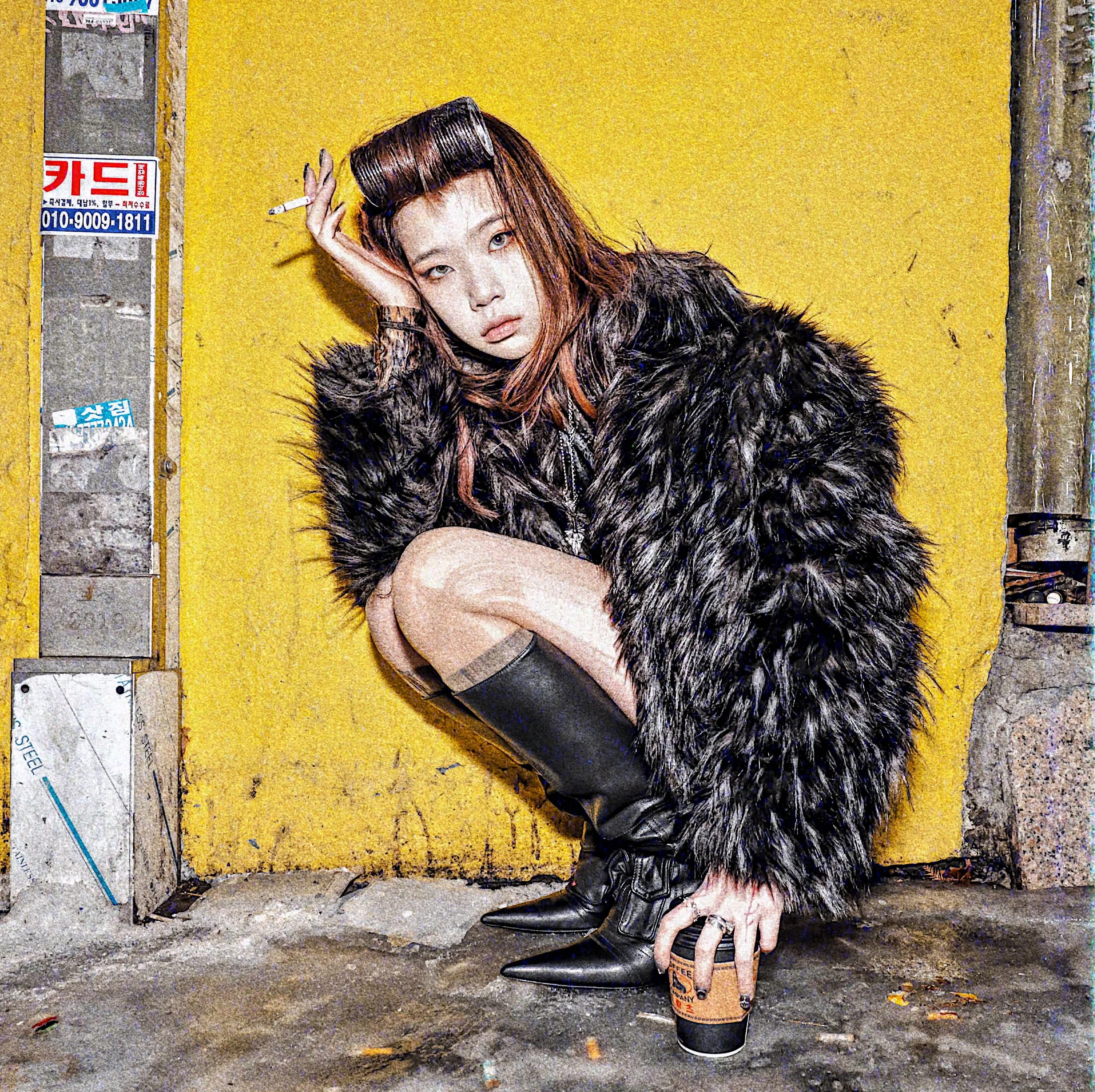
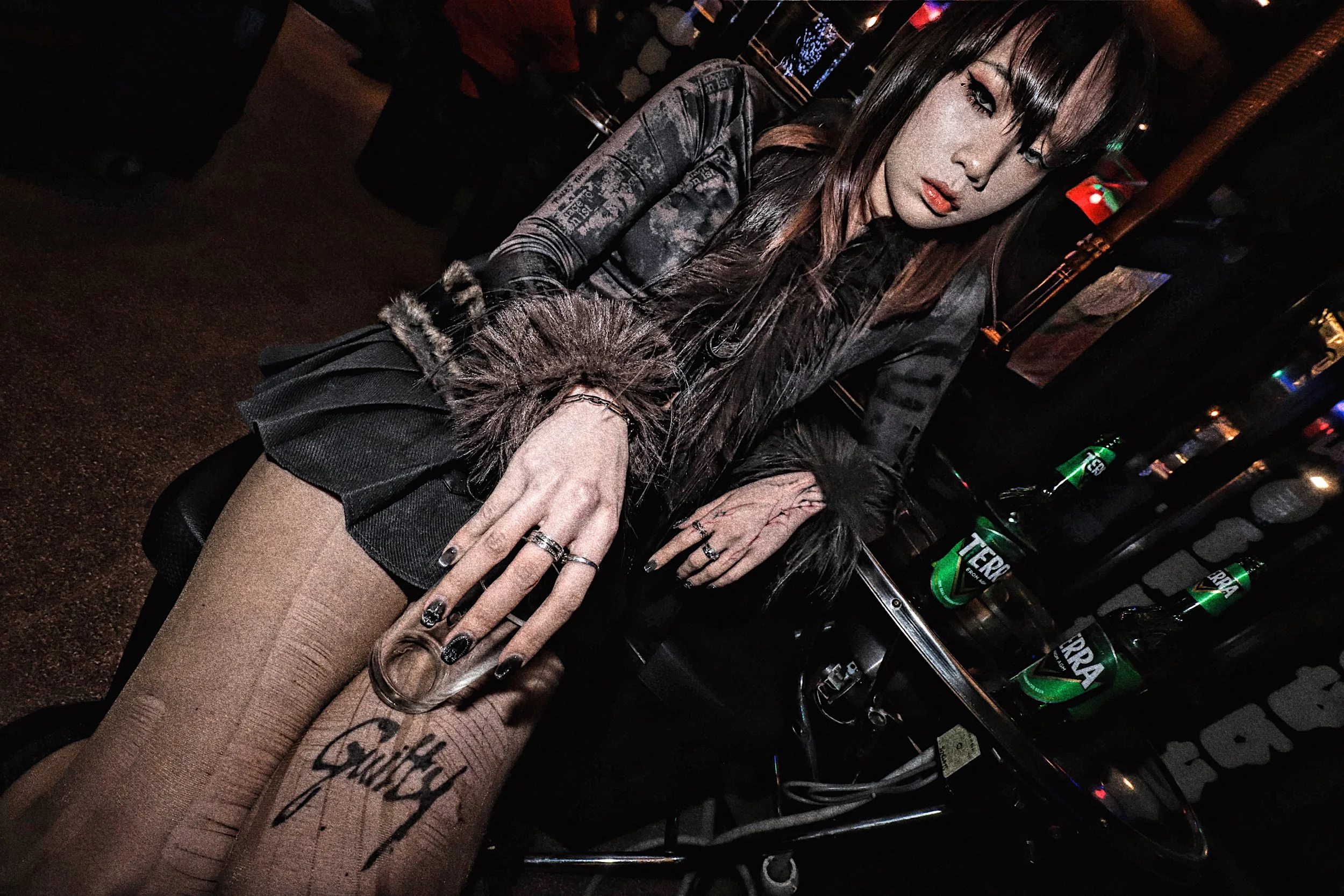
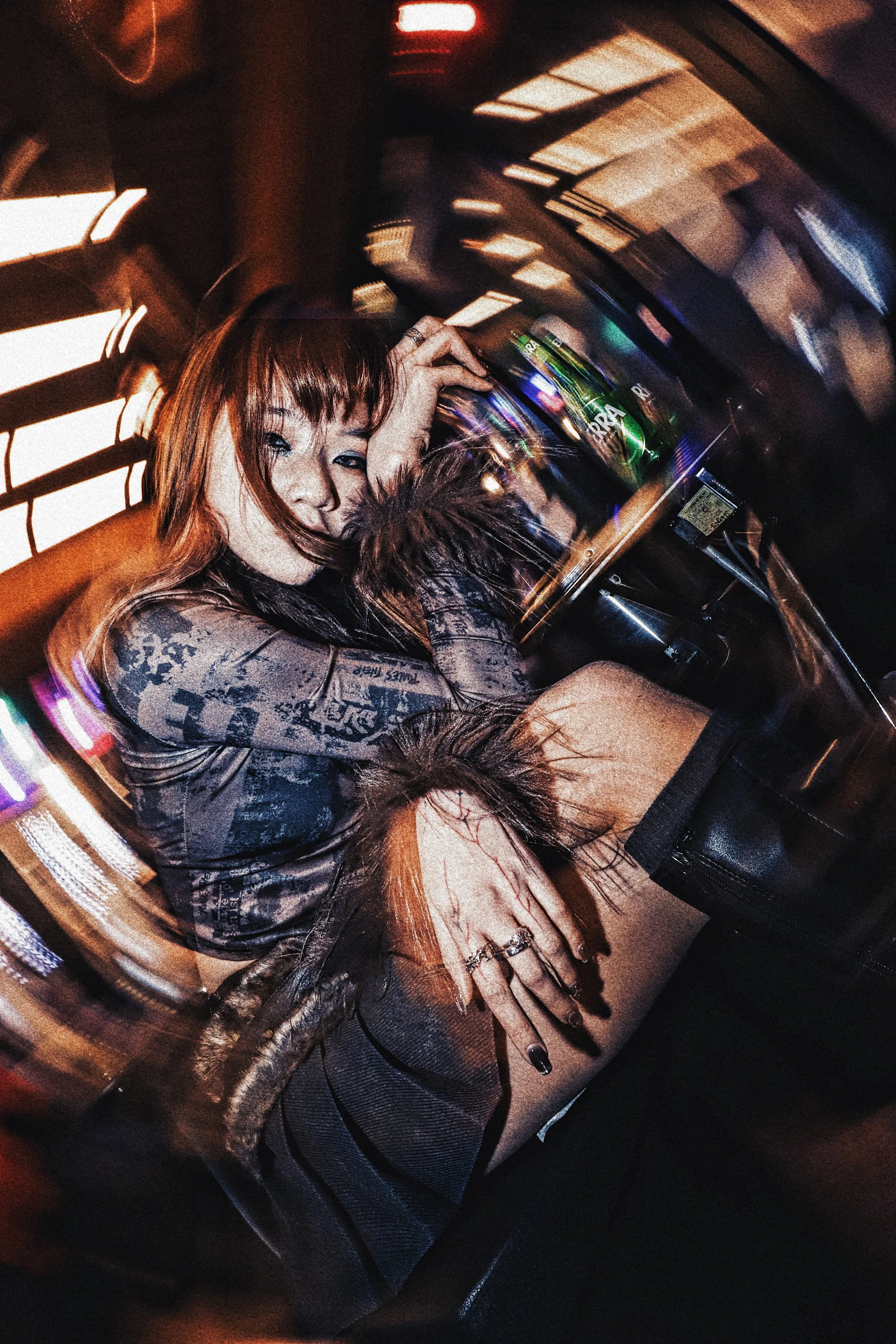
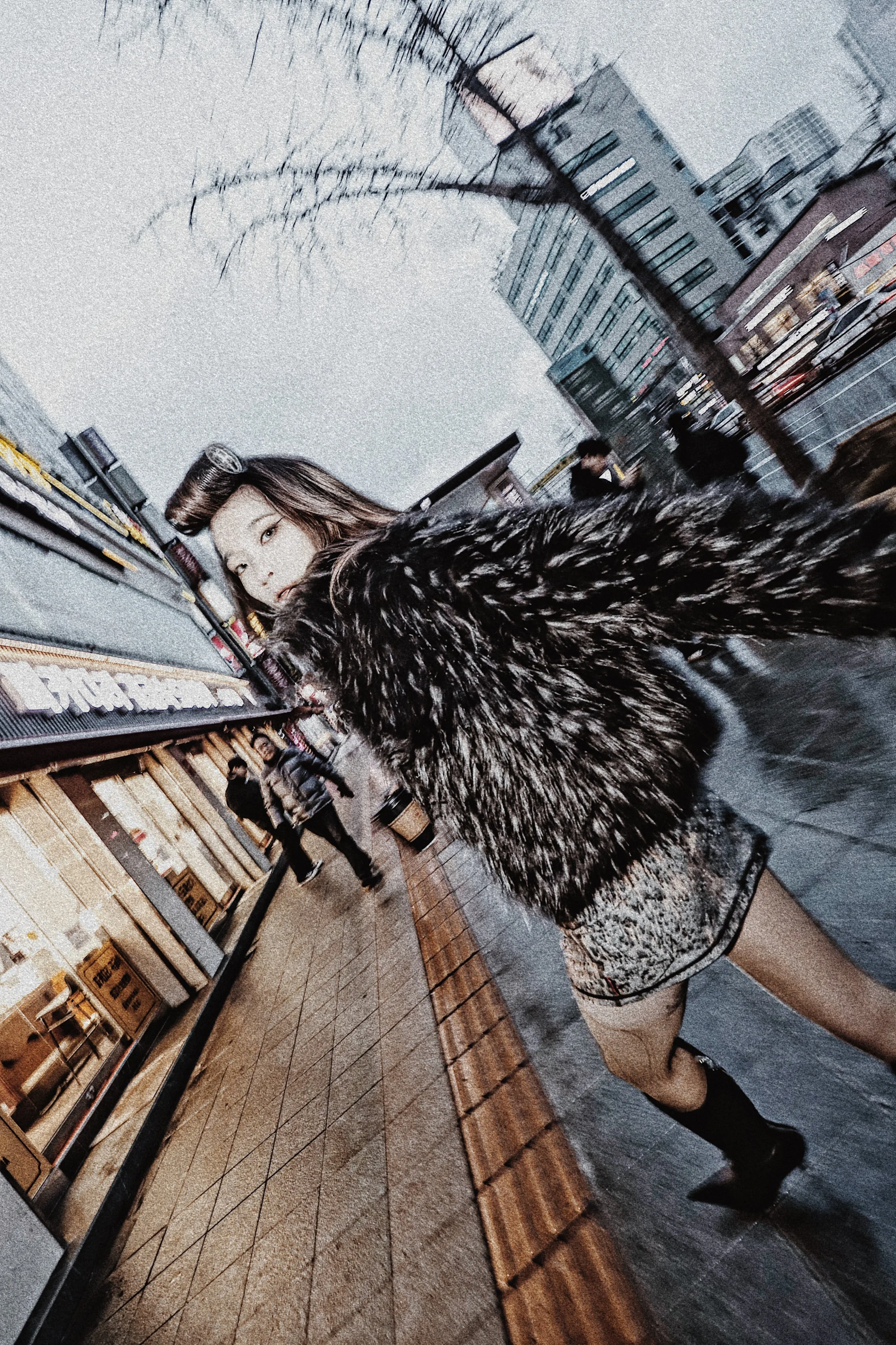
we’ve essentially gone in a several-block circle and returned to one of the Jongno 3-ga’s exits, which the model is heading towards.
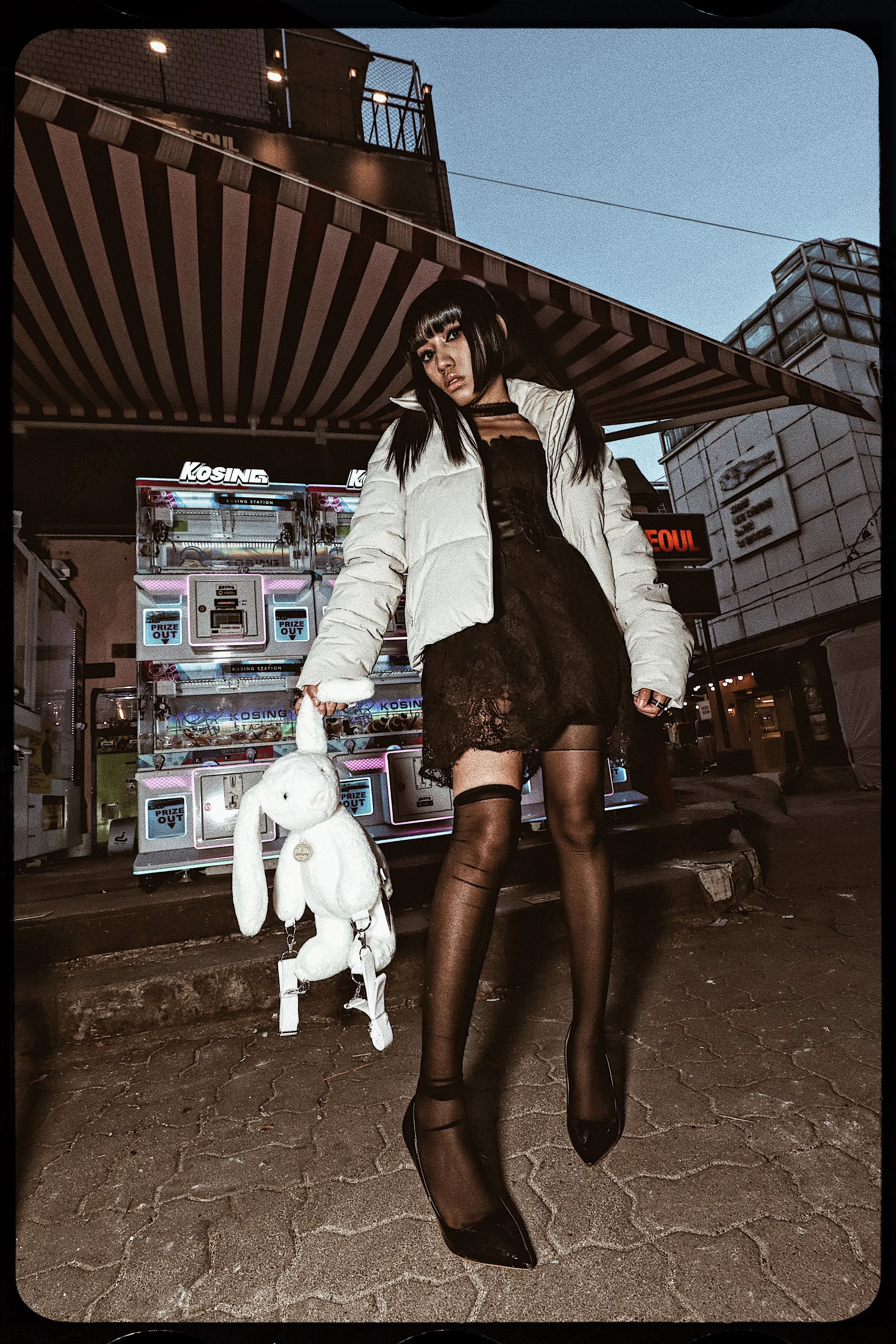
so what is Ikseon-dong? is it the cluster of gacha/claw machines where one can go on a mechanical hunting/gambling expedition? Or is it the alleyway of retro dress cafes? The boutiques? The slat-bread bakeries? Notably, one gets there by going out of one of the Jongno 3-ga subway exits.
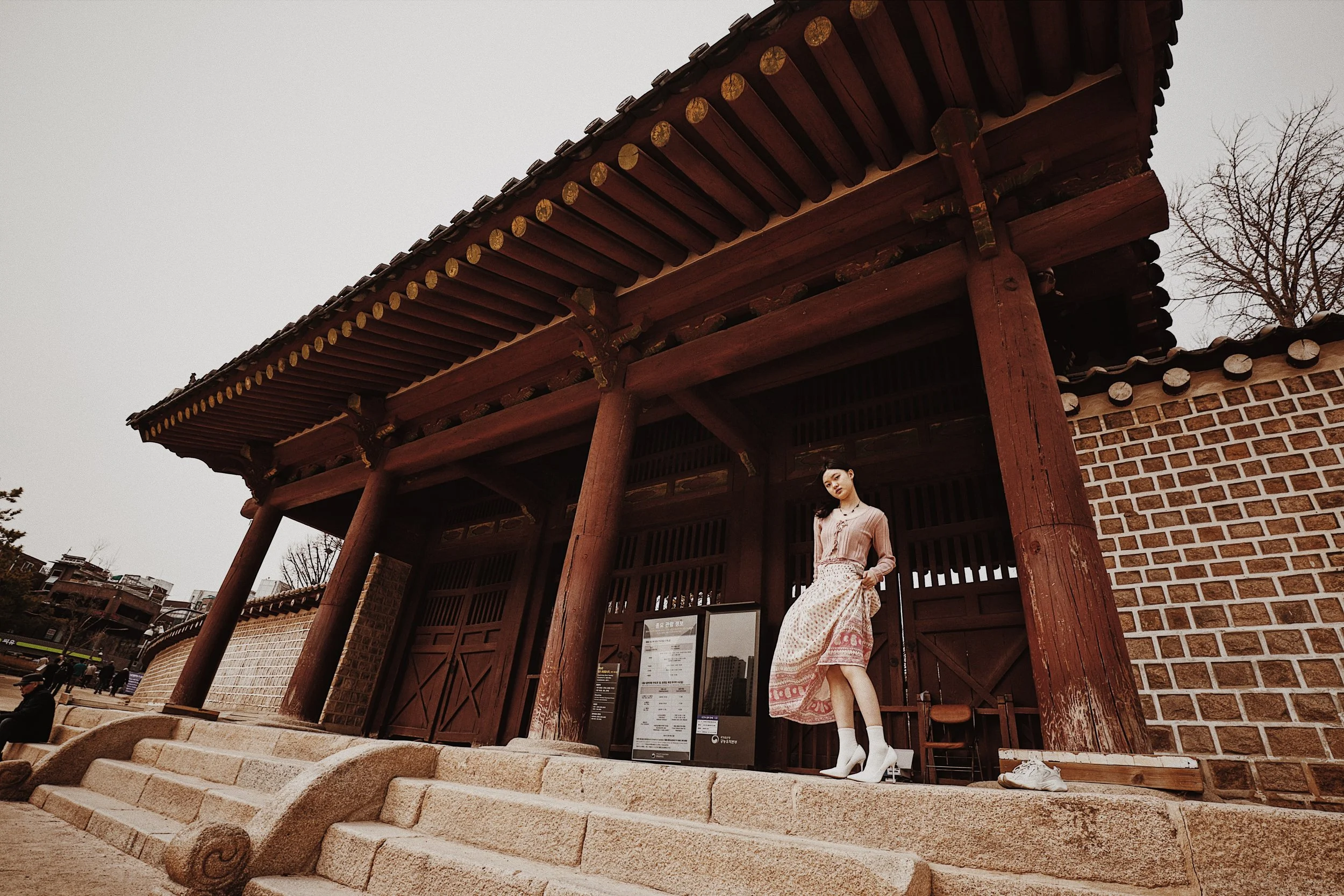
Model Eunmyung [@exnxyung] standing on highest stair in front of the iconic (and Instagram gravitation center/barrier) Jongmyo wall and gate, white pumps freshly worn, with the sneakers she wore and changed out of at the CU convenience store far off at the bottem left of the frame just a few minutes prior lying to the side. Seosulla-gil, Seoul in March 2026.
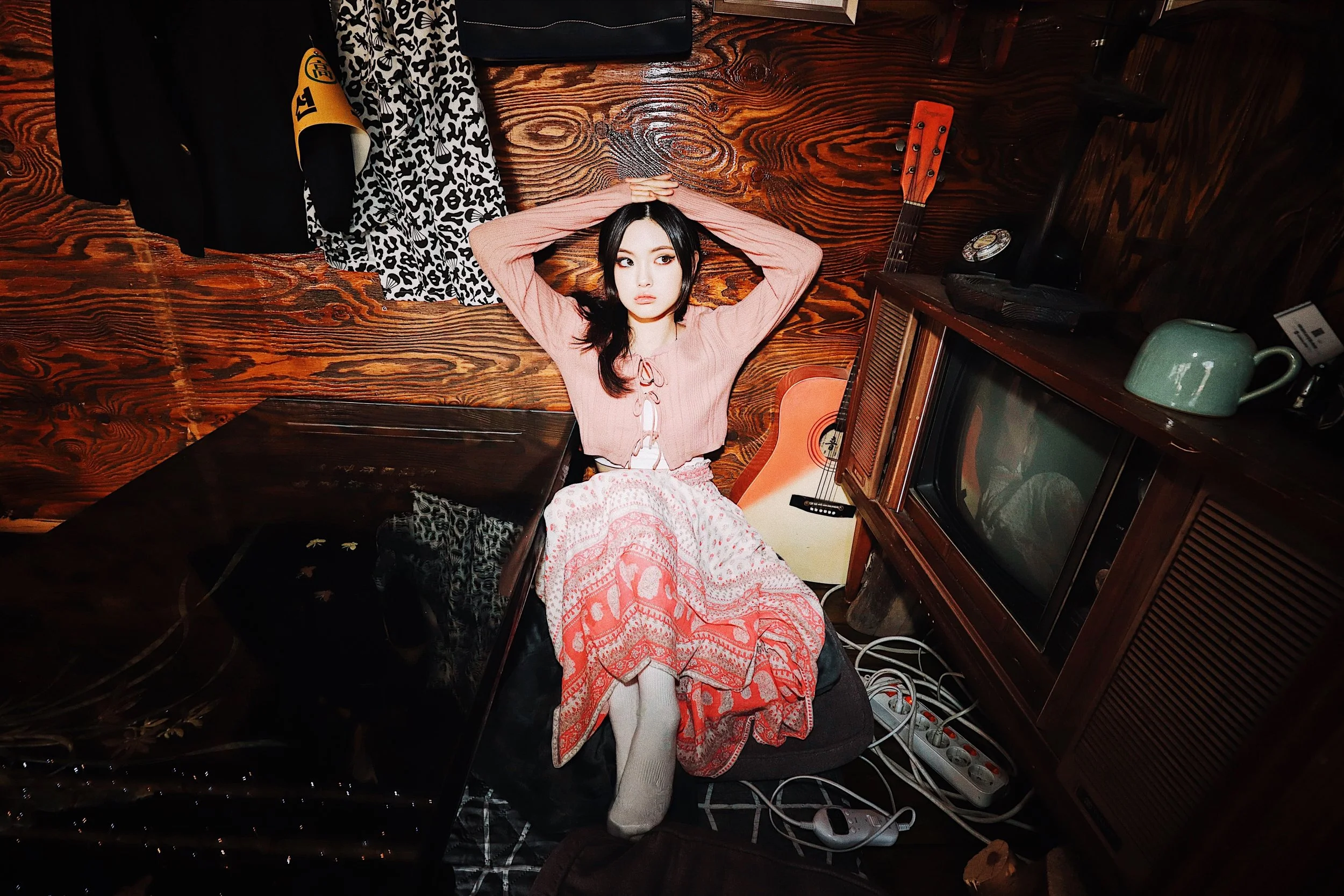
Model Eunmyung [@exnxyung] on the third-floor anbang platform of Cafe 1968, Seosulla-gil, Seoul, 2026. Dusty-rose Indian-print midi skirt, pink ribbed cardigan with ribbon bows, white socks. Behind her: wood-grain paneling, a CRT television, an acoustic guitar, an old dial telephone. Her outfit is what Korean Instagram files under morigirl (모리걸, “forest girl”), a Japanese-origin fantasy of a pre-modern femininity that never existed, worn in a room that simulates a 1970s home no one lives in. Two imagined pasts, one frame. The same shoot then moved out to the Jongmyo wall, where she posed in white heels and the same white socks, a pairing that is itself retro and carries the room’s 1970s register out in front of the Jongmyo site. Both settings sit on one 800-meter strip: a simulated past three floors up, 600 years of actual stone at street level, and one outfit worn across both. She is dressed for the compression: a look that already stacks pasts moves through tightly stacked urban interfaces without friction.
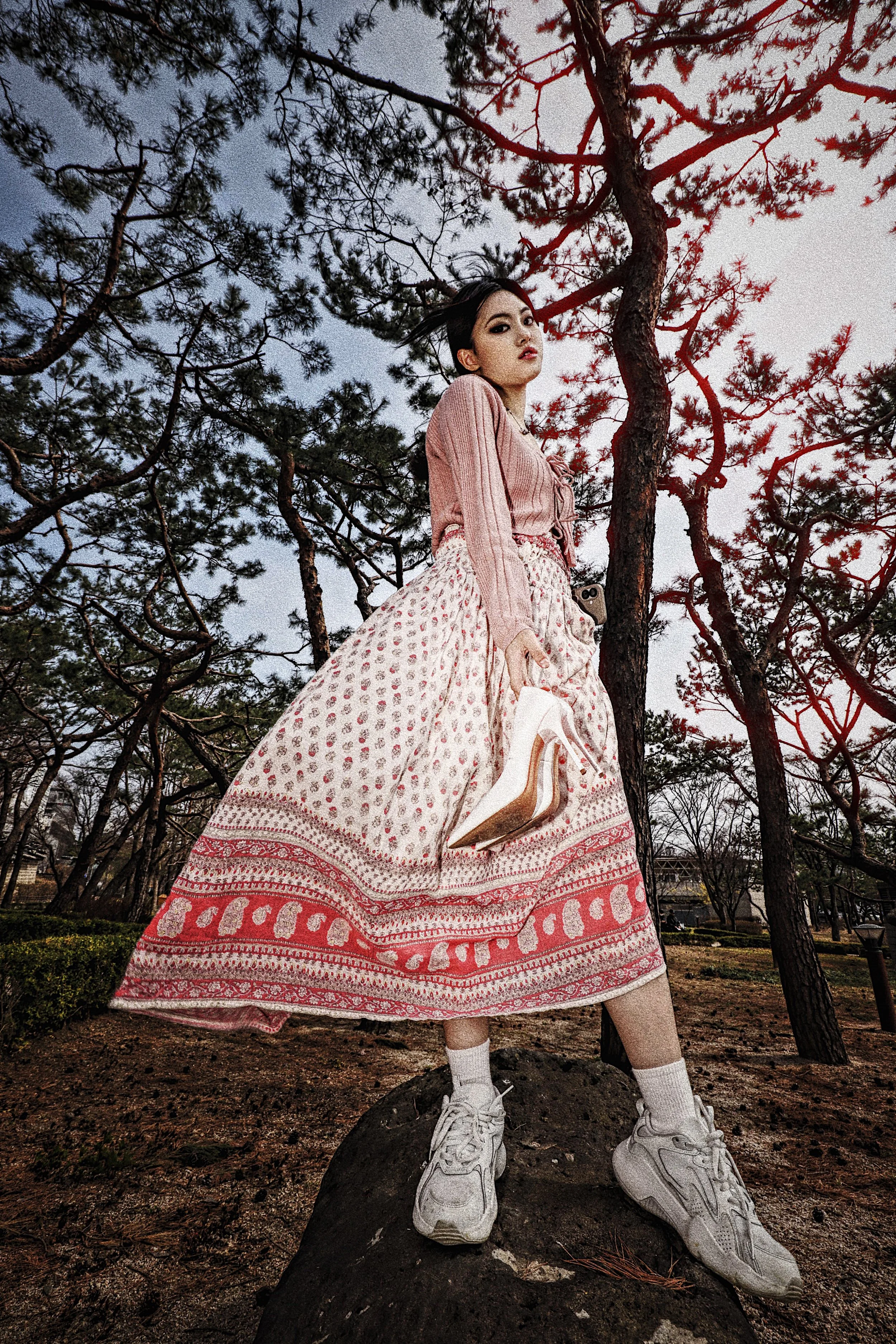
Model Eunmyung [@exnxyung] in the small park outside the front gate of Jongmyo, Seoul, 2026, caught between interfaces. The same dusty-rose Indian-print midi skirt and pink ribbed cardigan, now with chunky white sneakers over white crew socks and a white pump held in one hand. On the way from the retro room at Cafe 1968 to the royal wall, the heels are carried and the sneakers do the walking: neither the costume of the past nor the commute, a body caught mid-switch between registers.
The pojangmacha strip has the oldest story and the least interest in telling it. The tents cluster around exits 3 through 6 of Jongno 3-ga Station. For years this was a drinking district for middle-aged and older Seoulites. Younger crowds, and now foreign visitors, have rediscovered it as the authentic old Seoul the other two places only simulate. That is exactly the story a refabulating area needs most, and the one that is hardest to fake.
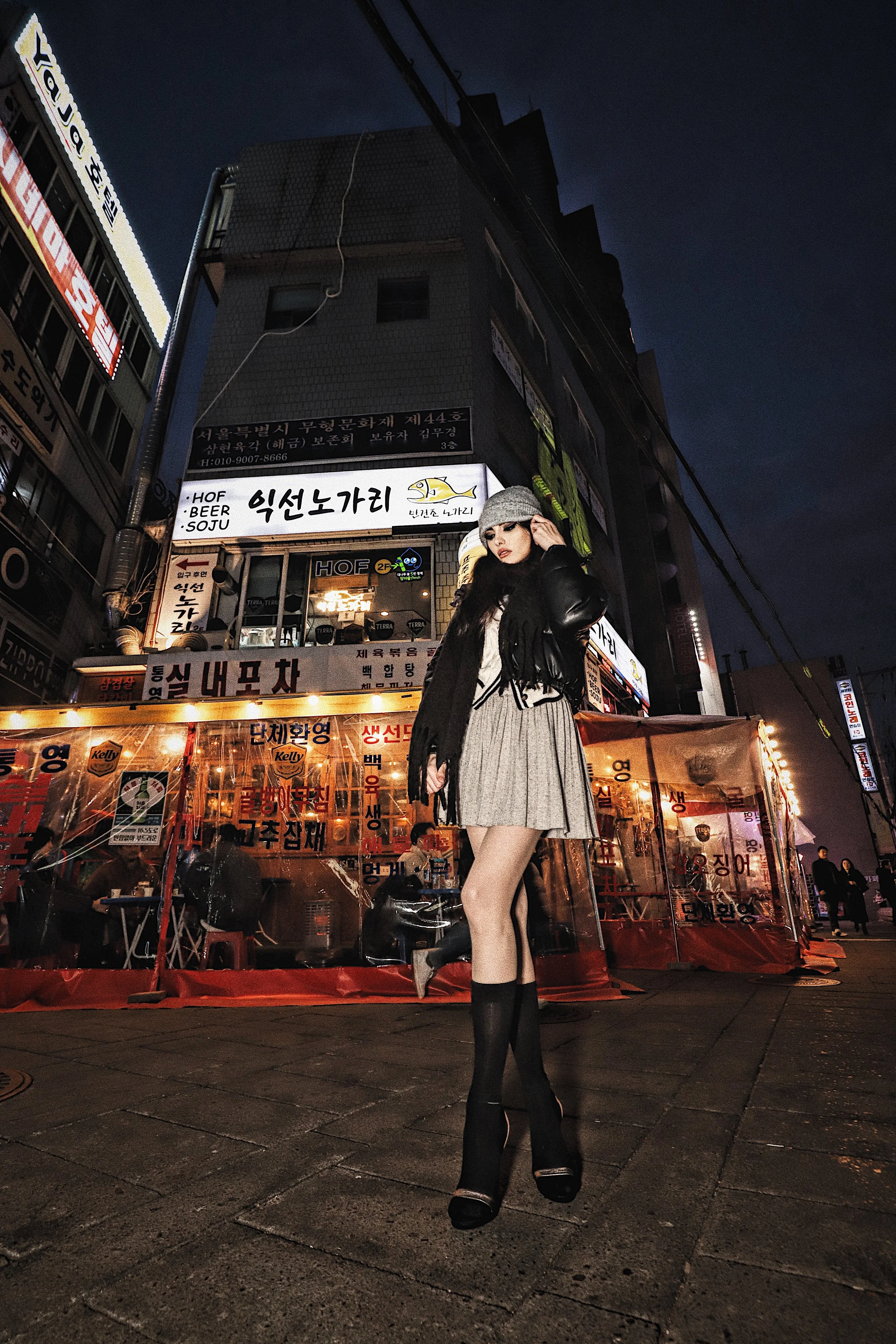
[FIG. 10 — PHOTO PLACEHOLDER · JONGNO AT MIDDAY] Fig. 10 – Model [@handle] in a brick-walled alley at midday during the lunch hour, a cigarette in one hand and a coffee in the other. Jongno, Seoul. [The UNCUT SEOUL "jongno" frame. Confirm the exact block before captioning it as the pocha-strip edge. Handle needed.]
Three zones, three stories, three clocks. Each one earned its vibe separately.
The Seam
Here is what the ranking collapsed. Vibes don't stay inside their blocks. The edges of Ikseon-dong's story, Seosulla-gil's, and the tent strip's sit close enough that they now overlap, and the overlap isn't a fourth neighborhood. It is a field where three refabulations are running over the same ground.
Refabulation explains how a vibe forms. It doesn't explain what a vibe is a vibe of. For that I use a second idea: the urban interface.
In computing, an interface is the shared boundary where two separate systems meet and exchange information. The screen on your phone is one: it lets you use a machine without understanding anything that is happening inside it. An urban interface does the same job for a city. The forces that shape a place, global capital, mass culture, the pull between tradition and modernity, are too large and too abstract to see directly. The philosopher Timothy Morton (2013) calls things like this hyperobjects: entities so vast in time and space that no one can perceive them whole. An urban interface is where one of them becomes something you can walk into and touch. The abstract tension between tradition and modernity becomes a hanok that is also a café. Globalization becomes a Korean barbecue restaurant next door to an old Italian deli.
In an earlier piece on hyperobjects and Seoul's urban interfaces, we argued that this makes the whole city a hyperobject translation system. Its eighteen thousand cafés are translation nodes. Its hot places are compression zones, where several hyperobjects become visible at once, and Seoul's particular talent has been to build dense networks of such spaces that turn forces too big to grasp into something you can live inside, one 4,500-won Americano at a time.
The term comes from my collaborator Bing Bu, whose 2024 Syracuse Architecture studio, "Emerging Urban Interfaces: From Euljiro to Shibuya," borrowed it from computing to describe the border conditions where pop-ups, cafés, and other tactical uses meet the larger systems around them. The architectural theorists Kim Dovey and Stephen Wood (2015) had already used "interface" for the edges where public and private space meet. The link to Morton's hyperobjects, and the typology and density argument below, are what I built on top of that using my own photographic fieldwork in Seoul.
The next step is the one that matters here. In my account of Seoul's hot places, a neighborhood doesn't get hot by being one kind of interface. It gets hot by packing a high density and a high variety of interface types into close proximity, so that the more kinds of interface coexist, the more interesting the place becomes to the people who consume it. I sort the interfaces into a typology of eleven types. These are the nine that matter here:
Adaptive reuse: an old space repurposed for something new (a bathhouse becoming a gallery).
Industrial-heritage transition: workshop and manufacturing districts turning into places to visit (Euljiro, Seongsu).
Selfie-studio infrastructure: spaces built or fitted out for photographing yourself and being photographed (what I call Nth-space).
Traditional residential: places people still actually live.
Luxury consumption: upscale restaurants and shops.
Commercialized youth zone: streets organized around young people's spending.
Traditional-culture consumption: buying the past as an experience (hanbok rental, hanok tea).
Traditional food tourism: eating "old Seoul" as a visitor.
Transit-adjacent emergence: activity that grows up around stations and exits.
That is the ordinary case: interfaces side by side, and you move between them. A singularity is a different condition, not just a bigger number. Ikseon-dong's micro-alleys are already a validated singularity in my fieldwork: five to six interface types compressed into a single hanok of roughly 80 to 100 square meters, so tightly that "what kind of place is this?" stops having one answer. Below that threshold, you move between interfaces. At it, they occupy the same spot.
[FIG. 11 — PHOTO PLACEHOLDER · THE INTERFACE STACK] Fig. 11 – [One hanok storefront showing several uses at once: a residential doorway, a café or studio sign, a rental or photo-booth banner, a restaurant menu board. Ikseon-dong, Seoul, 2026.] [The micro-alley singularity in one frame: five or six interface types in one building. Choose a shot where a reader can count the uses.]
I haven't run the full scoring on the seam between these three zones. The working count looks like this:
Ikseon-dong ("the past, rented by the hour"): traditional residential, traditional-culture consumption, selfie-studio infrastructure, commercialized youth zone, luxury consumption.
Seosulla-gil ("the past, as atmosphere"): industrial-heritage transition, adaptive reuse, traditional-culture consumption.
The pojangmacha strip ("the past, as the real thing"): traditional food tourism, transit-adjacent emergence, commercialized youth zone.
Where those fields overlap, you don't get a bigger neighborhood. You get a compound singularity: so many interface types stacked across so little ground that "which neighborhood am I standing in?" has no clean answer. It is the wall I ran into when I tried to draw the month's boundary: there was no inside to stay inside.
Put another way, a singularity is a stacking of interface types so tight that you can't work out what kind of space you are standing in. That is a large part of what makes Seoul, and Korea, so interesting to people used to different spatial definitions, where a space is expected to be one kind of thing at a time.
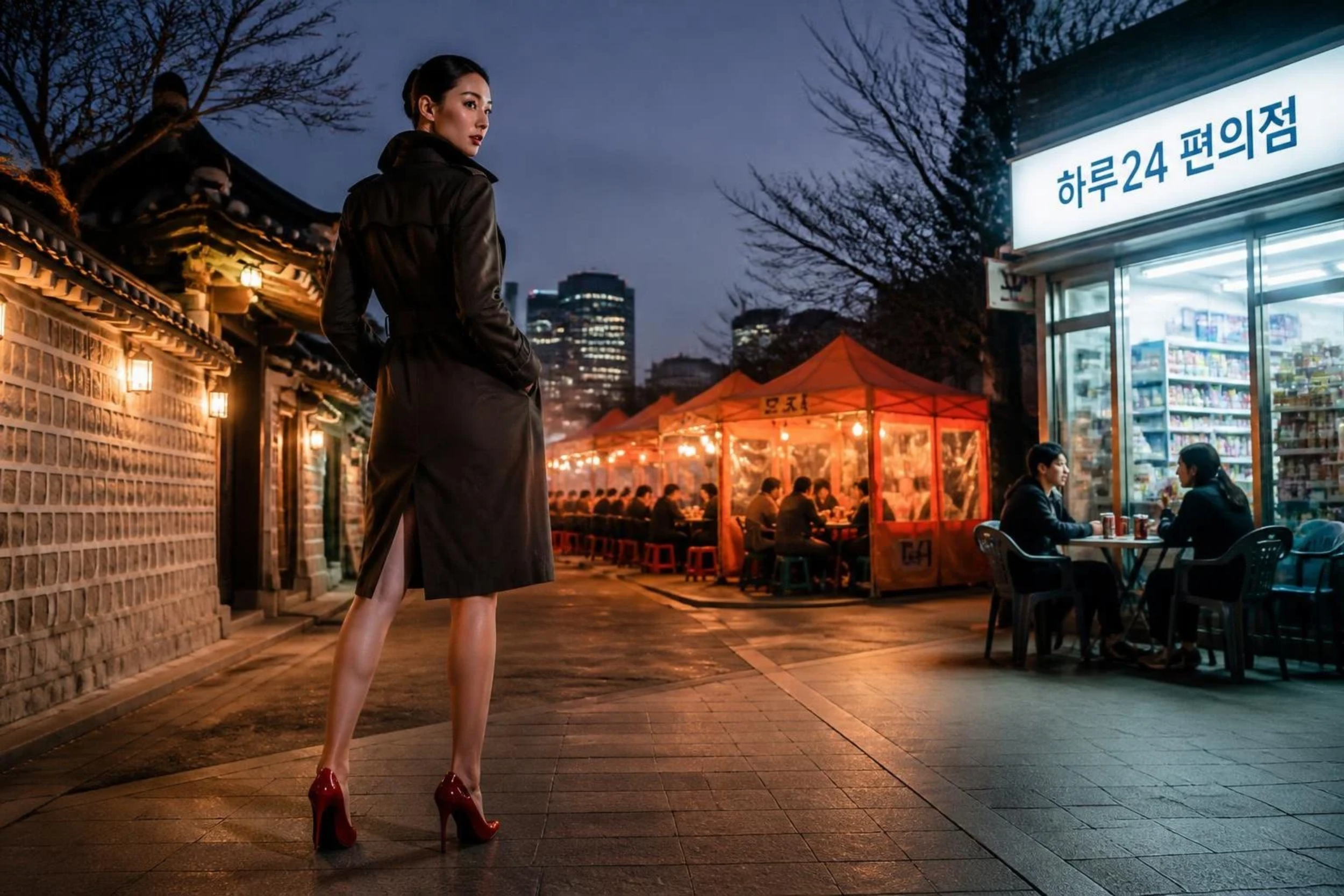
[FIG. 12 — PHOTO PLACEHOLDER · THE SEAM] Fig. 12 – [A single wide frame where two zones meet: hanok roofline and tent-bar signage, or a Seosulla-gil lane opening onto the Ikseon-dong edge.] [No confirmed frame found in our earlier chats. Pick from the month's set, or reshoot. The Oct. 4 idea of one model walking all three zones would fill this gap exactly.]
Why the Listicle Reached for the Station
A singularity has one defining property: you can't name it after anything inside it. Every address in the field belongs to a more specific story. So when a ranking needs one proper noun per entry, it does what anyone standing inside a singularity does and grabs the nearest fixed, nameable thing. Jongno 3-ga Station, a hub for Lines 1, 3, and 5, was the only object in the field that belonged to none of the three stories. It was also the one name a visitor already had in hand.
[FIG. 13 — PHOTO PLACEHOLDER · THE EMPTY SENTENCE] Fig. 13 – [A late-evening outdoor table scene: string lights, plastic chairs, soju bottles, dishes. A model seated. Jongno-gu, Seoul, 2026.] [The picture that could caption Beard's 'late-evening alfresco dining.' A frame that could plausibly be in any Seoul neighborhood is the point: the generic scene sits next to the sentence that is just as generic.]
That is also why Beard's sentence reads so empty. "Late-evening alfresco dining, indie businesses and shops" is what's left when a refabulated story gets flattened into a caption. Everything specific enough to belong to only one of the three places has been sanded off, so the sentence can hold all three. Time Out didn't get the neighborhood wrong. It named a seam after a subway stop.
And the naming isn't neutral, because the ranking is itself a refabulation: a new story told over the seam, with a megaphone no café's Instagram account has. My name for the loop that follows is naebu sunhwan (내부순환, "internal circulation," after Seoul's circular Line 2). Success draws coverage, coverage draws foot traffic, foot traffic draws more Instafication, and the heat feeds itself. Now it runs on the flattened name. The density that made this ground a singularity depends on the three zones staying different from each other, and the crown rewards none of that difference.
Seongsu-dong already ran this experiment. Time Out ranked it fourth in 2024. By December 2025, a fashion platform had paid ₩329 million to put its brand on the subway station.
There is also a larger reason a ranking like this finds its audience. "Korea" has itself become a hyperobject: everywhere at once in streaming, music, food, and fashion, and too large for any visitor to take in whole. Hyperobjects call for interfaces, and a neighborhood makes a convenient one. For people outside the country, a place like Jongno 3-ga is a handle on Korea, somewhere the abstraction turns into something you can walk into, photograph, and rank in an afternoon. Time Out wasn't only ranking a neighborhood. It was offering its readers an interface to Korea, and building that interface on the visitor's name for the place, not the locals', is exactly why it shows them the brand and not the order underneath.
That's the real story. Jongno 3-ga isn't a neighborhood that got cool. It's three neighborhoods' worth of stories, refabulated into one, and the station got the credit.
Coda: Onion Does the Seam on Purpose
The preceding sections describe a seam that formed by accident: three refabulations running over the same ground until a ranking named the overlap after a subway station. One Seoul business builds the seam on purpose, and does so consistently enough to serve as a proof of concept: Onion.
Onion's Seongsu café is a converted metal factory with its walls left raw. Its Anguk café, in Jongno-gu itself, applies the same method to a hanok. In both, the building's earlier self is kept and a quiet, minimalist layer is added on top. The remaining question is which minimalism. The reading offered here is that it is the Korean minimalism that already exists, consciously and visibly presented, joined to the Scandinavian minimalism the rest of the world already knows how to read: pale wood, white walls, ceramics, empty space. The Scandinavian half makes the Korean half legible to a visitor, and the Korean half keeps the room from reading as Copenhagen. This is an interface smash operating as a business model.
The legibility of that formula can be tested. Canva's image generator was asked for a space where Korean tradition and minimalist café design overlap, with a model in heels exploring it. Neither Onion nor Anguk was named in the prompts.
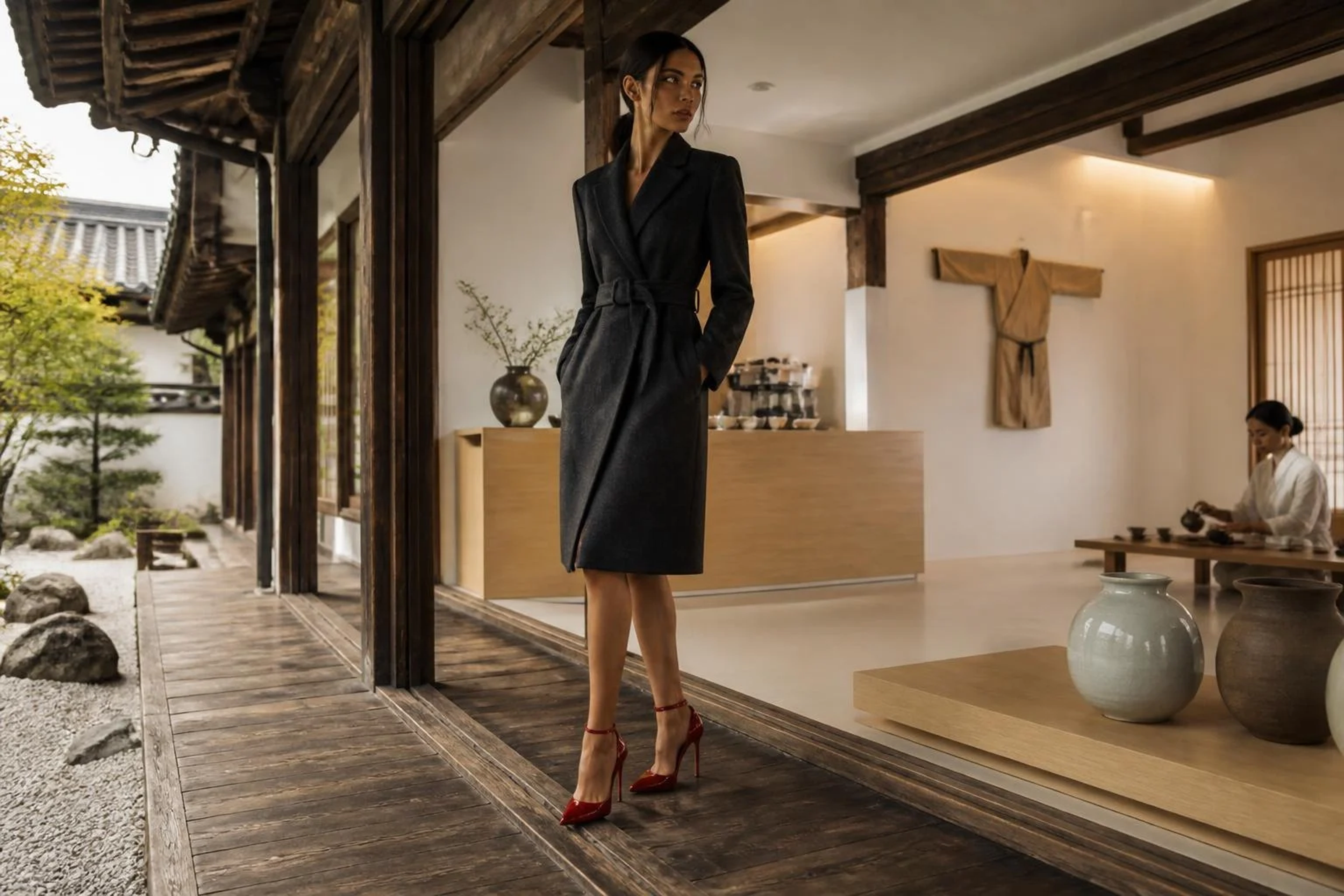
AI-generated editorial illustration of urban interfaces meeting, prompted as "Korean tradition meets minimalist café.": a hanok's timber beams and tiled eaves over a concrete floor, a pale stone counter and a courtyard glass wall. The actual Onion Cafe in Anguk, which actually looks like this, was not named.
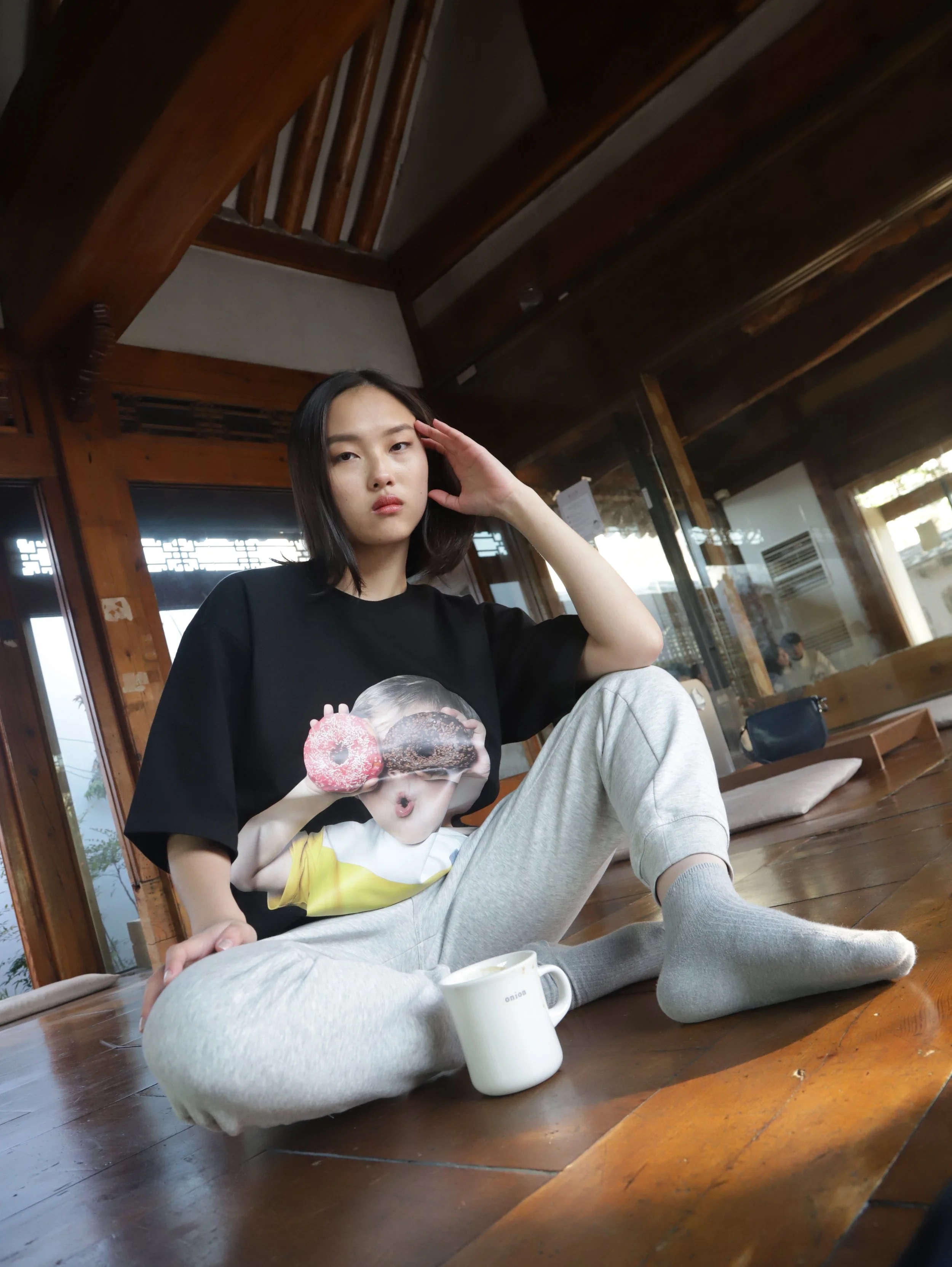
Model [@handle] on the floor of The Cafe Onion in Anguk, Jongno-gu, Seoul, December 2020.
[FIG. 16 — IMAGE · Canva MAHYOxyWhtA] Fig. 16 – AI-generated editorial illustration: a traditional wooden porch meeting a stark white interior with a long oak counter.
[FIG. 17 — PHOTO · your Onion Anguk close-up (model holding the white mug, hanok tile roofline blurred through the window)] Fig. 17 – Model [@handle] with a mug at Onion Anguk, Jongno-gu, Seoul, [date]. Real fieldwork photograph.
The resemblance is close: dark timber against pale plaster, a ceramic cup, a glass wall onto a courtyard, soft light, the same hush. The differences are analytically more useful. The real room contains an air-conditioning unit on the wall, floor cushions, a handbag on a ledge, and other customers visible behind a glass partition. The generator renders the type; the building holds the singularity, with the clutter of actual use. A caution applies: whether the generator has seen Onion's own photographs is unknown, and it may not have needed to. The look has already gelled into a recognizable aesthetic, the process described earlier in this piece, and can now be produced from the names of its ingredients.
That legibility allows a forecast. Onion has a planned branch in Myeongdong, about which little is known: a 2021 report described a bakery, café and gallery in a "sustainable space," with no building named. Onion's pattern is to read what the host district already is and keep it. Myeongdong's earlier self is not hanok. It is neon tourist retail, mid-century commercial and banking architecture, and a Gothic cathedral on the hill. The expected outcome, stated so that it can be checked:
An adaptive reuse of an older commercial building, not a new-build and not a hanok pastiche.
A shifted tradition ingredient: raw concrete, steel and the hall of an old bank or department store in place of timber.
A bakery as the front, with a gallery corner. Bread is the element perceptible from the street.
The cathedral in the frame, through tall windows or on the street side.
A quiet interior set against a loud street. The neon becomes part of the interface instead of something the design hides.
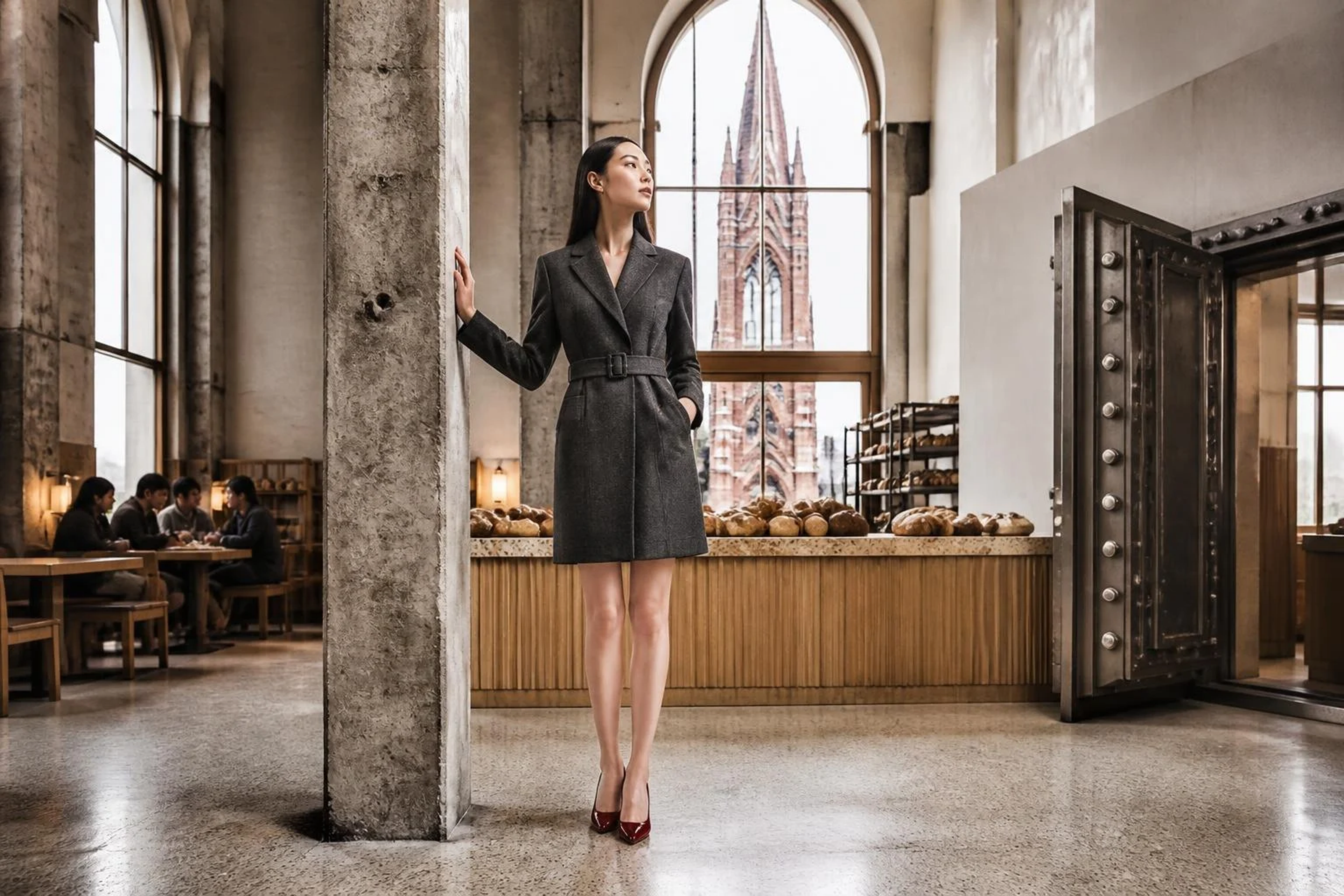
AI-generated concept illustration, speculative: an imagined Onion in Myeongdong, a stone-and-concrete commercial building with a bakery storefront, neon street and cathedral spire behind.
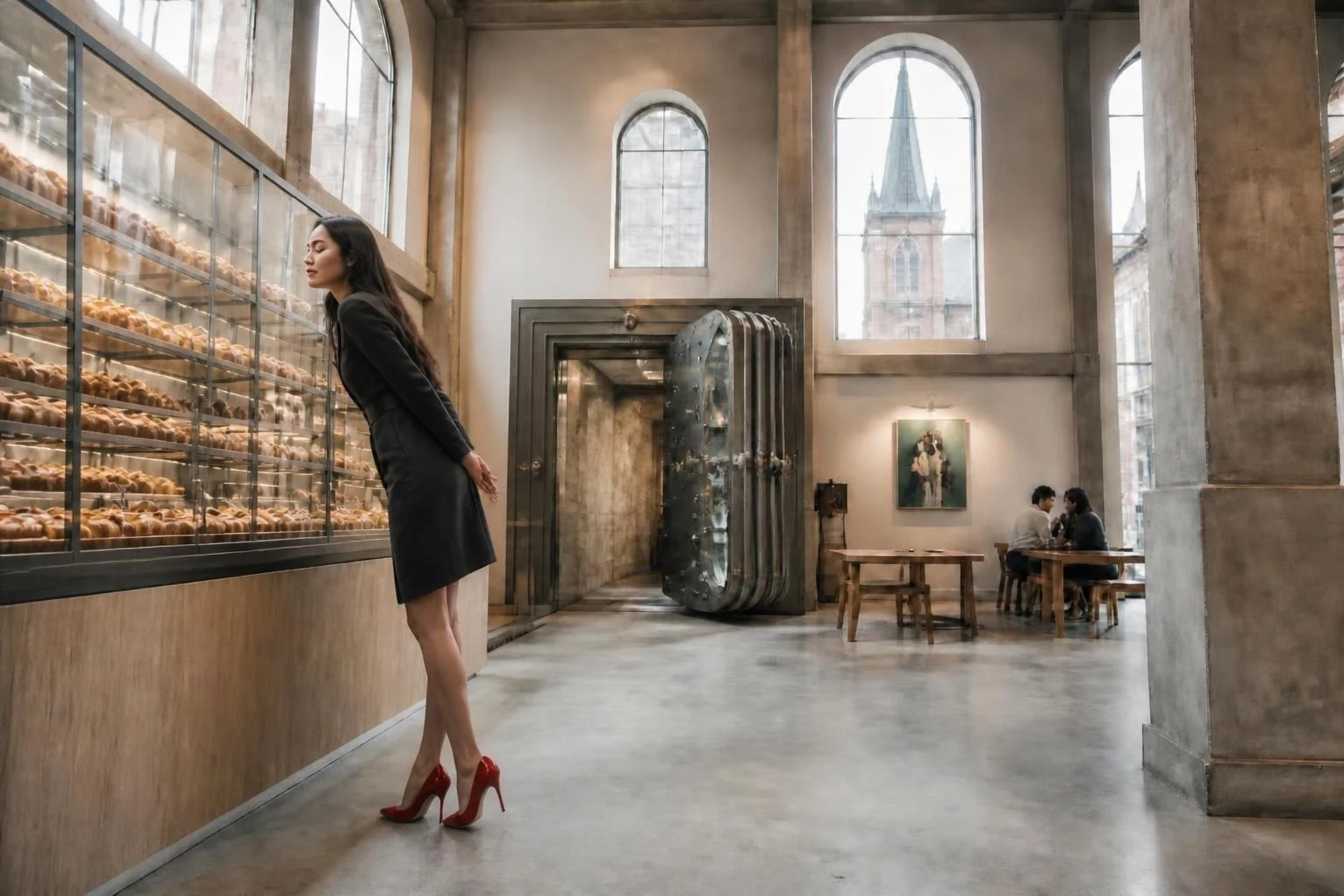
AI-generated concept illustration, speculative: an imagined Onion interior in a converted bank hall, with a bread counter, an open vault door and the cathedral spire in the arched windows.
In the typology used here, a Myeongdong Onion of this kind would be an adaptive-reuse interface laid over a luxury and tourist-consumption district, with a gallery on top. If the forecast holds, the AI images above will prove uncomfortably close to the real thing. If it fails, the miss shows what the formula cannot predict.
Time Out's error was not a factual one. The hanok alleys exist, the tent bars exist, and the late-night dining boom is real. The error was logical, and it came from distance. A ranking of neighborhoods assumes that every entry is a unit with one name and one story, and that an outside reader can locate the unit on a map. In a place where several stories run over the same ground, that assumption fails without any visible sign of failure, and the most legible fixed object, a subway station, fills the gap. A writer who knew Ikseon-dong, Seosulla-gil and the tent strip as three separate social places would not have merged them under a transit label. A writer who knew them only as a shared visual brand, the look that circulates on screens, would. The label therefore marks the edge of the writer's knowledge. It shows what the ranking could not see: the layer of interfaces that makes the place work, and the boundaries that residents and regulars actually use. Onion shows the alternative method. It reads what a place already is, keeps it, and designs the overlap in the open.
The stakes extend past one list. Korea is increasingly met through intermediaries that compress it into nameable, rankable, generatable units: listicles, algorithmic feeds, and now image generators that can reproduce a place's look from the names of its ingredients, as the Onion experiment above shows. Each rewards the version of a place that is easiest to label, and none requires knowing the place. Where interface types stack tightly enough to form singularities, as they do across much of Seoul and arguably across Korea as a whole, labels fail first, and the cost of a wrong label can fall on the people and businesses inside the seam, who may find the district renamed, re-priced and re-crowded around a story that was never theirs. Understanding such places calls for the slower method set out at the start of this piece: take the name people actually use, push on the space, and map what pushes back. Without that, the most photographed neighborhoods will keep being named for the nearest thing a visitor can find on a map. A seam can be named from a distance. But the actually real, lived-in social space of a Korean neighborhood can only be understood by stepping inside the social logic that defines it — not by naming the closest subway stop.
References / Further Reading
Bu, Bing. 2024. "Emerging Urban Interfaces: From Euljiro to Shibuya." Syracuse University School of Architecture, ARC 500 studio.
Dovey, Kim, and Stephen Wood. 2015. "Public/Private Urban Interfaces: Type, Adaptation, Assemblage." Journal of Urbanism 8(1).
Garfinkel, Harold. 1967. Studies in Ethnomethodology. Prentice-Hall.
Hurt, Michael. 2018. "The Korean Style: The Medium and Message of Korean Fashion." The Korea Times, November 3. https://www.koreatimes.co.kr/opinion/20181103/the-korean-style-the-medium-and-message-of-korean-fashion
Morton, Timothy. 2013. Hyperobjects. University of Minnesota Press.
Roberts, Allen F., and Mary Nooter Roberts. 2007. "Mystical Graffiti and the Refabulation of Dakar." Africa Today 54(2).
Time Out. 2026. "The 40 Coolest Neighbourhoods in the World in 2026." September 16. https://www.timeout.com/travel/coolest-neighbourhoods-in-the-world-2026
CNN. 2026. "'World's Coolest' Neighborhood for 2026 Named by Time Out." September 16. https://www.cnn.com/2026/09/16/travel/worlds-coolest-neighborhood-2026-time-out