Fashion Fictorial: “The Photographs Remain”
THE PHOTOGRAPHS REMAIN
The thing about being an iljin is knowing exactly when the world isn't watching. Sio had learned this by her second year—the precise rhythms of institutional negligence, the gaps in adult surveillance where a girl could slip through like smoke. The ten-minute break after third period meant the vice principal was in his office preparing for the next meeting, the teachers were gathering materials for their next class rotation, and the security guard was absorbed in his phone, watching highlights from last night's baseball game.
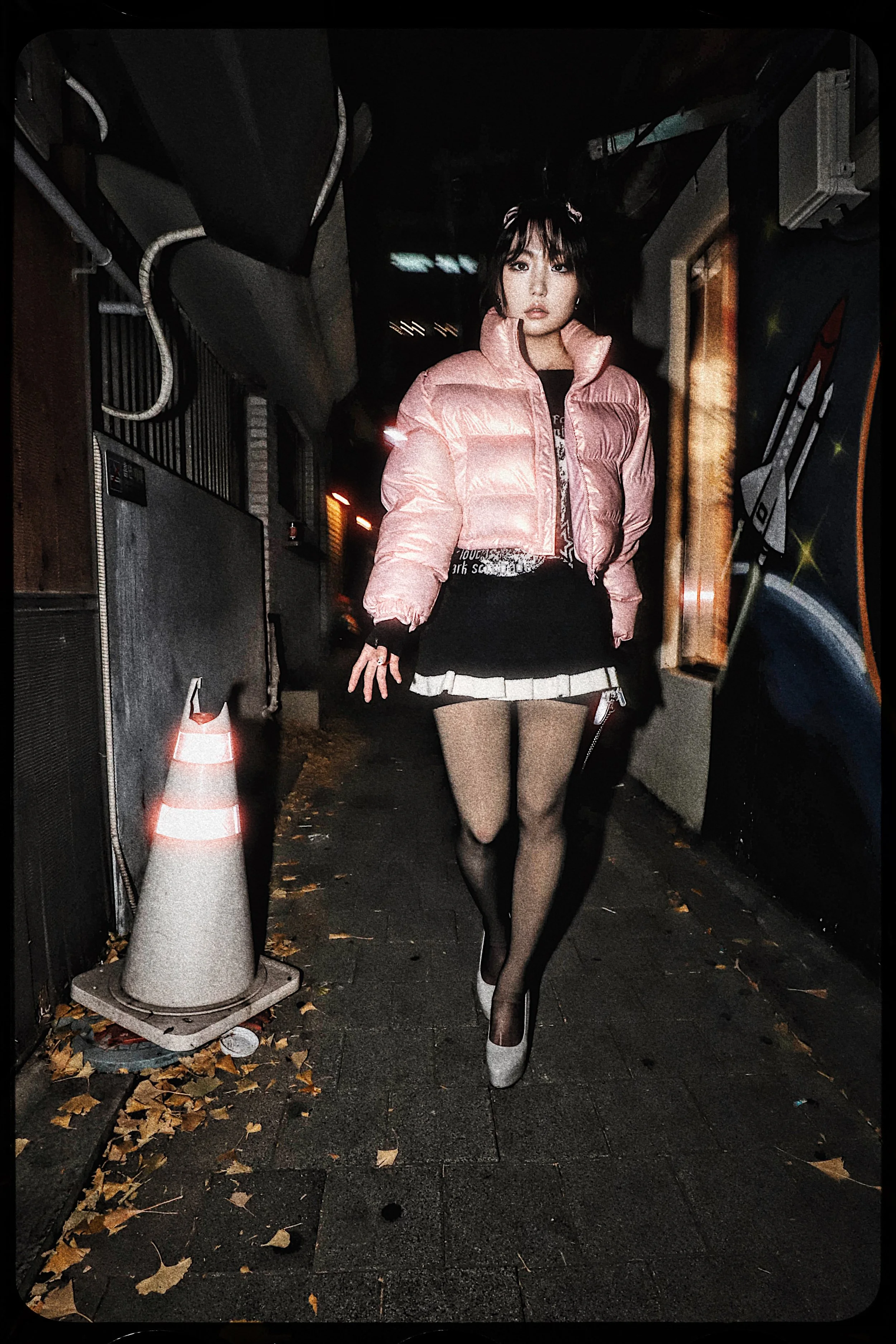
She had left during the break after third period, when no one tracked where anyone went.
The pink puffer was this season's tell—crop-length, hitting right at the waist, part of the half-padding (하프패딩) revolution that had quietly replaced Korea's long-padding dominance. The era of knee-length black padded coats sweeping every Seoul street had peaked in 2018 and crashed by 2019, but nobody wanted to admit it died because nothing else kept you warm enough during Korean winter. So the market compromised: shorter, hitting the hips or higher, maintaining the puffy volume but giving back mobility. The technical fabrics got better—nano-yarn structures, Mulard down filling, hybrid insulation—so brands could claim they were innovating materials rather than admitting the silhouette itself was being curtailed, both literally and figuratively. Her pink one was distinctly cropped, the kind of length that said she understood what was happening in Korean street fashion right now, that she knew the difference between last season and this season, that she paid attention to what was moving through Hongdae and Geondae even if she was supposed to be in class.
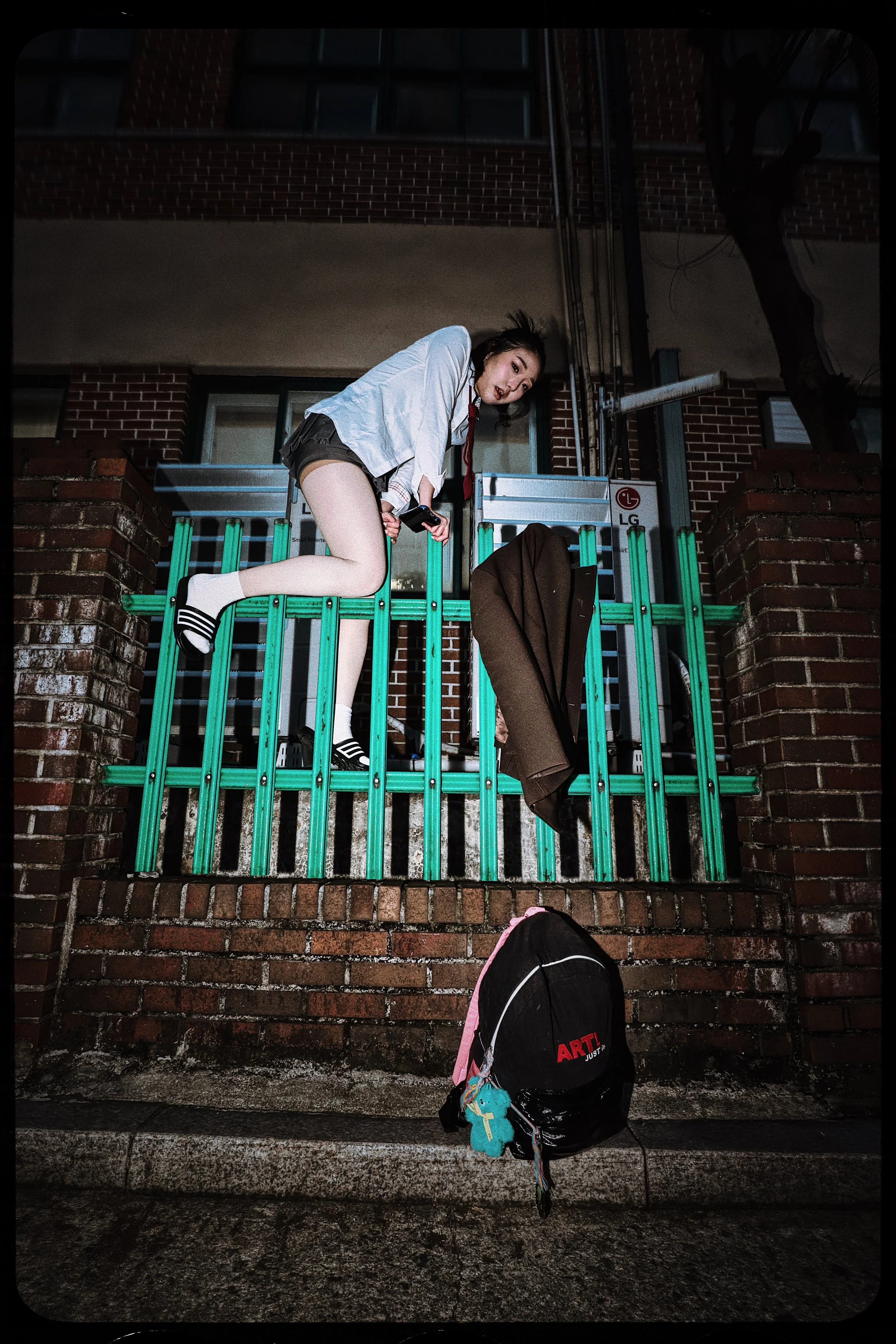
The gate was easier to climb than explaining why she needed to.
She'd told her homeroom teacher she had really bad menstrual cramps—생리통—and needed to go to the nurse's office. The words alone were enough to make him wave her away without questions, without asking for details, without offering to call anyone. This was the genius of it: the excuse that made men uncomfortable enough to stop investigating, that bought you hours instead of minutes, that no one would follow up on because acknowledging it meant acknowledging bodies that schools pretended didn't exist. By the time fourth period attendance happened and someone noticed she hadn't returned, she'd already be changed and gone. The uniform stayed in her bag like evidence of a crime she hadn't committed yet.
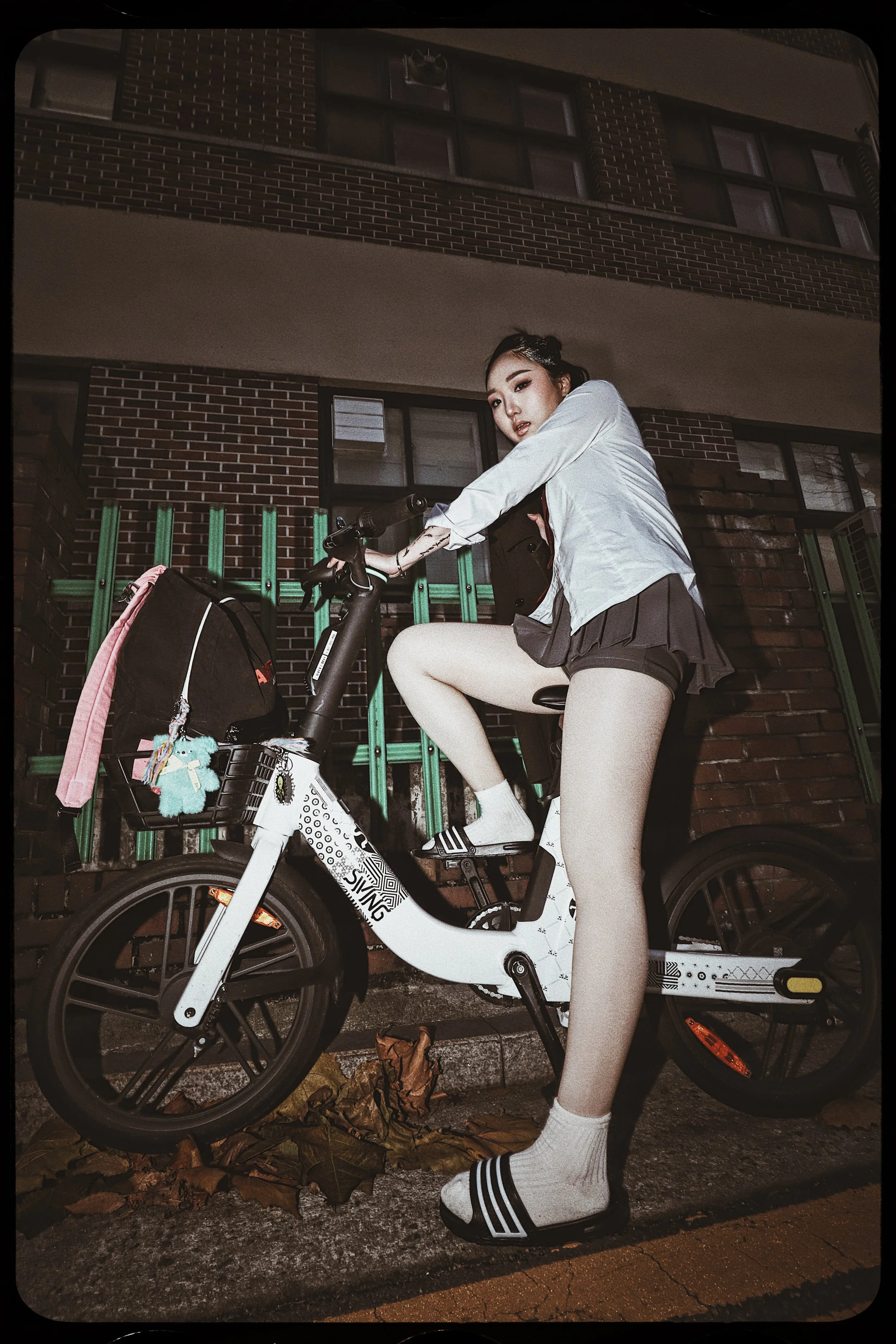
The bike wasn't hers, but neither was the morning.
Freedom, she'd discovered, had a particular flavor in Seoul—it tasted like convenience store coffee and the exhaust from delivery scooters, smelled like someone else's laundry drying on a balcony you'd never see again. The electric bike belonged to the chicken restaurant on the corner, the one where the owner's son had dropped out last year and now spent his afternoons smoking on the back steps, radiating the specific resignation of someone who'd stopped fighting predetermined futures.
She'd borrowed it the way iljin borrowed things—with a silent contract that everyone understood but nobody acknowledged. She'd return it eventually. Probably. The morning stretched ahead of her like an unwritten exam, all that blank space where answers should be. She rode past the hagwons where her classmates were already imprisoned for the evening shift, their futures being secured one English vocabulary list at a time. Past the shuttered shops and the grandmothers sweeping storefronts and the salarymen who didn't even glance at her because in daylight, without the school uniform, she was invisible.
There was a particular architecture to rebellion—you had to find the places where the city's infrastructure assumed compliance, where the designers never imagined someone would simply refuse. The turquoise gate was exactly that kind of place, ornamental and functional, meant to keep people in or out depending on which side of it you were born. But iljin didn't believe in sides. They believed in leverage points and upper body strength and the kind of casual trespassing that looked like confidence if you didn't overthink it.
From up here, she could see into the residential courtyard that the gate was meant to protect, all those private domesticities laid out like evidence. Laundry. Potted plants. A bicycle someone forgot to lock. The ordinary debris of people who followed rules because they'd never questioned whether the rules followed them back. Her backpack hung from one hand, heavy with everything she'd need for a day that didn't belong to anyone's schedule. The sun was bright and specific, the kind of Seoul daylight that made everything look like it was auditioning to be photographed.
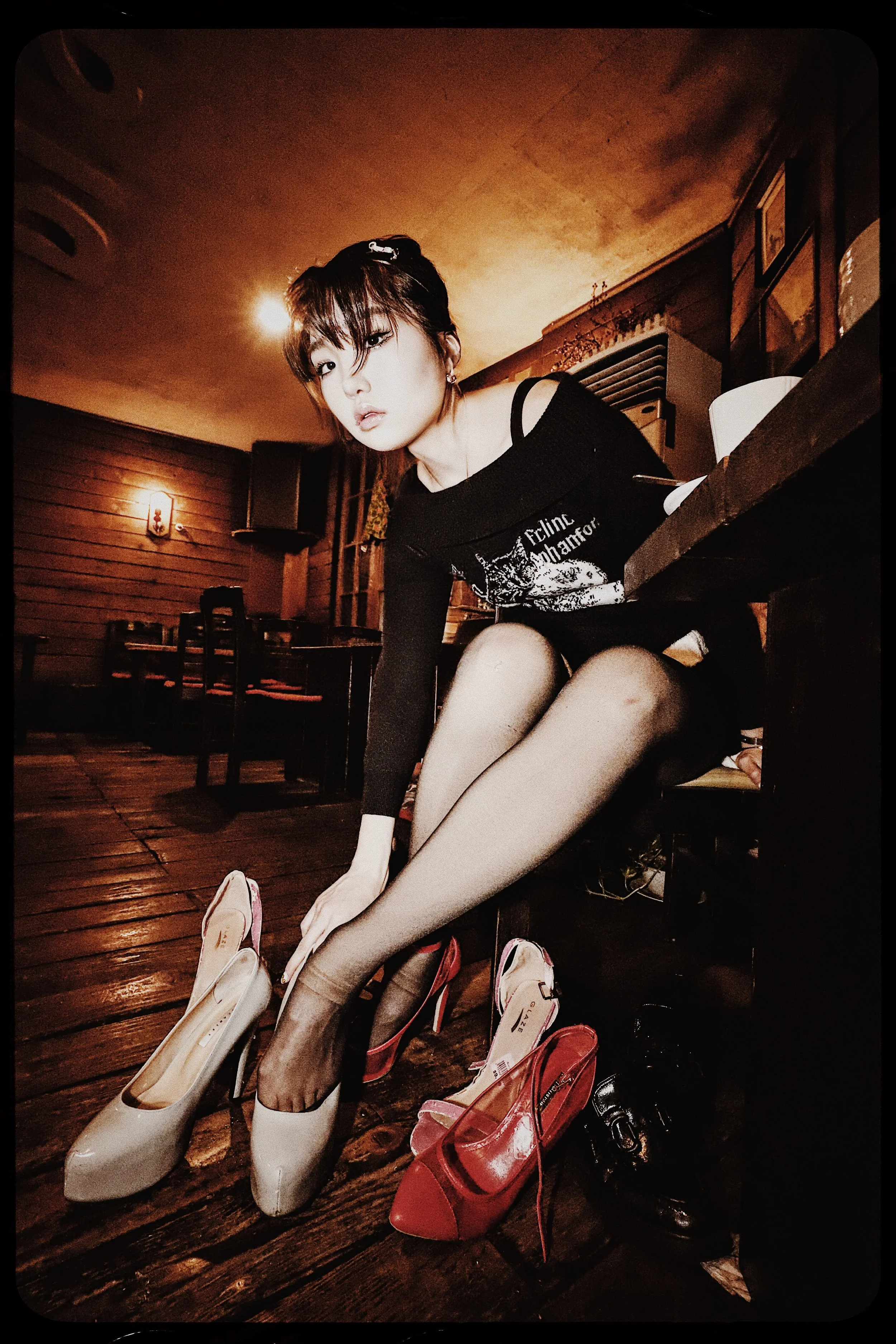
Costume changes are strategic. Since identity is modular.
Brahms is one of the oldest coffee shops in Seoul, operating continously since 1995. It’s a classic place to stop for a breath, especially since Sio knows the owner. She could spread out there and style herself and relax in peace. It was her form of meditation — her private temple where she could bask in the silence. This was one stage of her personal selfies party before she went to take a different, racier kind of picture. This was where she could easily meet her photographer oppa who had followed her forever on Insta, and who would buy the coffees and take nice pictures with his expensive camera. And who provided the best kind of easy, lauding audience. And who bought outfits and accessories. And who would quietly stand by as they cafe-hopped around Bukchon. But the classical look was only part of she wanted. Sio also wanted modern, “aesthetic,” and truly edgy.
KNOTTED was perfect for this. The new coffee shop in Anguk-dong, one of those "hot places" that had bloomed along with the post-COVID tourist return to Bukchon, three blocks from her school and right next to the photo selfie studio where girls queued up to document themselves against pastel backdrops. The bathroom was on the first floor, big enough to spread out, and nobody questioned why you needed fifteen minutes in there if you'd bought an iced americano. For ₩4,500, you got a personal staging area with a mirror and a lock and plausible deniability.
She'd spread her options across the floor like a stylist preparing for a shoot: the heels in cream and pink and red, each pair communicating a different story about who she might be today. The black hoodie with "Feline Behavior" printed across the chest—ironic, feral, the kind of slogan that worked because it didn't try too hard. The school uniform was in her bag, wrinkled but ready. The pink puffer for later, for whatever came after the thing she was doing now. The white blazer was already on, the one that made her look like she had places to be, people who expected her.
This was the part nobody talked about when they discussed iljin girls: the labor of it. The planning. How you had to be three different people in one day, each costume carefully calculated for its specific audience and purpose. She chose the cream heels. Not the pink—too obvious, too cute. Not the red—too aggressive, too clear about its intentions. The cream ones said sophistication without trying, said she knew what she was doing even if she didn't. In the mirror, she practiced the face she'd need: detached but not cold, available but not desperate, interested but not invested. The face every Korean girl learned by her teens, the one that said you existed at exactly the right distance from whatever was happening.
The skirt was its own story—regulation length if you measured from the original waistband, but she'd rolled it three times before leaving this morning, each fold shaving off centimeters until it barely covered anything. This was standard iljin mathematics: the school issued skirts that theoretically reached mid-thigh, but every girl knew the actual length was negotiable, determined by how many times you rolled the waistband and how brave you were about getting caught. The really short ones—the kind she was wearing now—came with their own insurance policy: safety shorts (안전 팬츠) built into the design, a second layer of modesty that let you go shorter than modesty should allow. You could see them if you looked, if the skirt rode up or if she sat wrong, those little glimpses of the under-layer that said this wasn't accidental exposure but calculated risk. Korean school uniform designers had figured out how to make the super-mini skirt socially acceptable by building in the coverage that let girls push boundaries while technically maintaining propriety. The safety shorts were permission to be racy while claiming you were being safe, to show leg while pretending you weren't showing anything, to occupy that space between modest and immodest that iljin girls had mastered.
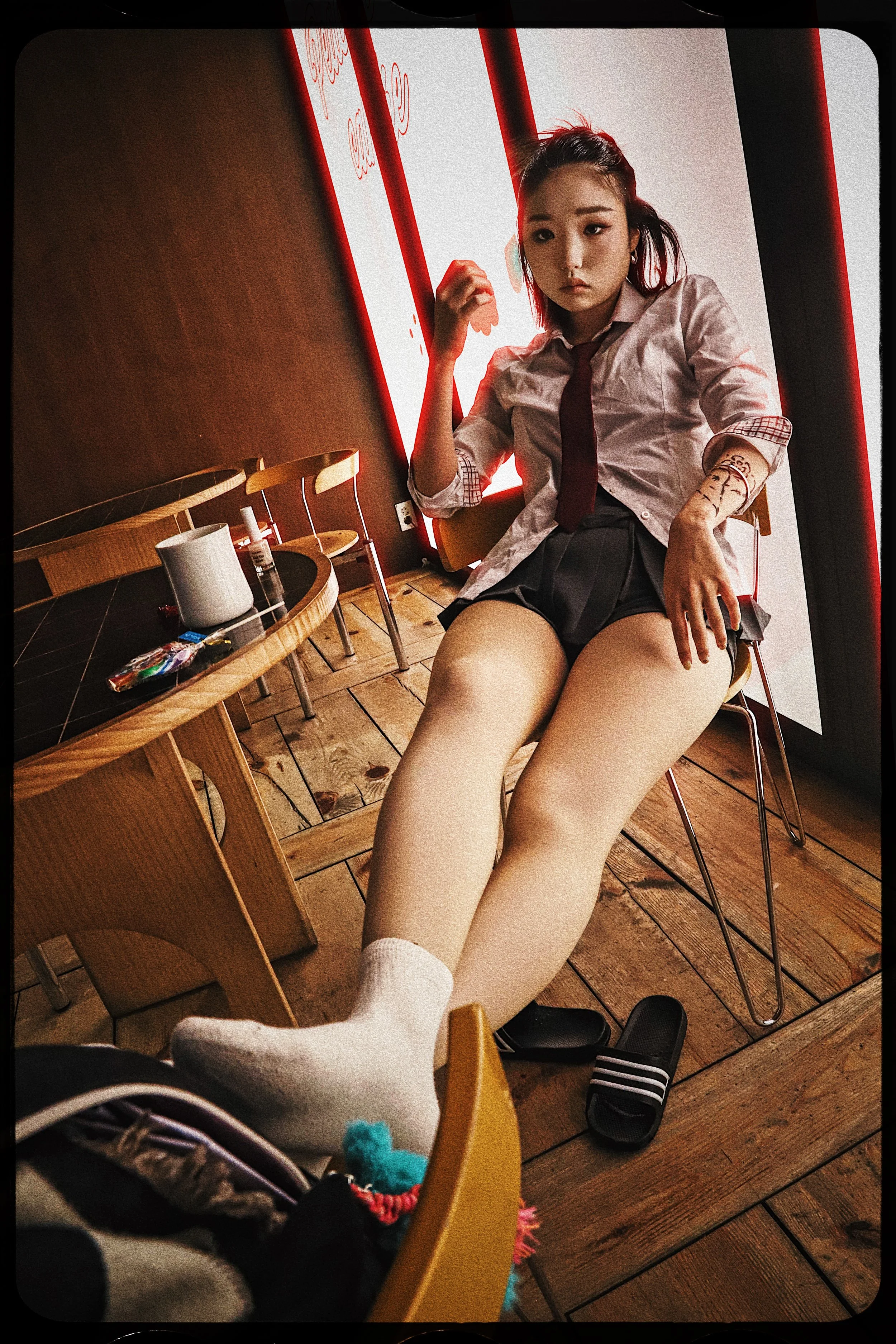
At the wall, the lollipop still on the table, still in the wrapper. This was the moment before the performance began.
She'd claimed the spot by the big KNOTTED panels, the ones next to where everyone shot. The red-framed light panels on the wall reflected lit her up like a supermodel under a softbox, lighting up her school uniform, tie loose, skirt short, looking like she might be skipping class or might be on her way to it. The wooden floor was perfect, worn but clean, the kind of surface that read as authentic in photos. Her iced americano sat on the small yellow table, condensation pooling on the wood. The lollipop waited next to it, still wrapped, a prop she'd deploy in the next setup.
This was the staging moment, the breath between ideas. Coffee paid for and her nails freshly painted, she sat with her legs extended, white school socks pulled up, cheap “samdidas” slides from the local CU convenience store kicked off to the side, along with the slippers she'd worn from the bathroom. Her backpack slumped against in the chair, full of all the other costumes, the other versions of herself she'd need later. Behind her, KNOTTED continued its business—other customers at other tables, pretending not to watch this schoolgirl claim prime real estate on the floor for her photo shoot.
Her white socks were tight athletic cotton, properly pulled up—not the trendy wrinkle socks (주름 양말, jureum yangmal) that came and went in cycles since around 2021, but the clean white choice that never quite disappeared from Korean feet. White was the most Korean option, the one that connected back through centuries of sock culture, even if nobody consciously knew it anymore. The lineage ran clear: white beoseon in the Joseon Dynasty, white athletic socks during rapid industrialization, white everything because white meant clean, meant fresh, meant you maintained standards even when Seoul's streets worked against you and even 30 minustes spent outside meant anything white would become a shade of gray. White socks showed every mark, every scuff, required constant washing—but that was the point. Choosing white over black or navy was choosing to signal that you cared, that cleanliness mattered, that you'd put in the work to keep them pristine. The visual prominence helped too—white against black Adidas slides created maximum contrast, made the socks themselves a statement rather than something that disappeared into the footwear. Most Korean girls wearing white socks didn't think about traditional beoseon or cultural continuity; they just knew white looked right, felt Korean, matched the aesthetic of clean youth and deliberate presentation. This was cultural pattern persistence operating below conscious fashion rationalization, transmitted through what looked cool rather than what anybody could explain.
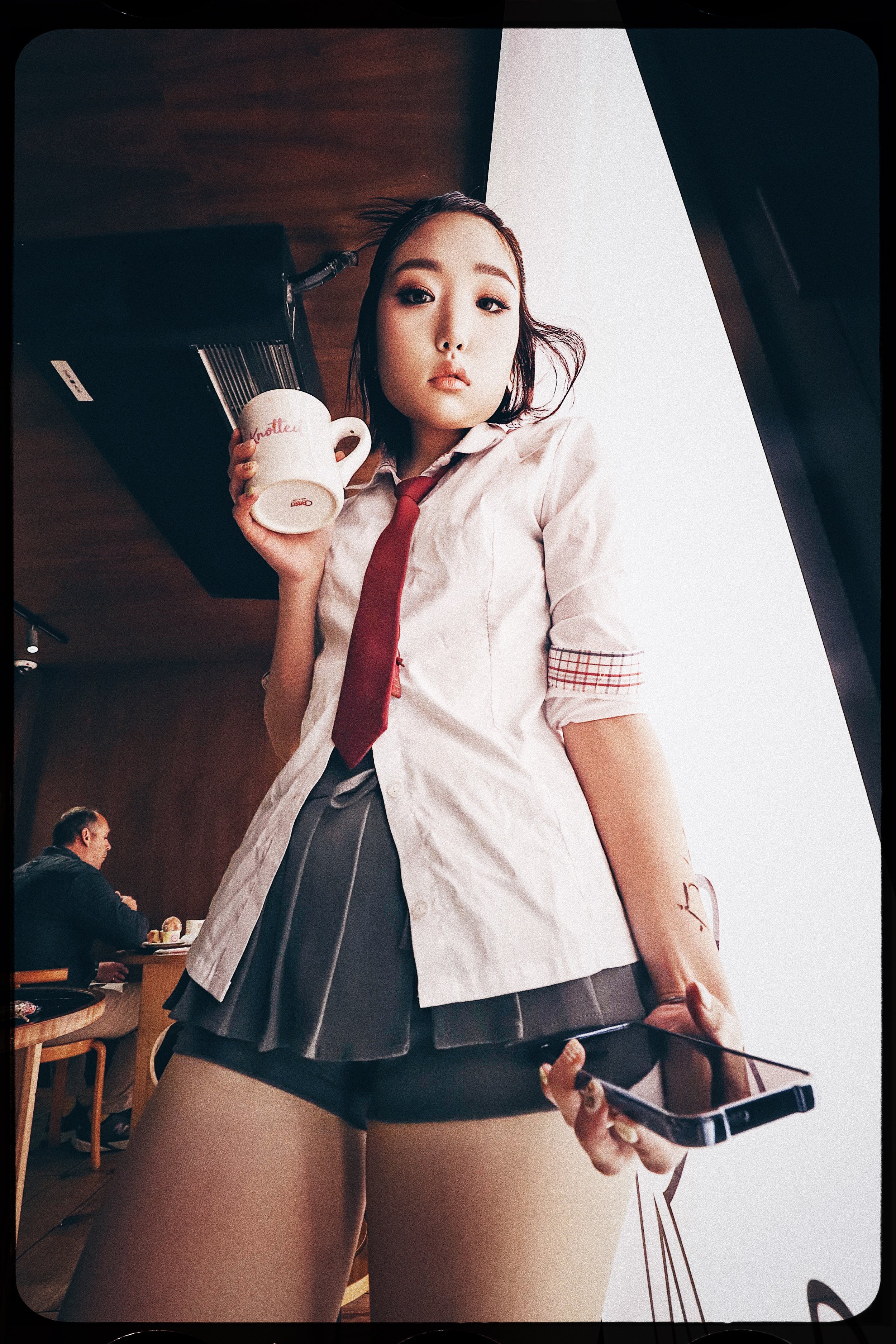
Sio feigned not noticing the guy who set up at the table behind her acting like he wasn’t noticing her not noticing him looking.
She went to the panels and checked the light. Checked her phone. Scrolled through her Instagram feed to see what poses were working this week, which angles the algorithm was rewarding. The wall glowed behind her, that specific Korean cafe aesthetic that signaled taste, youth, disposable income, free time. This was the shot, her actual school uniform, objectified object that it was, the “costume”: schoolgirl at an expensive cafe above her station, casual, doing her nails, self-consciously feigning obliviousness at all the attention she was attracting around her, hinting at the chaos to come. She held up her phone, caught her reflection in the mirror, adjusted her hair. The lollipop could wait. First, she needed to establish the space, show she belonged here, prove she knew how to work this particular stage.
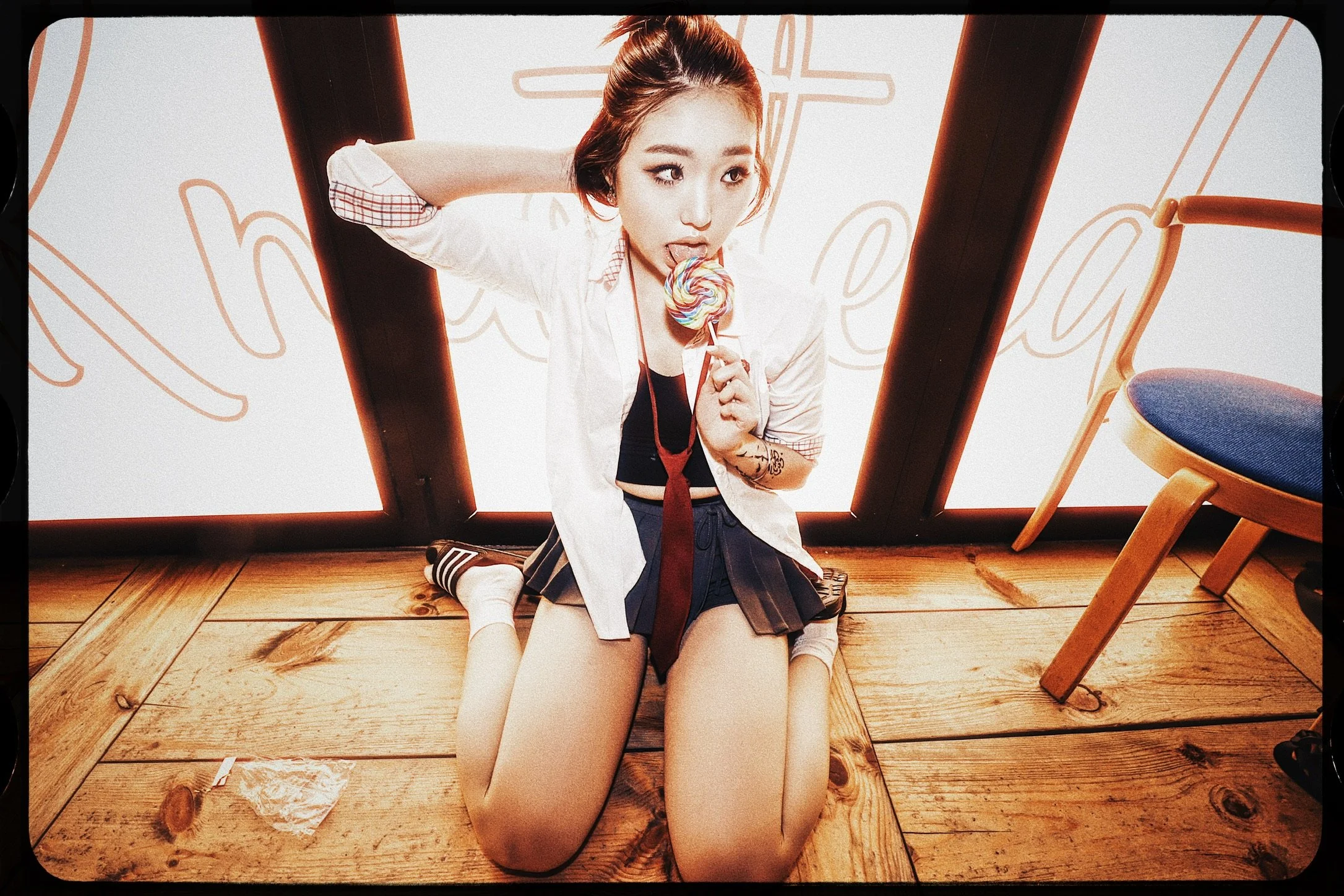
She sat wariza on the cafe floor—legs folded beneath her in that specifically feminine geometry, lollipop positioned just so.
Then she got down. That was the move—from sitting at the table like a normal customer to sprawling on the floor like she owned it. She unwrapped the lollipop, positioned it between her fingers, let the white blazer fall open just enough. The main floor of KNOTTED had that wall—the one everyone knew about, the one that had made it famous on Instagram in the first place. The light emanated from the panels at exactly the right angle and amount, wide surface area that made it soft and flattering, the kind of light that made everyone look like they were in a commercial for their own life.
This was why she'd come: not for the coffee, but for the wall, for the floor, for the fifteen minutes of photo time that oppa’s ₩4,500 bought you. She'd grabbed her iced americano, found the spot everyone used—right by that window, where the light hit—and now she was shooting the real content.
She sat wariza—割座, the characters meaning "split" and "sit." Her legs folded in that W-shape that only girls seemed able to hold comfortably, buttocks on the floor with legs bent backwards on each side. The Japanese called it "girl's sitting" (女の子座り) for a reason. It was all over Korean Instagram, that specific configuration of femininity and flexibility (even though she couldn’t quite get her leg foot all the way out to the side, as not all girls are THAT flexible), cute enough to be innocent, suggestive enough to hold attention. The lollipop held just so, sweet and sticky and deliberately positioned.
This was the performance iljin girls had perfected: the weaponization of innocence, the deployment of cute as a form of warfare. Wariza occupied that perfect ambiguous space—not quite sexual, not quite innocent, impossible to call out without sounding like you were the one with the dirty mind. KBS had banned K-pop idols from spreading their legs while sitting on stage, but this? This was just how girls sat. It was just a comfortable position. Just a personal choice. She knew exactly what the image looked like—could see herself through the eyes that would eventually see the photo, could feel the specific discomfort it would create in adults who couldn't quite articulate why a Korean schoolgirl with a lollipop sitting wariza made them uneasy.
The cafe owner watched her from behind the counter, unable to decide if she was a customer or a problem. The couple at the corner table had stopped their conversation to look, then looked away when she looked back. This was the game: pushing just far enough that people noticed but not far enough that anyone could name exactly what rule was being broken. The lollipop traced a slow circle in the air. She knew the power of ambiguity, the space between cute and sexual where Korean schoolgirls learned to live.
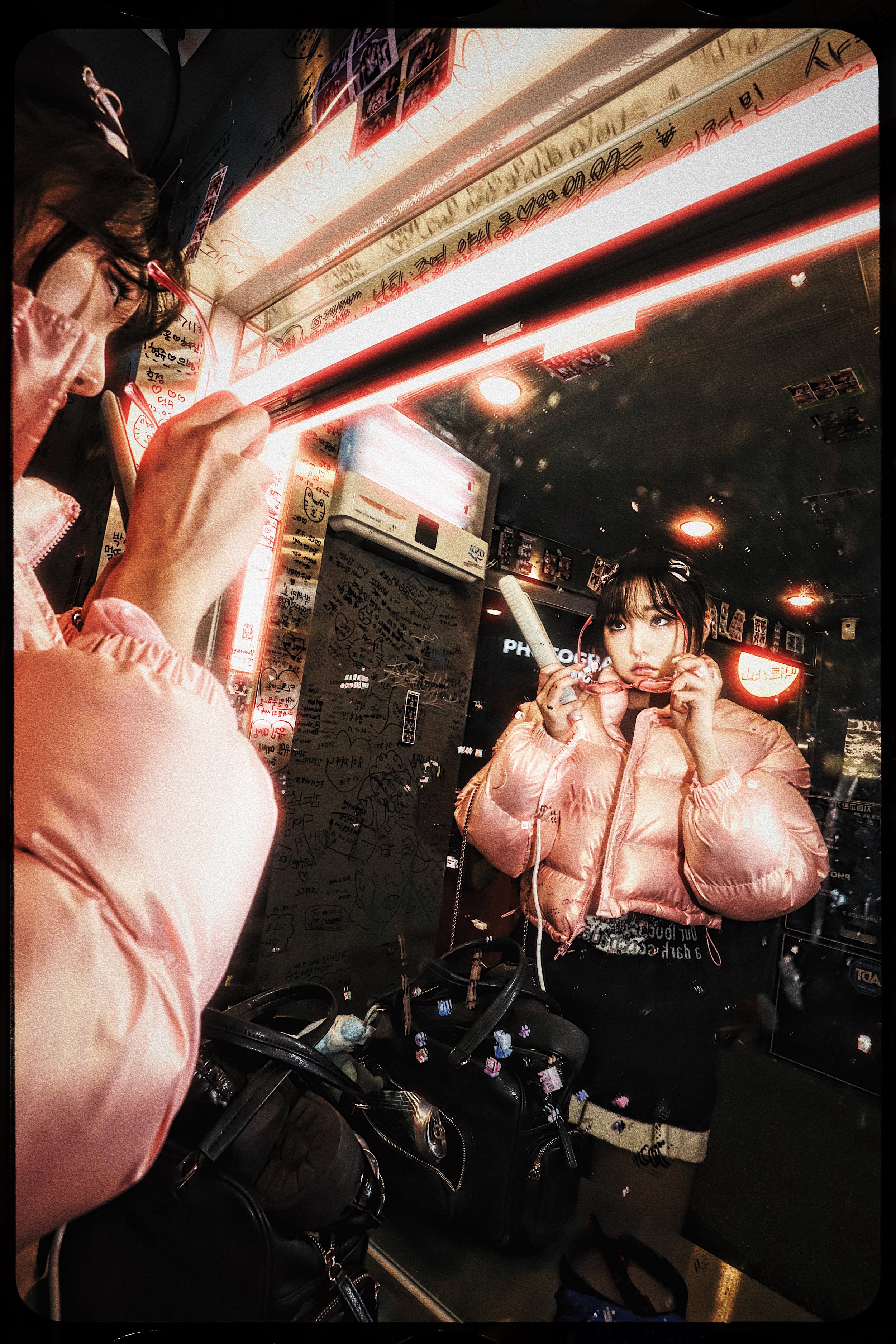
The photobooth knew all her secrets. The stickers never lied and the mirrors see everything.
She'd changed back into the pink puffer in the bathroom, the white blazer folded carefully into her bag like evidence that needed to be hidden. She loved all the on-the-go, bathroom chnages, which a few really popular coffee shops in Seoul were starting to crack down on and ban, since some online shopping malls would muck up access to the bathrooms with constant clothing changes. To Sio, this felt somewhat forbidden, almost like being a secret agent.
The photo selfie studio was right next door to KNOTTED—that was the whole point of this location, the reason Anguk-dong had become a hot place. The entire block was engineered for self-documentation: coffee shop with the perfect light, then photobooth, then the hanok cafes where tourists lined up to pretend they'd discovered authentic Korea.
The mirror caught her mid-pose, and she caught herself catching herself, the infinite regress of self-documentation that defined her generation. She held up the twin tails of her hair, made a face that was cute but not trying too hard, sexy but deniable. The machine would capture her in strips of four, each image a different claim about who she was: the good girl, the bad girl, the girl who was neither and both, the girl who was still deciding.
This was the actual expedition. Not the cafe, not the escape from school—this. The accumulation of images that would prove she existed, that she'd been here, that she'd tried on these different selves and documented the trying. The booth flashed white, capturing her mid-transformation, the pink jacket glowing under the artificial light like a beacon or a warning.
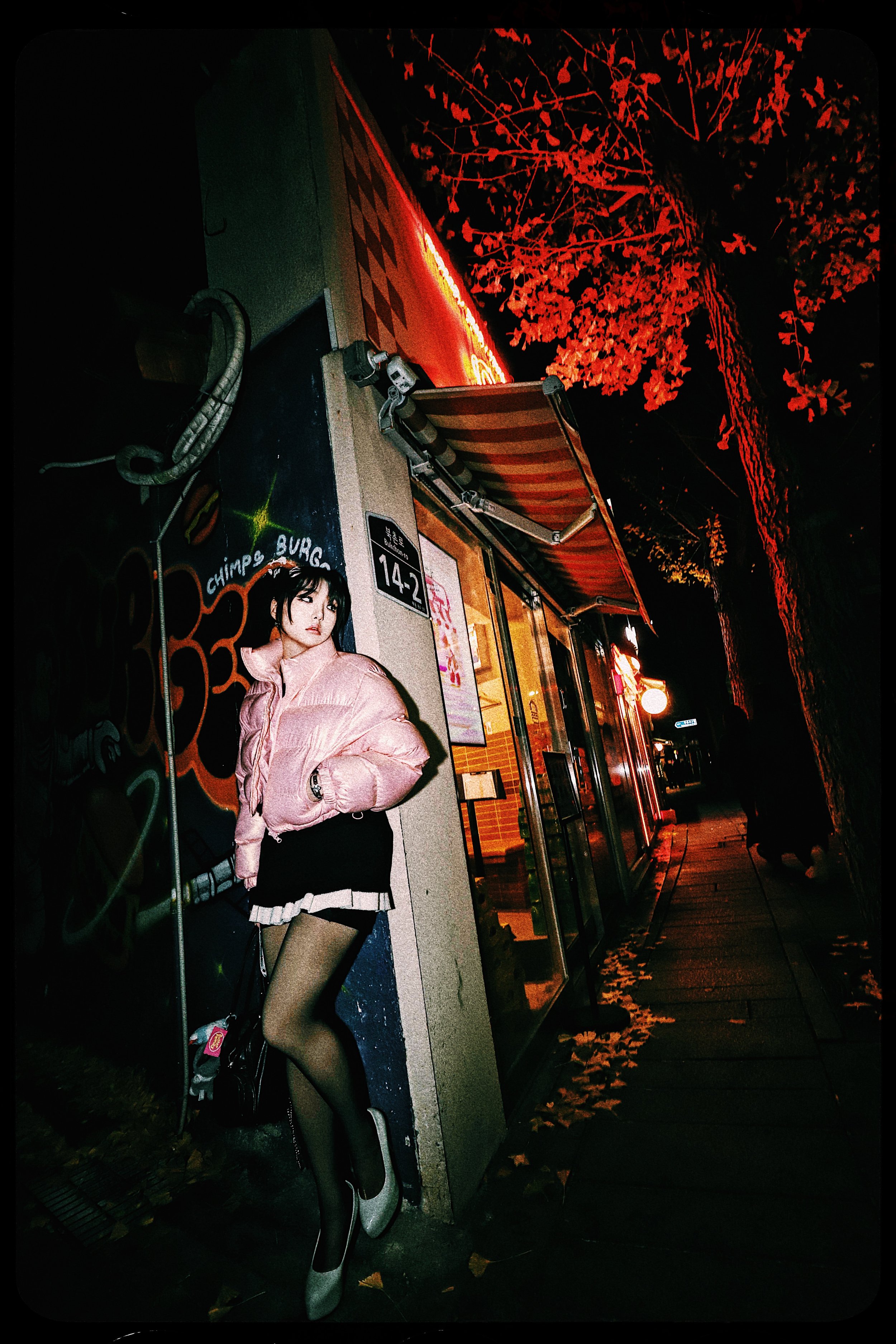
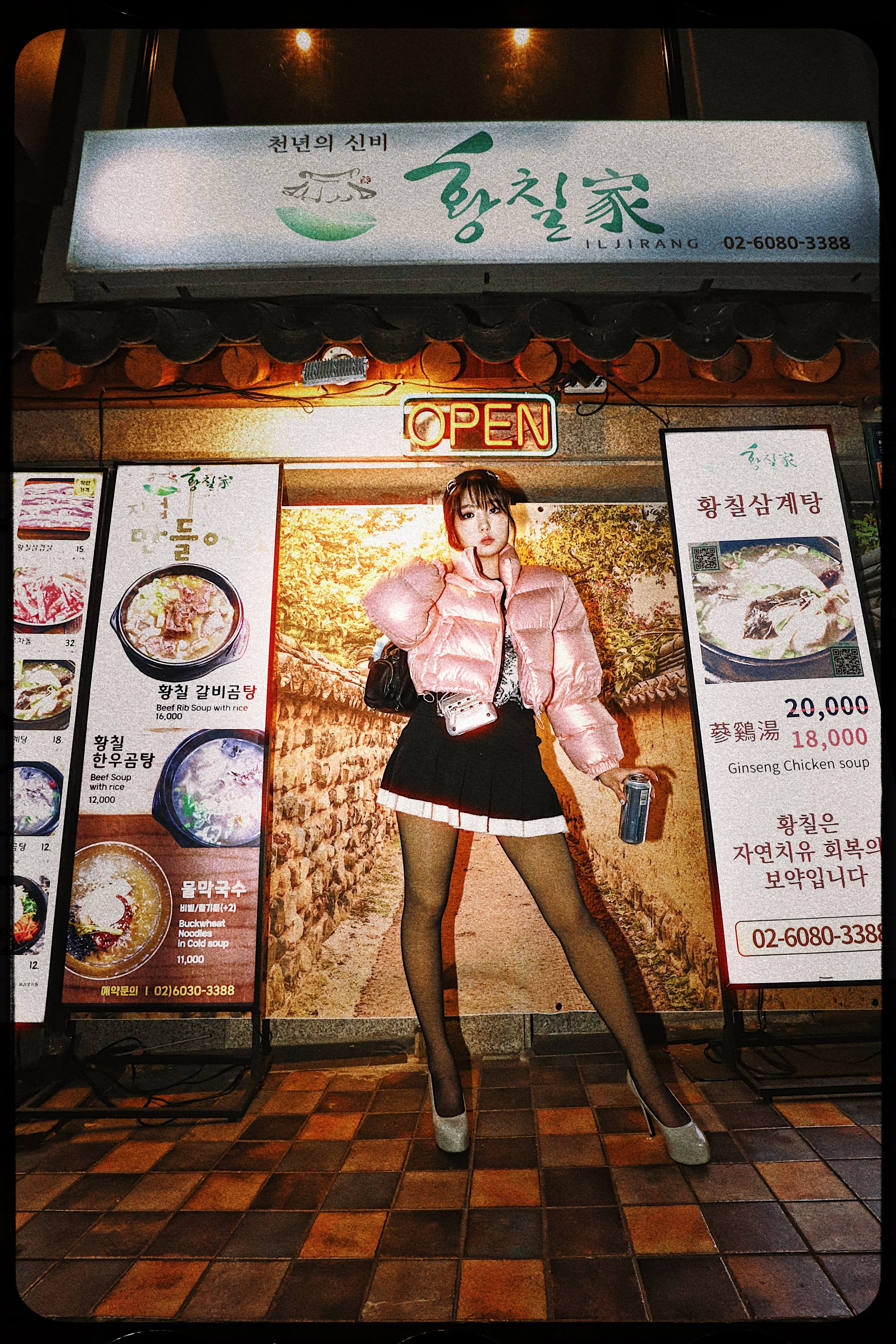
The night swallowed her whole, then spit her back out unchanged.
Caption:
By the time she stepped back into the street, the pink puffer felt like a costume she'd already outgrown. The light of the Chimps Burger glowed behind her, one of a thousand identical signs scattered across Seoul, each one marking a point on a map of teenage escape routes and late-night meals in hot places across the city. She'd hadn’t really been “out.” Or maybe she had—the details didn't matter as much as the possibility, the story she could tell later about where she'd been, who she'd seen, what had almost happened, through the pictures. On the ‘Gram.
The night was deeper now, thicker, the kind of dark that made everything feel both dangerous and safe simultaneously. She pulled the jacket tighter, felt the weight of her phone in her pocket, the photo evidence accumulating like alibis. Someone passed by without looking, then someone else, then a delivery driver on a scooter who glanced her way for half a second too long. She didn't flinch. This was the training: learning to exist in the male gaze without being consumed by it, moving through the night like she had every right to be there, like the streets belonged to her as much as they belonged to anyone.
But they didn't, of course. The streets belonged to men after dark, and girls like her were just borrowing them, just passing through on their way to somewhere they weren't supposed to be. She knew this. Had always known this. The pink jacket was armor and target simultaneously, making her visible and vulnerable at once. She took out her phone, pretended to text someone, performed having somewhere to be.
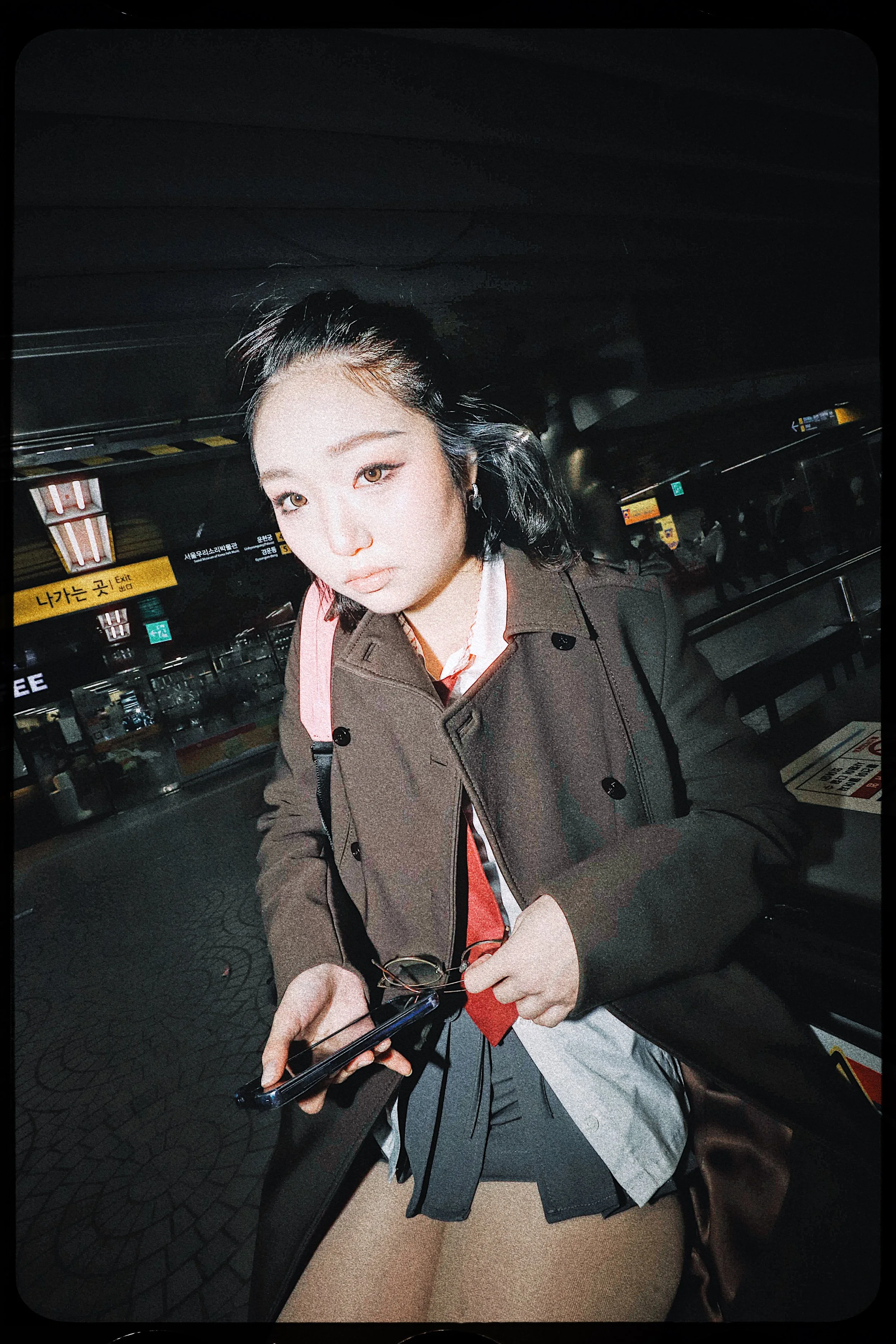
The subway was where good girls sometimes became statistics.
She'd changed again—when, exactly, didn't matter. The pink puffer was back in the bag, replaced by the brown coat and the uniform underneath, the skirt rolled three times at the waistband. Fold, roll, tuck—the way every iljin learned in their first year, each rotation shaving off centimeters of respectability, transforming regulation into provocation. The brown coat helped, made her look older, made her look like she might be in college or might be working or might be anything other than what she was: a high school girl who'd learned that attention was a currency she could spend before anyone taught her to calculate the interest.
The subway station at night was a different geometry than during the day. The same space that moved salarymen and students and grandmothers with shopping carts transformed after dark into a theater where different rules applied. The fluorescent lights were harsh and specific, illuminating everything and hiding nothing. She stood under the yellow "나가는 곳" sign—exit—and checked her phone, performing the universal gesture of having somewhere to be, someone waiting, a reason for existing in this liminal space.
The rolled skirt had ridden up enough that the safety shorts were visible now—not accidental, not wardrobe malfunction, but the built-in feature doing exactly what it was designed to do. This was the genius of Korean school uniform design: the shorts underneath meant she could sit like this, could pose like this, could occupy space like this without technically exposing anything that counted as exposure. But everyone knew they were there. Everyone could see them. And everyone understood what it meant that she'd rolled her skirt short enough that the insurance policy had become part of the outfit. The line between protected and provocative had become so thin it was barely a line at all—just a gradient of intentionality, a spectrum of calculated exposure where the safety shorts let her push further than she could without them. They weren't preventing anything; they were enabling everything.
But she didn't have anywhere to be. That was the thing. She was just occupying space, claiming territory, proving she could stand in a subway station in a skirt that short and survive it. The other passengers moved around her like water around a stone, their eyes finding her and sliding away, the men's gazes lasting just a fraction longer than the women's judgment. She felt both visible and invisible, powerful and vulnerable, exactly the contradiction that Iljin girls were trained to navigate.
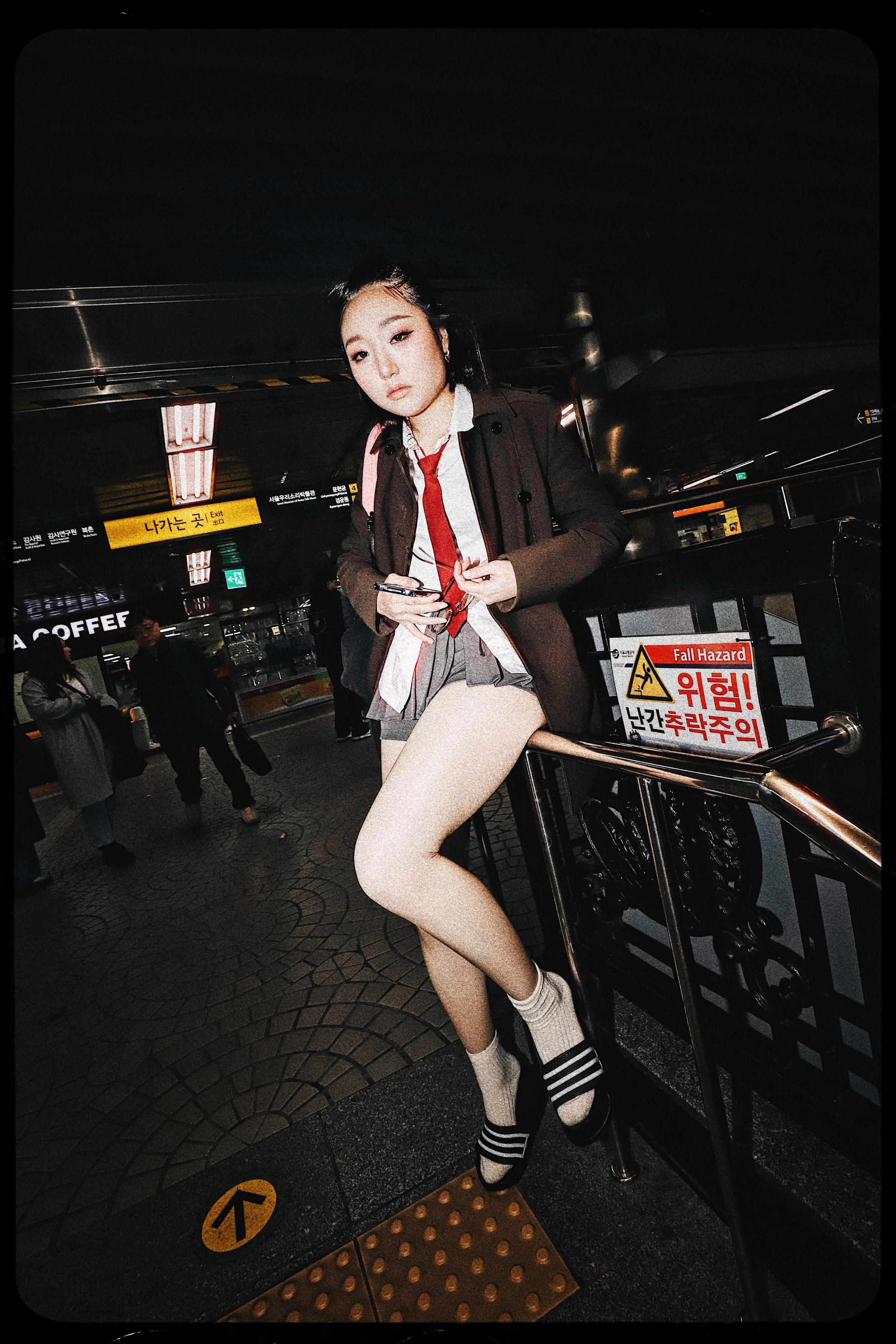
The warning sign said 위험—danger. She read it as invitation.
This was the part she wouldn't tell anyone about, couldn't explain even if she wanted to. The pleasure wasn't in the skirt itself, wasn't even in the attention, though both mattered. The pleasure was in the invitation of attention, in standing on the boundary between appropriate and inappropriate, in making people uncomfortable just by existing in a body that refused to apologize for taking up space.
She posed on the railing, one leg extended, the other necessarily hiked up, with her the cold metal of the railing a prodding reminder of just how much exposure she was slinging. The subway platform spread out behind her like a stage. The "Fall Hazard" sign glowed red and urgent in Korean and English, warning of the dangers of leaning too far, of losing balance, of falling. But falling required weight, and she felt weightless up here, suspended in the specific freedom of not caring what happened next, ho was looking.
This was what the adults didn't understand about iljin girls, what they couldn't see past their own fear and judgment: it wasn't about rebellion for rebellion's sake. It was about discovering that the rules they'd been taught to follow were arbitrary, that propriety was just a story someone decided to tell, that a body could be powerful precisely because it made people uncomfortable. She held her phone, took her own photo, documented herself documenting herself in this moment of deliberate transgression.
The rolled skirt was an act of translation—taking institutional fabric and making it speak a different language. Every centimeter she rolled was a sentence she rewrote, a rule she revised, a future she refused. And yes, she knew what it looked like. Knew the men on the platform were watching, knew some were aroused and some were disgusted and some were both. But their looking didn't own her. She'd learned the difference between being seen and being consumed, between visibility and vulnerability. Or maybe she hadn't learned it. Maybe she was still learning it, there on the railing, with the warning sign glowing red behind her as angry punctuation, warning of her inevitable fall.
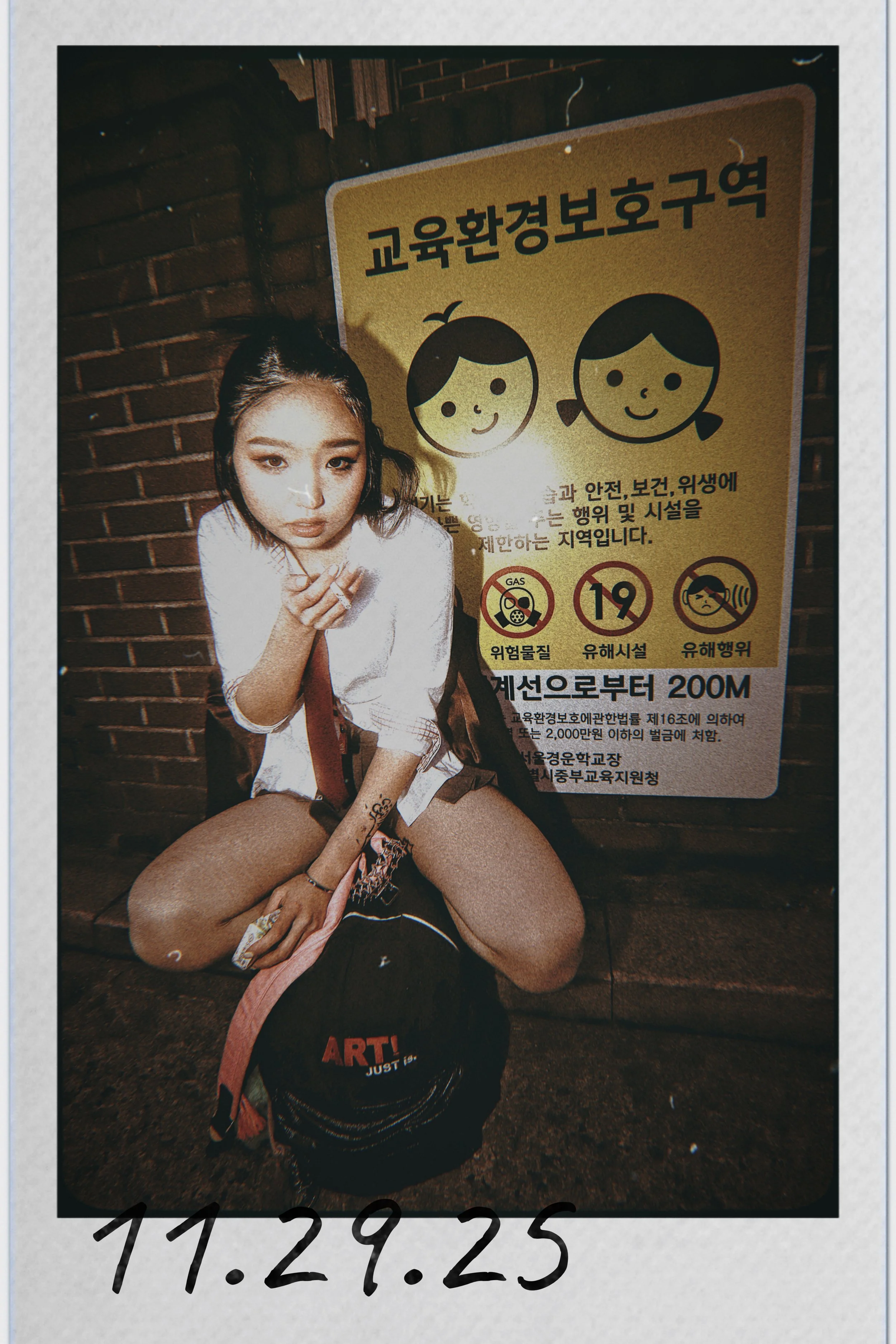
The sign warned about a school zone. The irony wasn't lost on her. This Fujipix “Polaroid” was her favorite picture of the day.
교육환경보호구역. School zone. “Protected educational environment.” The sign showed two smiling cartoon children holding hands, accompanied by a list of prohibited activities within 200 meters: smoking, drinking, loitering, being the wrong kind of person in the wrong kind of place. She crouched in front of it, close enough to violate at least three of the prohibitions by proximity alone, her backpack beside her like a co-conspirator.
The photo captured it accidentally—her crouching there, the institutional warning about protecting children from corruption hovering above her like a halo or an accusation, depending on interpretation. It was past dinner time. The school would have called her mother by now. Her mother would have looked at the phone, looked at the number, and let it ring on until ssomebody sent an SMS messsage because they'd had this conversation before, and what was the point of having it again? Some daughters were projects to be managed. Others were storms to be weathered. Sio had been upgraded to the latter category sometime during her first year, around the time she stopped pretending to care about university entrance rankings.
Night came the way it always did—inevitably, and with witnesses.
The streets transformed after dark, became honest about what they'd been pretending not to be during daylight hours. The restaurants opened their real faces, the ones that served soju instead of responsibility. The noraebangs lit up like small promises of temporary escape. The men on the sidewalks stopped pretending not to look, and the girls stopped pretending not to notice them looking.
She stood outside a pojangmacha where the steam and smoke blurred everything into suggestion, her uniform still on but transformed by context and hour into something that meant different things. The pink puffer was a provocation now, the short skirt an invitation to judgments she'd learned to wear like armor. This was the dangerous hour, when Iljin girls discovered whether they were brave or just desperate, whether freedom was worth its price tag, whether anyone actually cared enough to come looking.
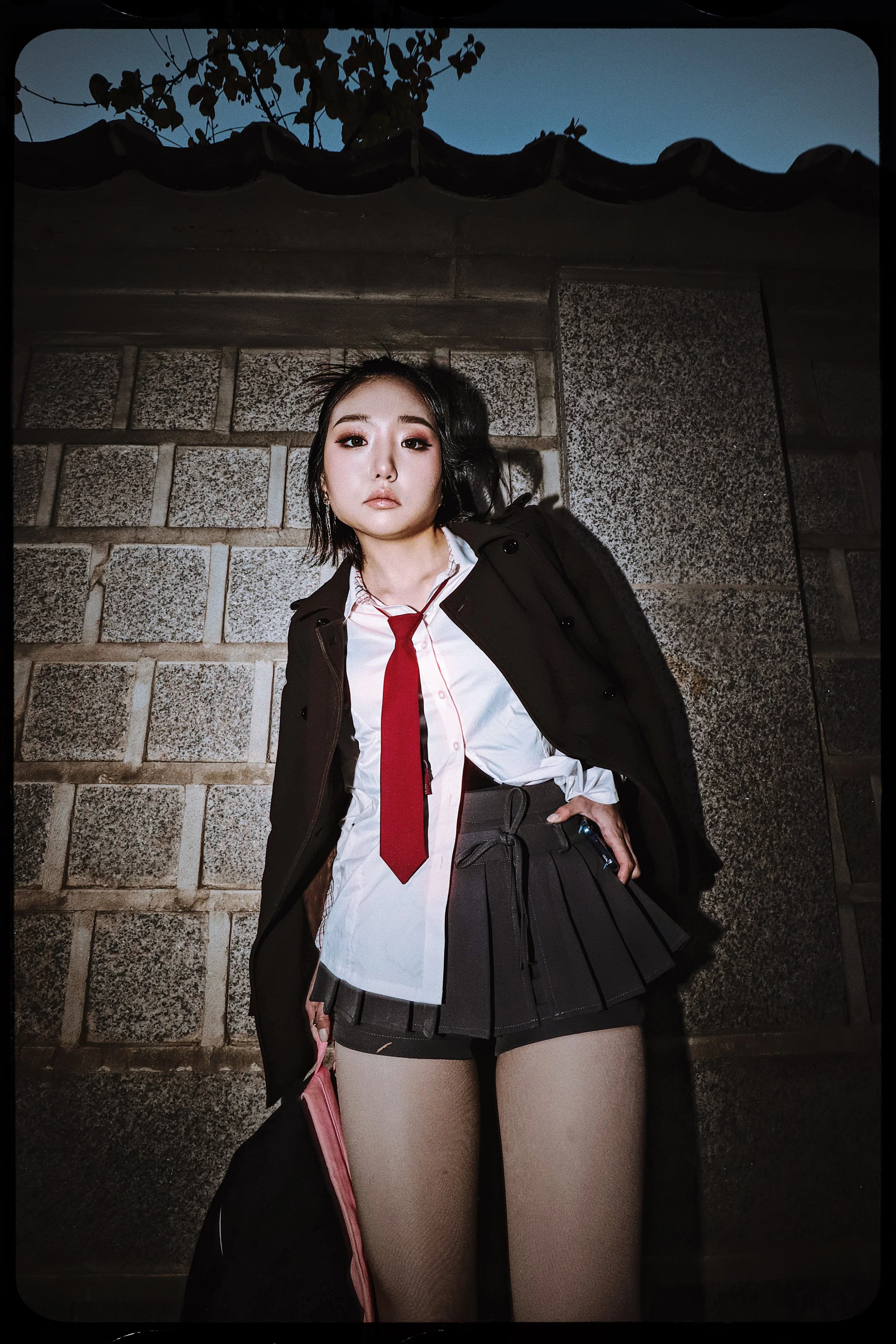
Her portrait, of sorts, was her other favorite shot of the day, taken at the gate where nothing ever changed, except everything already had.
The traditional Korean wall of the Unhyeongung Palace rose behind her like a verdict, all that granite permanence suggesting that some structures outlasted rebellion, that there were forces more stubborn than adolescent defiance. She'd put on the full uniform for this final shot—the blazer, the tie properly knotted, the pleated skirt at exactly the length that would pass inspection if anyone bothered to inspect.
This was the costume she'd return home in, the armor she'd wear back through her front door whenever she decided the day had ended. Her mother would be in the kitchen, pretending not to have been worried, preparing dinner as if Sio had just come home from school like always. They wouldn't discuss it. There was nothing to discuss. This was the ritual they performed: Sio running, her mother watching, both of them knowing she'd never get far enough to actually escape, but that the running itself was the point.
The pink bag hung from her shoulder, heavy with the other clothes, the evidence of her day in territories that weren't hers. Tomorrow she'd sit in class and copy notes and perform the choreography of compliance. But tonight, standing against stone that had witnessed generations of girls like her—girls who thought they were special, girls who thought they could rewrite the script—she allowed herself to believe that maybe she was different.
That maybe this time, she wouldn't go back.
She did, of course. She always did.
But the photographs remained.
FINITO
CREDITS:
Model/Actor: Sio @sio.0.show
Makeup Artist: Marcelarin Makeup @marcelarin_makeup
Anguk-dong Cafes:
Brahms:
Knotted, Anguk-dong: