So I just saw that HOPE (호프) in a Lotte Cinema near my home with a lively Korean audience. This is a spoiler-free review that will not relate plot points of any kind, but will simply give you some expectations to have, as well as a recommendation to whether to see it or not.
YES, you should see it. Like stop, drop what you’re doing, and go out and see that shit.
But First, a Note on Subtitling and Necessary Korean Skills
So first, the bad news. I'm not aware of many screenings with English subtitles. It's freshly opened here in Korea and nothing is really played here with English subtitling unless there's a specific reason. Now, English subtitles clearly exist, since this was shown at Cannes, which is where this film gained its initial buzz. I know this from a space my experience sitting in the editing booth for three straight days with Director Bong Joon Ho back when he was preparing The Host for release. With that film, they needed a fast, high-quality subtitling job for the Cannes premiere. It was one of the best little gigs I've ever done, something that I'm eternally grateful to my friend Darcy Paquet for sending my way. But surely subtitles exist. But you're not gonna see those for several months, until when this premieres in other markets, but I doubt very highly that a subtitled version will appear in the Korean market anytime soon. [addendum: There ARE a few screenings with English subs, which are here. Thanks to friends Matthew Nolan and Darcy Pacquet for alerting me to this link.]
That being said, the better news is that for those of you who are not native speakers of Korean, and are living in Korea, and are intrepid enough to be want to see this film before the rest of the world does, and can’t make one of the relatively few English subtitled screenings, you can see it anywhere at the zillions of screens it’s showing on across the peninsula. Even though you will have to rely on your very bestestest Korean to make it through, the Korean required to understand the things happening on screen basically hovers around Yonsei Level 4 or 5 Korean. Or more broadly stated, an upper intermediate level of Korean will get you through. This is because most of the Korean spoken onscreen is colloquial, action-based Korean. There isn't a lot of expository talking, political or historical back-and-forth (which usually ends up losing me and I feel like I'm taking a Korean comprehension test for that kind of stuff), and is spoken in Korean that matches things actually happening on this screen, like “hurry up and go over there!” or "Run!” or “Look OUUTTTT!!!” and there isn't very much spoken dialogue that won't have onscreen stuff happening to match it. Now, I must warn you that there is something that happens in lots of science fiction films that are screened in Korean theaters, which is that there are no English languages that are important to the film, which happened a couple of times, and you'll be stuck reading the Korean subtitles. I actually don't find that too problematic because I can usually read and comprehend much higher at a given level of Korean, but I can just read the sentence then if I'm forced to rely on the on-screen diction.
Simply put, it is one of those movies you watch and realize is a category-defining, genre-bending ur-movie. Like when you saw Ridley Scott’s Alien, James Cameron’s follow-up Aliens, or that same director’s film Terminator 2: Judgment Day. All those films changed the genres they were in or started entire new ones. And they all changed cinema forever.
Yeah, this thing is that level.
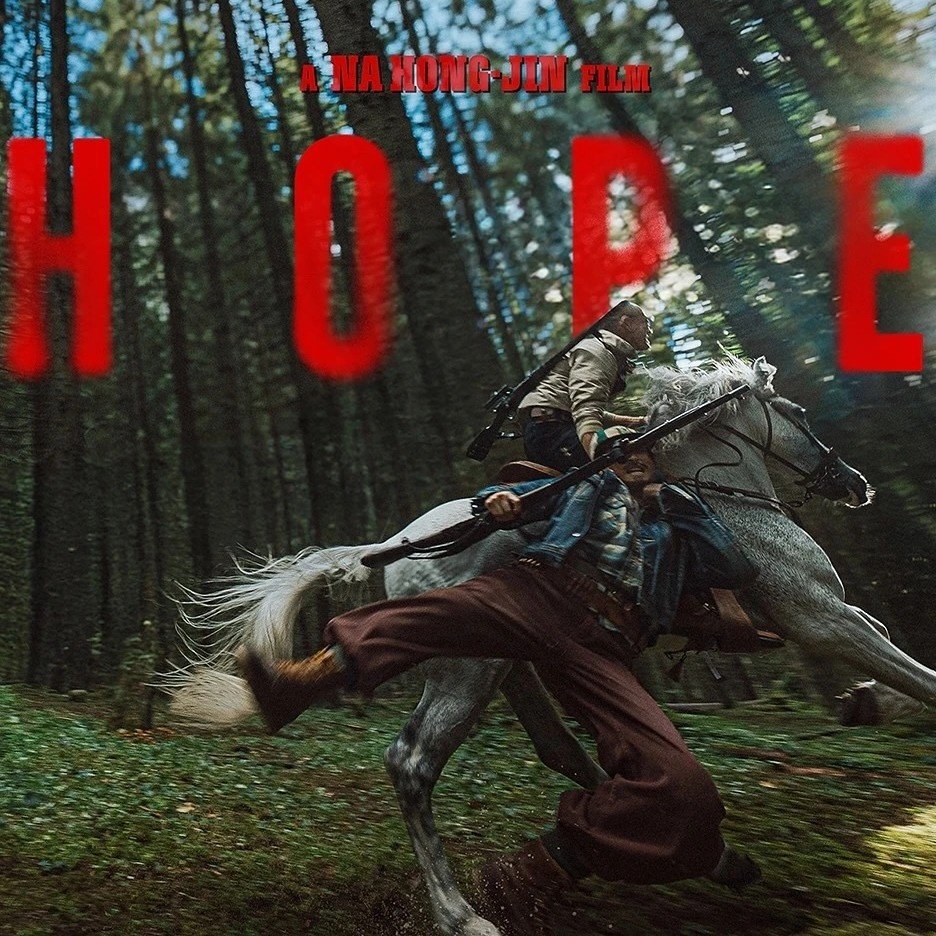
A Bit about What It’s About (No spoilers that you can’t catch in the trailer)
The film is set in Kentucky, South Korea, deep in the post population-crunch apocalypse that has left small towns in the countryside depopulated of youth and new things.
This decaying landscape is anchored by the fictional town of Hopo (호포). While the name is phonetically translated for global audiences as "Hope," its deeper roots likely lie in the Chinese characters (Hanja) that form the bedrock of Korean cartography. The first character, ho (湖), strongly implies a lake, meaning this forgotten outpost was historically a specialized lake port. The second character, Po (浦), signifies a water's edge, bank, or river port. Together as 湖浦/호포/Hopo, this forgotten outpost would have been, historically speaking a specialized lake port. ANd indeed, there are myriad po city names in Korean — the cities Mokpo and Pohang, or the neighborhood names inside Seoul, such as Mapo or Yeongdeungpo. If we translated this Korean town name directly into its literal English equivalent—the way Anglo-Saxon settlements are named—it wouldn't be "Hope" at all. It would be Lakeport.
This linguistic detail adds a layer of profound geographic irony to director Na Hong-jin's setting. A "lake port" implies a historical sanctuary of calm waters, localized trade, and self-contained inland survival. Yet, by the time the film opens, this protective geography has morphed into a trap. The town feels like a real Korean po might, small, rustic, and underpopulated — a place where everybody knows your name. Though they might not be glad you came.
This isn't a fictional wasteland built from standard Hollywood green-screens; it is a hyper-real, slightly exaggerated reflection of South Korea's actual, looming demographic collapse. By placing his massive $46 million cosmic horror blockbuster—the most expensive in Korean history—in a fading, isolated rural lake port, Na accomplishes something brilliant. He takes the quiet, real-world tragedy of local provincial extinction and injects it with a terrifying, otherworldly malignancy.
In HOPE, the mysterious entity that descends upon the edge of the water doesn't find a bustling, resilient community ready to fight back. Instead, it finds a vulnerable, decaying ecosystem already abandoned by the state, stripped of its youth, and left to rot in the shadow of Seoul's glittering centralization.
For international audiences waiting months to see stars like Jung Ho-yeon, Michael Fassbender, and Taylor Russell battle a sci-fi monster, the true terror won't be the creature itself. The real dread lies in how masterfully the film captures the bleak, claustrophobic reality of a countryside running entirely out of time. [1]
The State is Not Asleep; It Has Left the Building
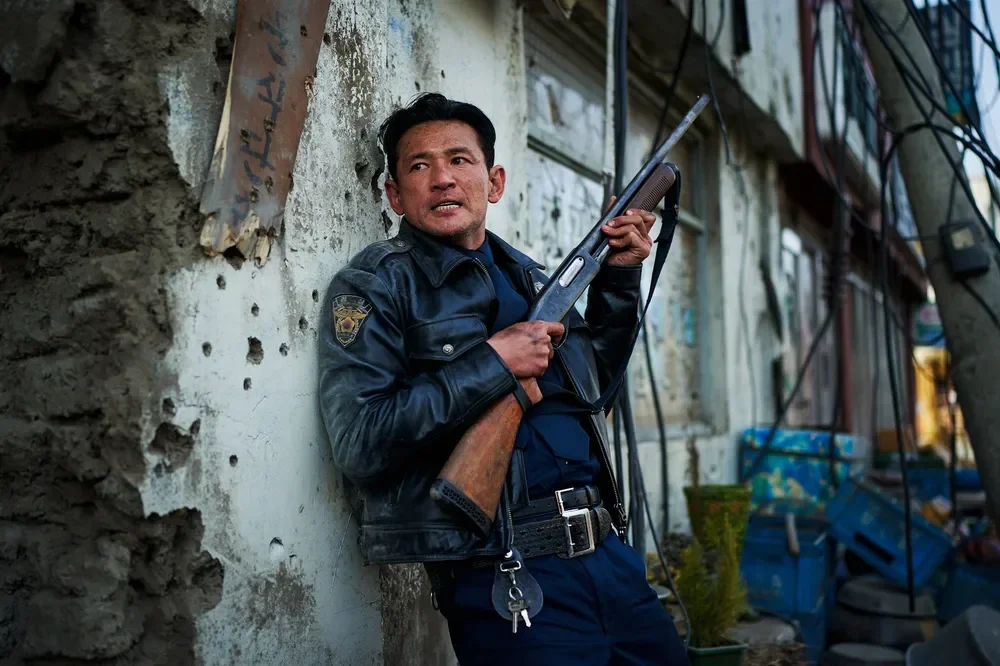
This sense of absolute isolation isn’t slow-burned over two hours—it is the brutal premise handed to the audience within the first five minutes of the film. HOPE taps directly into a bleeding-edge South Korean social anxiety: the growing realization that as the spectre of depopulation looms over the provinces, the state has essentially abandoned them.
There is no cavalry coming. There is no structural safety net. In Na Hong-jin’s universe, the government isn't just asleep at the wheel; it has entirely evacuated the premises, leaving the residents of Lakeport completely to their own devices. Everyone is on their own. This systemic abandonment creates a terrifying, hyper-localized vulnerability. When a cosmic threat lands on your doorstep in a town the capital has already written off as a statistical casualty, survival becomes a savage, privatized enterprise.
Dialed to Eleven: Nonstop Cinematic Whiplash, with a Whole Lotta Badassery
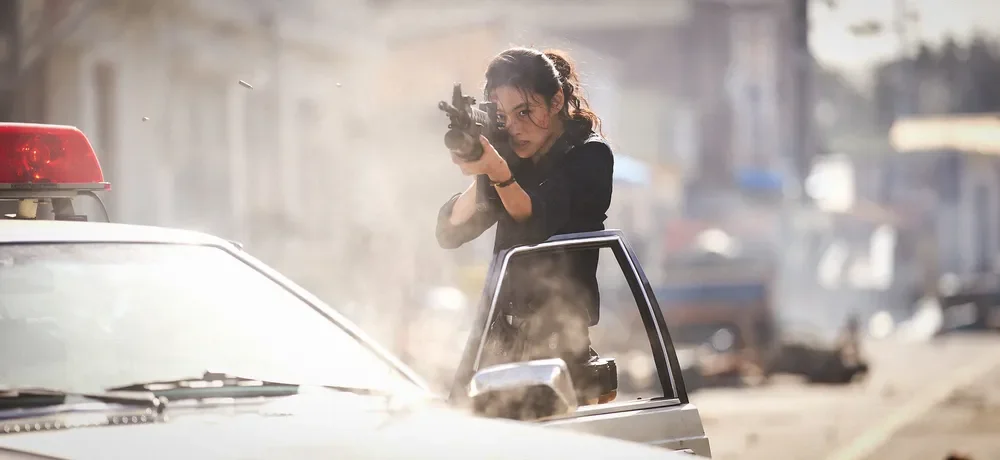
To match this desperate survival reality, Na completely abandons the patient, atmospheric dread of his previous masterpiece, The Wailing. Instead, the director opens the film at an 11 on the dial and leaves it there pretty much for the entire film.
The tension and action are simply nonstop. From the opening frames, the audience is plunged into a state of acute, breathless panic that refuses to reset. By maintaining this maximum-velocity frequency, HOPE perfectly mirrors the psychological state of modern Korea—a society operating under constant, high-pressure acceleration where there is no time to breathe, no room for error, and absolutely no pause button. It is a grueling, exhausting, and utterly magnificent feat of pacing that transforms the theater into a pressure cooker.
Oh, and it’s strangley, weirdly hilarious. One might even say it is comedic. But it is not a comedy. There is a lot of cursing and non-stop shibals. To the point that you are forced to notice it. And watching bumbling ajussis shooting at things and bumbling more while hissing and screeching “shibal” incessantly actually gets to be funny. You will laugh. I heard the Korean audience guffawing a few times, especially in the ridiculous interludes between frenetic action and desperate scrambles for life. It punctuates things perfectly and keeps the film grounded in its Koreanness, espcecially in how it constantly focuses on people eating during lulls in the action. Most hilarious was a bunch of people on the run in desperate evasion of the bad things chasing them, at which point a granny offers up a potato and is like, “Come on — you gotta eat one. It’s fresh!” Funny and reminds us where we are.
The Verdict: Absolute Physical Paralysis
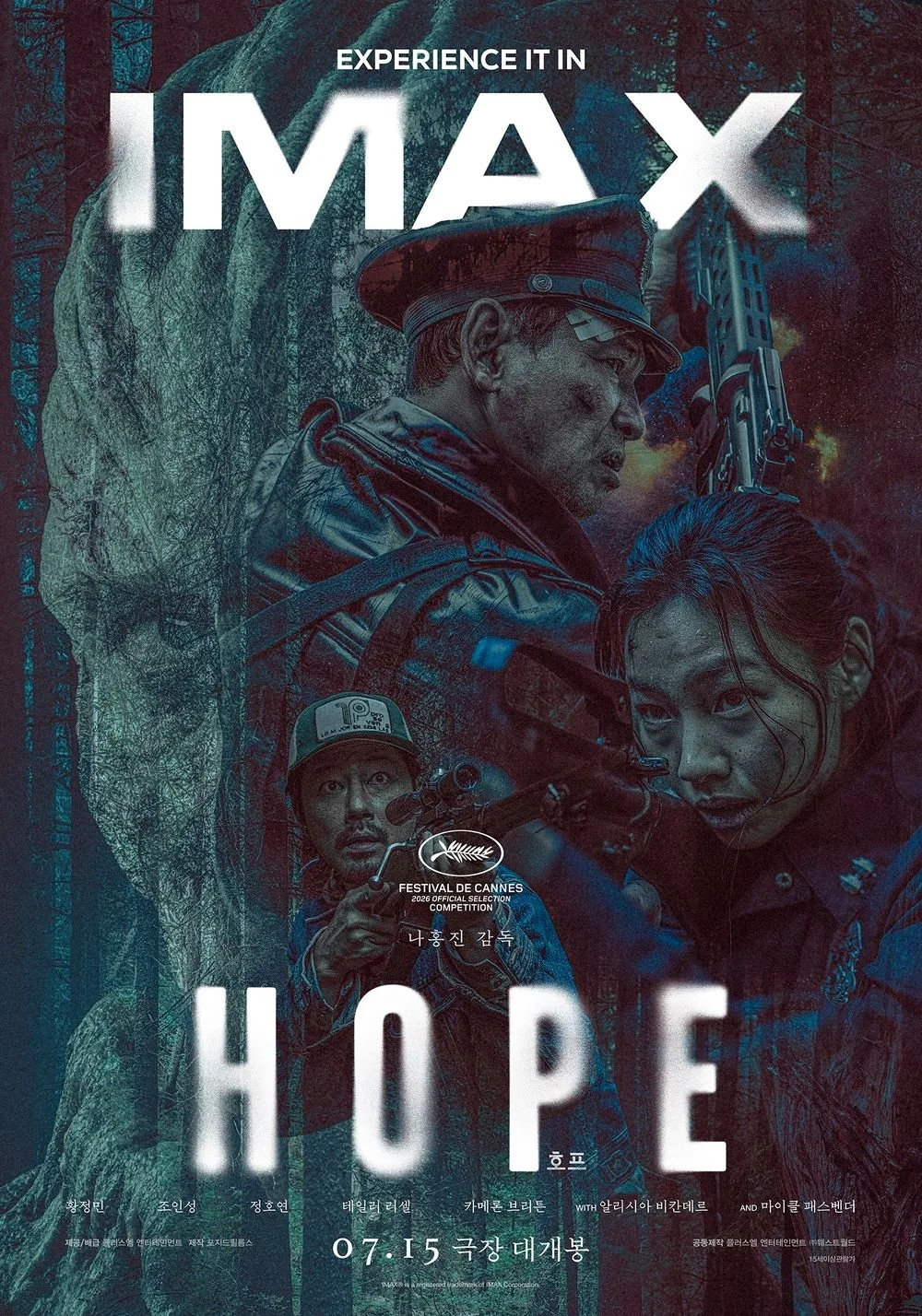
Back in the ancient days when superhero movies had not really reestablished their beachhead on the cinematic imagination, I watched Christopher Nolan's The Dark Knight in IMAX on nearly opening day. I sat down in my seat—literally on the edge of my seat—with a large bucket of popcorn, and absentmindedly just froze myself before the movie started. I didn't even realize I hadn't moved an inch or shifted my position until the movie was already halfway over.
This is the exact feeling you get when HOPE starts off, roaring down the interstate at 80 miles an hour. Or alternatively, when our heroes move slowly, boots crunching unsettlingly loudly enough to wake the dead, you pitch foward in your seat, with your mind frozen, mouth agape. Or you might be the type to squirm and melt deeply into your seat. In either case, your anal sphincter will be a MAX pucker level the entire time.
It is at this point that I amIt is at this point that I am obliged to say something relatively critical or even negative about the film, last readers begin to think I'm on somebody's payroll or something. The only small thing that brought me out of me moment just a little bit was the fact that the CGI was just a biiiiiit wonky. A lot of the scary things from the dark or on the screen in bright daylight, and they didn't always stand up to close scrutiny. The only other recent example of such a situation I could compare this would be Will Smith's turn in Gemini Man. The great thing about the film films that when Will Smith younger clone of himself was fighting him in the dark, it looked amazing. But in the final scene of the film where they're standing inside the university campus where his young closed that is about the Fresh Prince of Bel-Air's age starts his first semester of classes, it's on a bright sunny day and the CGI starts to look a little plasticky. But this was an obligatory ding; I honestly can't say that it takes you out of the film at all. The thing is so damn good that you forgive it instantly.
In the end, Director Na doesn’t ask for your attention; he pimp-slaps you into your chair and confiscates your autonomy for two hours. It is rare for a modern blockbuster to possess this level of kinetic, terrifying gravity. For international film fans currently locked outside of Korea’s exclusive theatrical window, the wait is going to be excruciating. It’s THAT good. The buzz will become a rumble, become an seismic event. Those of you in Korea, you know the assignment.