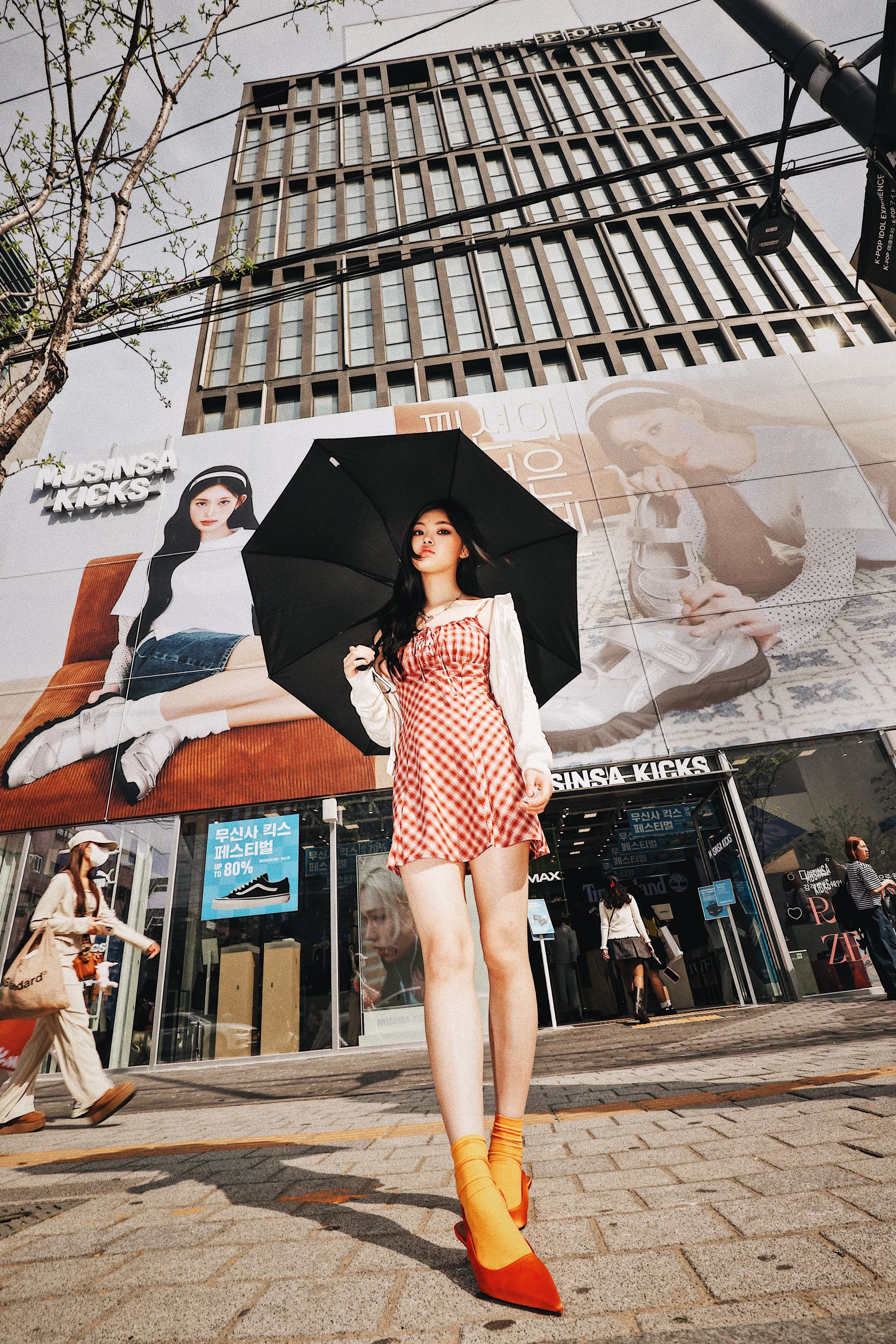
@exnxyung models a look that tends to work because someone's body decided, years ago, what 'one size fits all' would mean.
Picture a small shop on a side street in Hongdae, the kind with a hand-lettered sign and K-pop playing just a little too loud, racks packed tight enough that you have to turn sideways to get through them. The woman working the counter sees you coming before you've even reached the door. Her arms shoot up into a big X. "No big size! No big size!" she calls out, loud enough for the whole shop to hear, before you've said a word. You point to something anyway, just to try — and she watches, arms crossed, unimpressed, as you duck into the curtained fitting room in back and wriggle into it. It won't quite close. She glances at the tag, then at you, and says it's free size, like that settles the matter. Like it isn't anyone's fault. Nobody's, except yours.
And there's that small, familiar drop in your stomach — the one that doesn't blame the shirt, or the woman at the counter. It blames you. If you've shopped for clothes in Korea and felt that particular kind of quiet, private failure, you're not imagining it, and you're not alone. Hundreds of thousands of women — Korean and foreign, tourists and residents of twenty years — have stood in that exact fitting room and walked out believing something was wrong with their bodies. Almost none of them were ever told the actual reason. It has nothing to do with genetics, and it isn't really about vanity either, though it's been blamed on both for years. The real reason runs through a piece of hidden Korean industrial history most people have never heard of — one involving a burning protester in 1970, a customs loophole from the 1960s, a broadband bet the government made after a financial collapse, and one 22-year-old's closet in 2005. By the end of this piece, you'll know exactly whose body that tag was actually sized for. It was never yours. It was hers.
Try this the next time you're in Seoul, and you'll see the asymmetry for yourself. Walk into a shoe store and ask for your size. You'll get it — to the millimeter, no argument. Korean shoe sizing is your foot length in mm, full stop, climbing in 5mm steps from children's sizes into the 290s, the same system for everyone.
Now walk into the next shop over and ask for a top in that same precision. You'll get a shrug and one tag: 프리사이즈 (peurisaijeu). Free size.
Here's the thing almost nobody tells you, though, and it's the actual secret at the center of this story: free size was never really "one size fits all." It was one size fits one person — and everyone else was just asked to get close enough.
The excuse that doesn't survive a shoe rack
The easy explanation is genetics — Korean women are supposedly just smaller and more alike than everyone else, so why grade a pattern into five sizes when one will do. It's tidy. It's also wrong in an instructive way.
Let's give the genetics argument its due before knocking it down, because part of it is true. The average Korean woman's foot really does cluster around 240mm — a US size 7, smaller than today's American average of roughly 8.5 to 9 (itself up from about a 7 just a few decades ago, as American diets and average height have climbed). That's a real difference, and it's probably genuine, at least in part, in the same unremarkable way that average height differs between populations for real biological and developmental reasons. Fine. Concede the point.
But "the average is smaller" and "one size fits everyone" are two completely different claims, and only the genetics argument needs the second one to work. If Korean bodies were genuinely uniform enough to justify a universal cut, shoes would have found that out first — a bad shoe fit causes real injury, so manufacturers simplify wherever the body actually allows it. Instead, Korea runs the opposite experiment on itself, on purpose. Since 1979, the government's Size Korea project has scanned tens of thousands of citizens across well over a hundred body dimensions. A 2024 academic analysis of the state's own foot-scan data — 2,503 women, 44 separate measurements — didn't find one Korean foot. It found four distinct shapes, and all four show up even among women who share that same 240mm length. A smaller average doesn't collapse into a single size. It still needs a curve.
Four clusters. Not one. The same state that classifies its own citizens' feet with that much care sells its citizens' tops as if the classifying never happened. So if it isn't genetics, what is it? The answer runs through a hidden industrial history most people — Korean and foreign alike — have never heard, because the version of Dongdaemun most visitors know is a nine-story tourist mall with a food court, not the thing that built it.
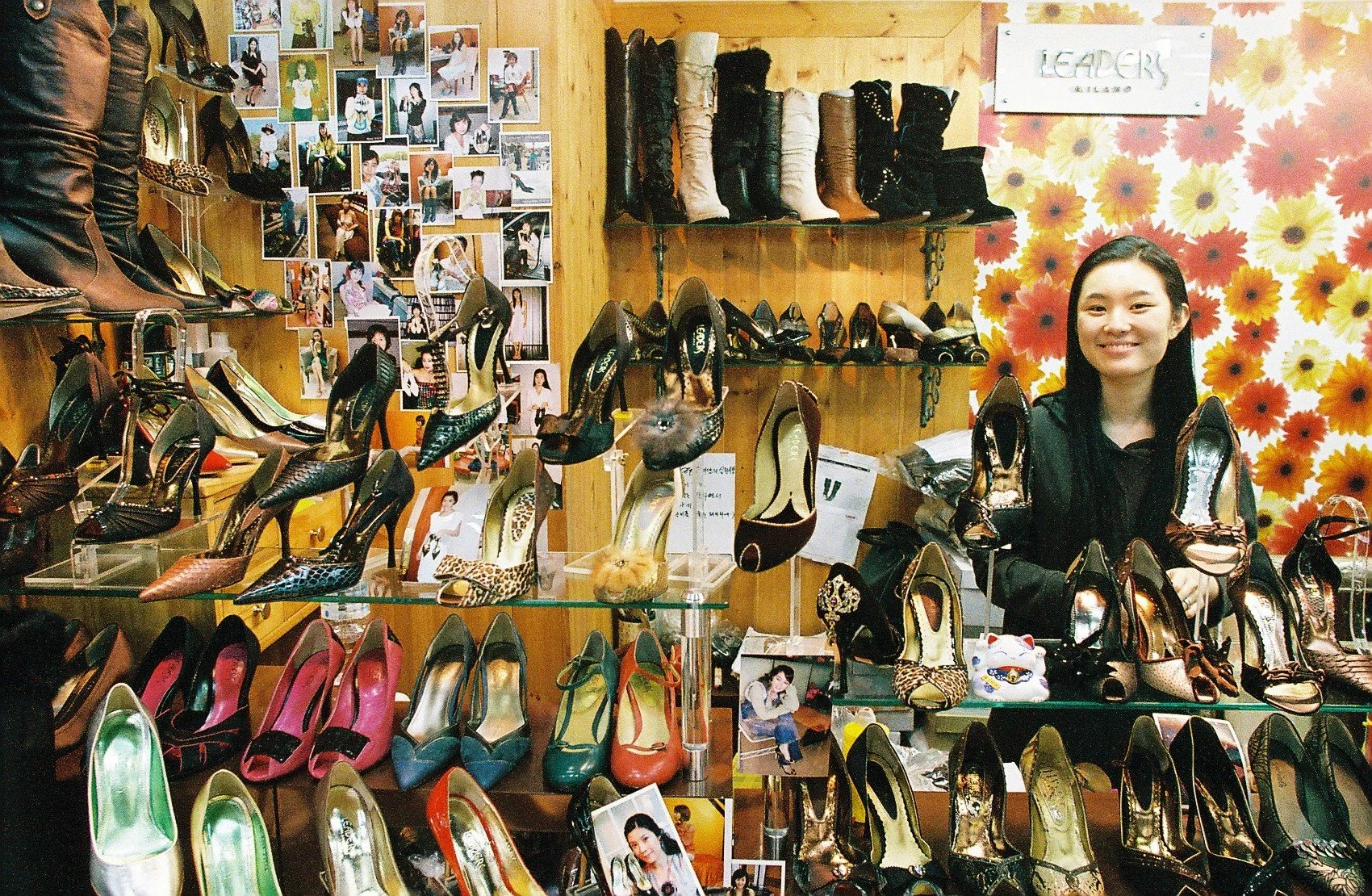
Korea is a paradise of option — if you are within the range of what can fit. This is inside a Dongdaemun "private-branded hive"/mall in 2005.
What Dongdaemun actually is
Say "Dongdaemun" to most people who've spent a week in Seoul and they picture Doota or the Design Plaza — glass towers, K-pop merch, tour buses. That's the storefront. It's not the story.
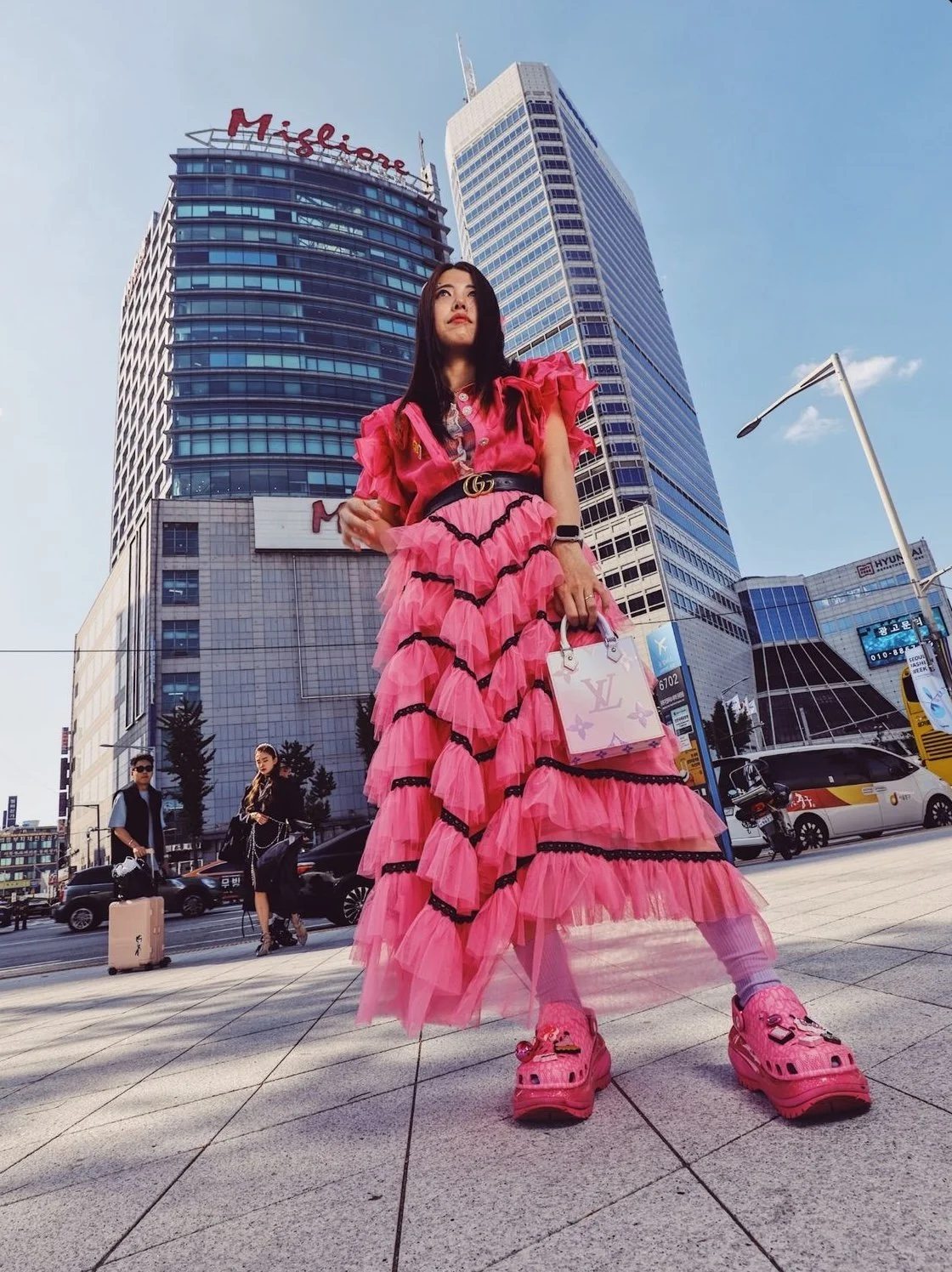
Model @bunny_ji_ni embodies the production processes and cycles of the Migliore and Doota buildings behind her. Neither exists without the other.
Dongdaemun's real history starts in the 1960s, when Korea rebuilt itself as an export-textile powerhouse on the backs of mostly female garment workers sewing for Western brands in conditions grim enough that in 1970, a young activist named Jeon Tae-il set himself on fire in protest at Pyeonghwa Sijang — the Peace Market — and became the founding martyr of Korea's entire modern labor movement. That's not a footnote. That's the actual bedrock this whole industry sits on.
Out of that manufacturing base grew a peculiar, quasi-legal economy known as 보세, bo-se — a term that started as customs law (raw textiles imported duty-free into bonded zones, turned into finished goods for export) and slowly came to mean something closer to "the stuff that fell off the back of the truck." Through the 1970s and 80s, Dongdaemun factories worked to precise Western specs for real clients — Nike, Gap, Express — and, inevitably, extra units and overruns ended up for sale in the back alleys of Namdaemun for a fraction of retail. Not counterfeit. Not quite legal either. Just real goods with nowhere official to go.
By the 1990s this system had gotten so fast and so flexible that it was secretly running someone else's fashion revolution. Dongdaemun could cut, sew, and ship a design in about six hours — against six weeks in traditional manufacturing — which is precisely the turnaround Tokyo's Shibuya 109 needed to keep pace with its own schoolgirl trendsetters. The lavender fishnets and impossible micro-runs that fueled 1990s Harajuku street style, the look the whole world associates with "cool Japan," were quietly being produced in Dongdaemun the entire time. Korea didn't just imitate Japanese street fashion, as generations of Korean fashion insiders insisted while looking enviously across the strait. Korea was, in no small part, secretly manufacturing it.
The first storefront to formalize this underground engine into a retail concept opened in 1998: Migliore, Korea's original "private-branded hive" — a mall-shaped structure that gathered hundreds of tiny sewing operations under one roof, each one a nameless bong-jae ("sewing designer") turning out limited runs of a few hundred units at a time, in near-lockstep with whatever the street wanted that particular week. This is the actual, unglamorous machinery that made everything that came after — Style Nanda, Musinsa, the entire "K-fashion" boom the world thinks it understands — structurally possible. Free size didn't spring from nowhere. It grew directly out of a manufacturing system built for extreme flexibility and zero waste, running micro-orders too small and too fast for any traditional grading process to keep up with.
This is also, not coincidentally, the exact system that got completely misread by outsiders the one time a major international outlet actually looked closely at it. In 2017, the influential fashion site Highsnobiety released a documentary called Counterfeit Culture | Seoul: A Look Inside Korea's Fake Fashion World, framing what it found in Seoul's streetwear stalls — knockoff Off-White, Balenciaga, Fear of God — as evidence of a national "counterfeiting problem." It's an understandable read if you don't know the history above, and a completely wrong one if you do. Bo-se was never a hindrance to Korean fashion culture; it's the engine that produced it — the same flexible, quasi-legal, zero-inventory logic that let a nineteen-year-old with a webcam and a shopping mall storefront outcompete traditional retail. A documentary crew that spends a week in Dongdaemun and comes away calling it a counterfeiting problem has mistaken the machine for a malfunction.
The media economy nobody remembers
Here's the part that gets forgotten fastest, because it happened on platforms that no longer exist, in a decade most of today's K-fashion fans are too young to remember firsthand.
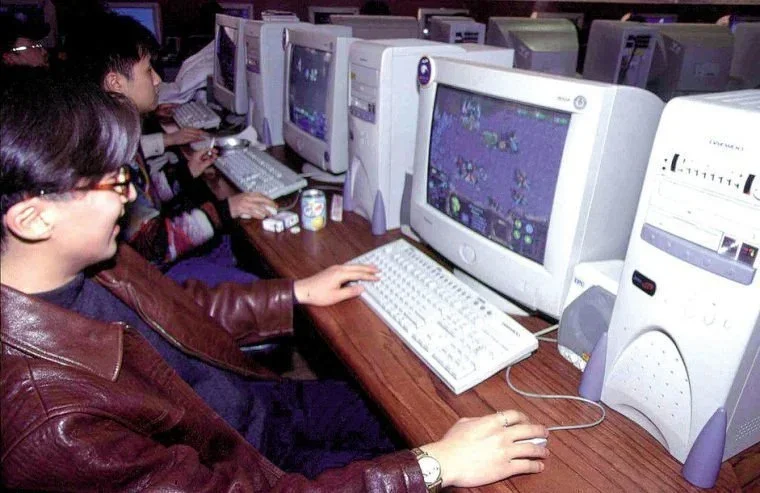
None of what follows happens without a piece of infrastructure history that rarely gets told alongside the culture it made possible. After the 1997 Asian financial crisis gutted the Korean economy and forced the country into an IMF bailout, the incoming Kim Dae-jung government made a deliberate, unusual bet: instead of just cutting its way back to stability, it would spend its way into becoming a "knowledge economy," wiring the entire country for speed. The 1999 Cyber Korea 21 initiative poured government investment into a nationwide broadband backbone, while newly deregulated private carriers — Thrunet with cable modems from 1998, then Hanaro Telecom and KT racing each other into ADSL in 1999 — fought a price war so aggressive that monthly broadband fell to around $20, among the cheapest in the world. By 2004, more than 70 percent of Korean households had broadband. Where a home connection wasn't yet installed, the ubiquitous PC방 (PC bang) — Korea's internet cafes, open all night, dirt cheap — filled the gap for anyone still getting online: from roughly 100 of them nationwide in 1998 to something like 30,000 by 2000.
If any of this infrastructure story sounds familiar, it's probably because you already know its most famous side effect, even if you never connected the dots. That same broadband bet and that same explosion of PC방 is the exact reason Korea became the undisputed global capital of StarCraft, and by extension E-sports itself. Blizzard's 1998 real-time strategy game landed in Korea right as PC방 were multiplying and bandwidth was getting cheap enough for real-time online play to actually work, and the two fed each other: national StarCraft competitions were airing on dedicated television channels by 2000, the Korea e-Sports Association was founded that same year, and by 2004 more than 100,000 fans showed up in person to watch a Pro League final on a beach in Busan. Pro gamers became bona fide celebrities, endorsement deals and all. Nobody planned for a strategy game to turn into a national sport. It happened because the underlying pipes were already the fastest and cheapest on Earth, and enough young Koreans had cheap, fast, always-on access to actually build a culture on top of them. Fashion's version of that story is just quieter, and it happened largely on clothing racks instead of a stage.
This wasn't a coincidence sitting alongside the platform economy that came next. It was the floor it was built on. Broadband this fast, this cheap, and this universal is precisely what made it viable for ordinary people — not engineers, not companies with server budgets — to run a real, image-heavy, constantly-updating storefront from a bedroom. A handful of new platform companies built directly on top of that infrastructure: Cafe24, Makeshop, Godomall let literally anyone open an online shop with zero coding knowledge, uploading photo after photo of themselves in new outfits without a second thought about load times or hosting costs, because the pipes underneath them were already the fastest and cheapest on the planet. By 2003, Makeshop alone hosted roughly 26,000 individual shops moving a combined 20 billion won a month.
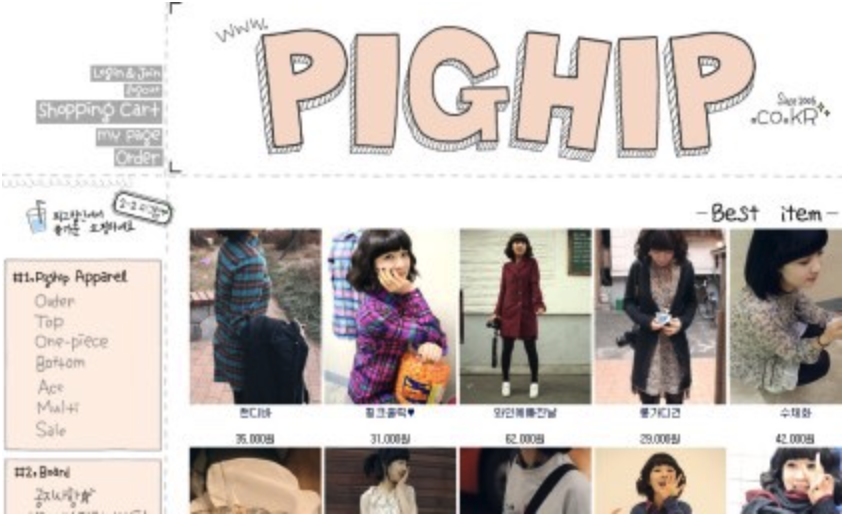
A really typical layout of an online shopping mall back in the early 2000s.
What made these platforms spread as fast as they did wasn't just that they were cheap and functional — it's that using one didn't feel like starting a business, at least not only that. The interfaces worked the way a social media profile works: drag a product photo in, write a caption, arrange a grid, hit publish. It's the same basic motion Western drop-shippers use on Shopify or Instagram Shops today, except in Korea in the early 2000s it arrived wearing the skin of a personal homepage rather than a storefront template. Setting one up felt less like filing paperwork and more like building your own website, your own Instagram account, years before Instagram existed — which meant the mall itself became a kind of identity project as much as a commercial one. A young woman running one of these shops got to be several things at once, all through the same simple upload button: an entrepreneur, technically the sole owner of an actual company; a stylist and tastemaker, since the whole catalog was just her opinions about clothes made purchasable; and a minor culture-maker in her own right, since a following built around her taste was itself the product. One interface, three identities, scratching all three itches simultaneously — which is a large part of why so many people wanted in. This is worth sitting with for a second, because it's easy to undersell how strange and new it was: Korea had built, faster than almost anywhere else on earth, an entire infrastructure for consumption disguised as production. These platforms didn't just let people buy clothes online. They recruited ordinary consumers to become sellers to other consumers — take a cut of Dongdaemun's bo-se supply chain, style it on your own body, sell it back to your peers, keep the margin. It was consumers marketing to other consumers, at scale, years before "peer-to-peer commerce" or "creator economy" were phrases anyone outside Korea was using. Some of that consumer base got extraordinarily rich doing it.
Layered on top of this commercial infrastructure was a parallel fame economy running on two platforms that have both, in their own ways, quietly vanished — and are worth explaining properly, because at this point even a lot of Koreans have half-forgotten them, let alone the newly arrived expat trying to make sense of it all.
Cyworld (싸이월드) is usually described today, in the one-line version, as "Korea's MySpace." That's close, but it undersells how total its grip was. Every user got a 미니홈피 (minihompy) — a small, cluttered personal homepage with a customizable avatar (미니미, minimi), a virtual room you decorated (미니룸, miniroom), a guestbook, and a running diary — funded by a genuinely ingenious virtual currency called 도토리 (dotori, "acorns"), which you spent on background music, room wallpaper, and outfits for your avatar. Friendships were formalized as 일촌 (ilchon) — literally "1 degree of separation," borrowed from the Korean kinship system, where family closeness is measured in chon: parent and child sit at 1촌, the tightest possible bond, siblings at 2촌, and so on outward. Cyworld took that unit and repurposed it for friendship — asking someone to be your ilchon meant granting them the closeness of your nearest relative, which is a genuinely strange and intimate thing to ask of a classmate. Browsing from friend to friend was called 파도타기 (padotagi) — "wave-riding," surfing along the connections between homepages. At its 2004–2009 peak, Cyworld had roughly 30 million users in a country of about 49 million — functionally everyone who wasn't elderly or in elementary school. It's not a stretch to call it MySpace, Instagram, and Facebook's entire social graph fused into one service, arriving years before any of those existed. It cratered in the early 2010s when Korea, like everywhere else, went all-in on smartphones and international platforms elbowed it aside; it's been "revived" by new owners more than once since, largely to a shrug.
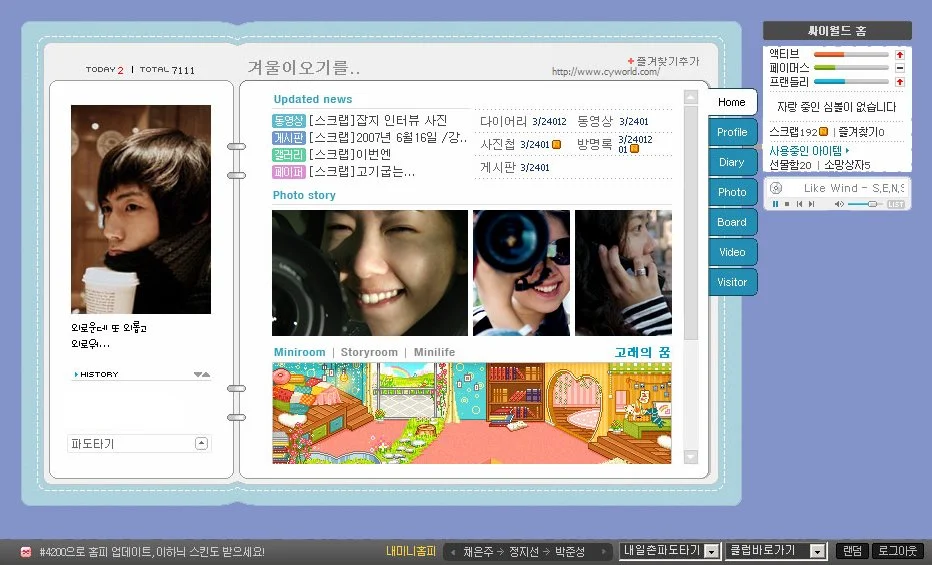
A typical Cyworld page.
Haduri (하두리), the second platform, is a stranger and less remembered story. Launched in 1999 as a webcam chat site, it became the place a whole generation of Korean teenagers went to point a webcam at their own face — which is, quite literally, where the 얼짱 (eoljjang, "best face") phenomenon was born, along with the specific vocabulary of the flattering 얼짱 각도 (eoljjang gakdo, "best-face angle") that would later migrate to every phone camera on earth. Baby pictures of stars like IU and G-Dragon are still findable there. It's the direct, if largely forgotten, ancestor of the selfie as Korean cultural export — Hadduri was teaching Korean teenagers how to angle a camera at themselves for flattering effect a decade before Instagram made that a global skill everyone assumed they'd invented themselves.

Representative eoljjang shots from Haduri.
Between these two platforms — Hadduri recruiting the talent, Cyworld turning it into actual fame — Korea had, by the mid-2000s, minted its first wave of internet celebrities: the eoljjang themselves. By the culture's own accounting, the majority of these internet-famous teenagers went on to either run fashion shopping malls themselves or model for others doing the same — being recognized as pretty online was the business plan, and the shopping mall was just the way you cashed it in. This wasn't subterranean. In 2010, a national variety show called Style Battle Royale: Top CEO put eight young mall founders on television in a styling competition — a former Miss Korea contestant, a racing model, an ordinary housewife, several eoljjang — judged on-air by a professional stylist. One contestant, nicknamed by the press 4억 소녀 (sa-eok sonyeo, the "400-Million-Won Girl") for her reported monthly revenue, used her airtime to correct the number upward, revealing an actual annual take closer to 5 billion won. Self-presentation, on primetime television, treated as a legitimate, competitive, broadcast-worthy business skill. Nobody involved thought that was strange.
[PHOTO: Something evocative of early-2000s Korean internet aesthetics if available — a screen, a webcam-style self-portrait feel, or a nostalgic device shot. Suggested caption: "Before there were influencers, there were 사장님 (sajangnim) — proprietors who were also the product."]
Anyone who was actually around for this in Korea will recognize the shape of the ambition, even if the vocabulary has changed. And if you're reading this now and you've ever caught yourself daydreaming about blowing up on TikTok, landing a YouTube channel that actually takes off, becoming the next name everyone in your algorithm somehow knows — you already understand exactly what these young women wanted, better than any history lesson could explain it to you. You just have to swap the platform. Today, that dream runs through an influencer deal or a viral video. Back then, she wanted to be the next "OO소녀" (sonyeo, "girl" — the OO standing in for whatever revenue figure the press decided to pin on you) — the next "[Something]-Won Girl," the next name-and-number combination the press would pin on her the way they pinned sa-eok sonyeo on that Style Battle Royale contestant. It was the era's version of going viral, before "going viral" was a phrase: a nickname built out of your own revenue, broadcast to the whole country as proof you'd made it. And more than any of them — more than any of the eoljjang, more than any of the Style Battle Royale cast — there was one name every girl with that particular dream was quietly trying to become.
The tweed jacket
In 2005, a 22-year-old woman named Kim So-hee bought a beige tweed jacket at Dongdaemun because she liked it. Friends kept asking to buy it off her, half-joking, so she listed it on Auction (옥션) — Korea's answer to eBay, still running today, then the default place a young Korean sold secondhand things online. It sold within minutes for about 70,000 won.
She did it again. And again — no market research, no business plan, by her own account in interview after interview over the following decade. Just Dongdaemun, her own taste, and an audience that apparently wanted what she wanted too. In 2006 she formalized it as Style Nanda. Within its first year, it was already the country's top-ranked women's fashion mall.
The mechanism matters more than the money, though the money eventually became extraordinary. Kim So-hee wasn't grading a pattern for a population. She was dressing herself, at her own proportions, in her own taste — and a national market organized itself around one woman's closet. Her early models wore makeup she'd mixed herself from drugstore products because nothing on the market matched the shade she wanted, and customer demand for "that exact color" is the literal origin of 3CE, the cosmetics line that eventually made up roughly seventy percent of company revenue. In 2018, she sold Style Nanda and 3CE together to L'Oréal for a reported 600 billion won — the first time the French beauty giant had ever bought a Korean brand. The Korean press had a nickname for her by then: 동대문 신데렐라 (Dongdaemun Sinderella), the Dongdaemun Cinderella.
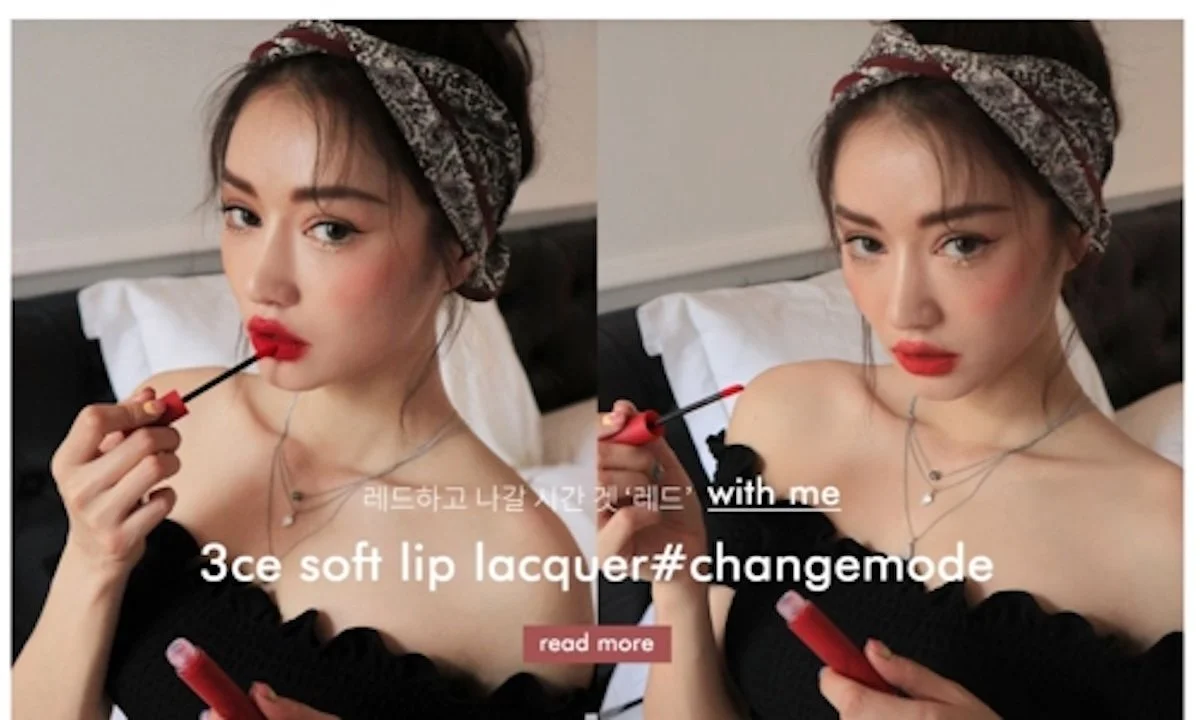
Kim So-hee, former CEO of Style Nanda — once one of the most successful founders of Korea's first generation of tourist-facing online fashion malls, before selling the company to L'Oréal in 2018. [SOURCE]
She wasn't an isolated genius, either — she was the biggest wave in a flood that included, on the menswear-adjacent side, a shoe-photo community founded in 2001 by a high schooler obsessed with sneakers, which slowly grew into something called Musinsa, today Korea's largest fashion platform. Both companies started as one person's obsessive, ungraded, unbusinesslike taste — and both ended up rewriting the retail landscape of an entire city.
There's an academic term for what Kim So-hee was doing, coined a decade later by scholars studying a completely different country's fashion bloggers: entrepreneurial femininity, Brooke Erin Duffy and Emily Hund's phrase for a mode of self-enterprise in which a woman's own body and self-presentation become the literal means of production, packaged as effortless "passion" rather than calculated labor. Duffy and Hund never looked at Korea. If they had, they'd have found their thesis had already played out here at a scale and a decade earlier than anything their American subjects achieved.
Two things that were never actually in competition
There's a comfortable, contrarian version of this story that says: see, it was never really about beauty standards — it was economics all along. That version is too neat, and it's already been complicated by people who know the industry better than any outsider.
A 2024 Kyunghyang Shinmun data-journalism investigation pulled 45,678 women's clothing listings from Musinsa and 29CM and found 39 percent sold as free size, against just 6.8 percent of menswear. Run the same comparison against a matched Zara/H&M sample and free size shows up in 0.09 percent — three items, total. Whatever's happening here, it isn't a universal law of retail.
The same investigation talked to actual shoppers hitting this wall in real time. One woman, identified in the piece only by her surname, Song, had lost weight specifically hoping a free-size item would finally fit her. It didn't. "I thought it would finally fit, but it's still too small to wear," she told the paper — after already having spent years, before the weight loss, simply skipping free size altogether. That's not a data point. That's a woman changing her body to match a garment's assumptions about it, and still coming up short.
When Kyunghyang asked designers why, nobody handed them one cause. Hongik University textile professor Kim Jin-young laid out the plain math: split sixty pieces into small, medium, large and you're managing reorders and dead stock across three lines that a small brand's capital can't absorb; sell all sixty as one size and the problem disappears. She traced the practice's real acceleration to exactly the early-2000s online boom we've just walked through — small sellers minimizing inventory risk above nearly everything else. But she was equally clear that free size only works as a strategy because Korean fashion culture already prizes a narrow beauty ideal — enough customers already fit, or feel they should, to make one size commercially survivable. The inventory logic and the beauty standard aren't rival explanations. They're the same feedback loop, each one making the other cheaper to run.
That loop had a name-brand mechanism underneath it, and we've already met her: designers without capital to grade a pattern default to a single sample size — often, quite literally, their own body. Multiply that decision across tens of thousands of SOHO malls, each built out of one woman's closet, running for two decades, and you get a national retail default. Not because Korean bodies are unusually alike. Because an entire generation of businesses were, quite literally, built one woman's proportions at a time.
The majority, the stone, and the normate
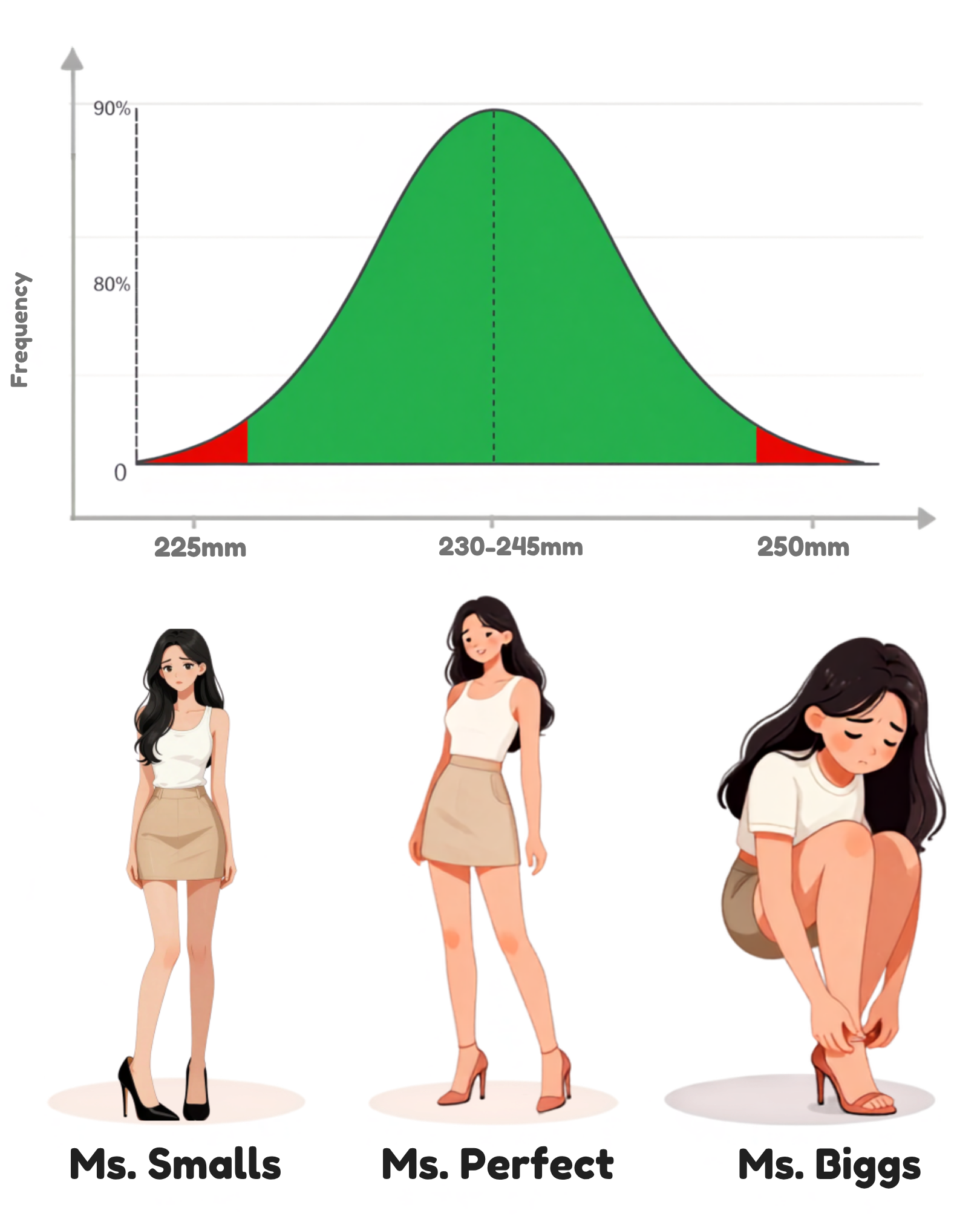
Ms. Smalls and Ms. Biggs aren't outliers. They're the red zones that are real, if smaller, parts of the same curve as Ms. Perfect. And Ms. Perfect has a name. It's Kim So-hee.
There's a name for what happens next — three names, actually, each a little more precise than the last.
The political-theory name is 다수의 횡포 (dasu-ui hoengpo), "tyranny of the majority," Tocqueville's term for what happens when a numerical majority mistakes its own size for correctness, treating anyone outside it not as a legitimate minority but as an error. Korean has its own, much older way of saying nearly the same thing, taught to children as folk wisdom rather than political philosophy: 모난 돌이 정 맞는다 (monan doli jeong manneunda) — "the protruding stone gets hammered down." Long before anyone thought to apply Tocqueville to Korean retail data, the culture already had a proverb for what happens to the shape that doesn't match the pile.
But there's a third, more precise term still, from disability studies rather than political theory: Rosemarie Garland-Thomson's "normate" — the unmarked, assumed-default body against which every other body is measured as deviation. Not necessarily the most common body. Just the one a system has quietly agreed to build around. A free-size top is a normate made of fabric. It doesn't claim to be the average. It claims to be the default, and lets everyone outside it absorb the cost of not fitting as a personal failing rather than a design decision. None of this is new to Korea, either — the idea that a disciplined, self-controlled body is a kind of moral achievement runs deep in Korean culture, well before any of this became a business model; free size just gave that old idea a price tag and a shopping cart.
Put the three together and you get the actual mechanism, not just a metaphor for it: a market built on majority-shaped logic — because that's what SOHO-mall inventory math rewarded — dressed in the register of a proverb everyone already believed, producing a normate that the government's own Size Korea data can split into four separate clusters while the market keeps manufacturing for exactly one. Kim So-hee's own body became that normate almost by accident — not because it was engineered to, but because enough of the market organized itself around her closet that her proportions calcified into the default nobody chose but everybody inherited.
Look at the shape of it plainly, the way a chart draws it: one wide green hump in the middle, and only a thin red sliver at either edge. That's the whole mechanism, reduced to two colors. The red zones were never empty — they're just small enough that a majority-shaped market decided they weren't worth building for. 다수의 횡포 doesn't require disliking the minority. It only requires deciding the minority is too small to bother with, which is a quieter, more forgivable-sounding way of arriving at the same exclusion.
This is, in the end, the same bottom-up story Korean street fashion has always told about itself — the paepi out-influencing the runway, the street becoming the real stage while official fashion week plays catch-up. Free size is that same inversion, just quieter and earlier, and working on the body instead of the outfit: not a design house declaring a standard, but one woman's own closet becoming an unspoken national standard because enough other women copied her business model before anyone had a name for what she was doing.
Whose closet doesn't get to be the standard
None of this is a story with an uncomplicated hero. Duffy and Hund's real point about entrepreneurial femininity, stripped of its "passion project" packaging, is that this mode of self-branding quietly requires a body and a set of circumstances already marketable — then hides that requirement behind a story about hustle and destiny. Not every twenty-two-year-old's closet could have become a national default. Kim So-hee's could, because her proportions already sat inside the narrow band the market was prepared to reward.
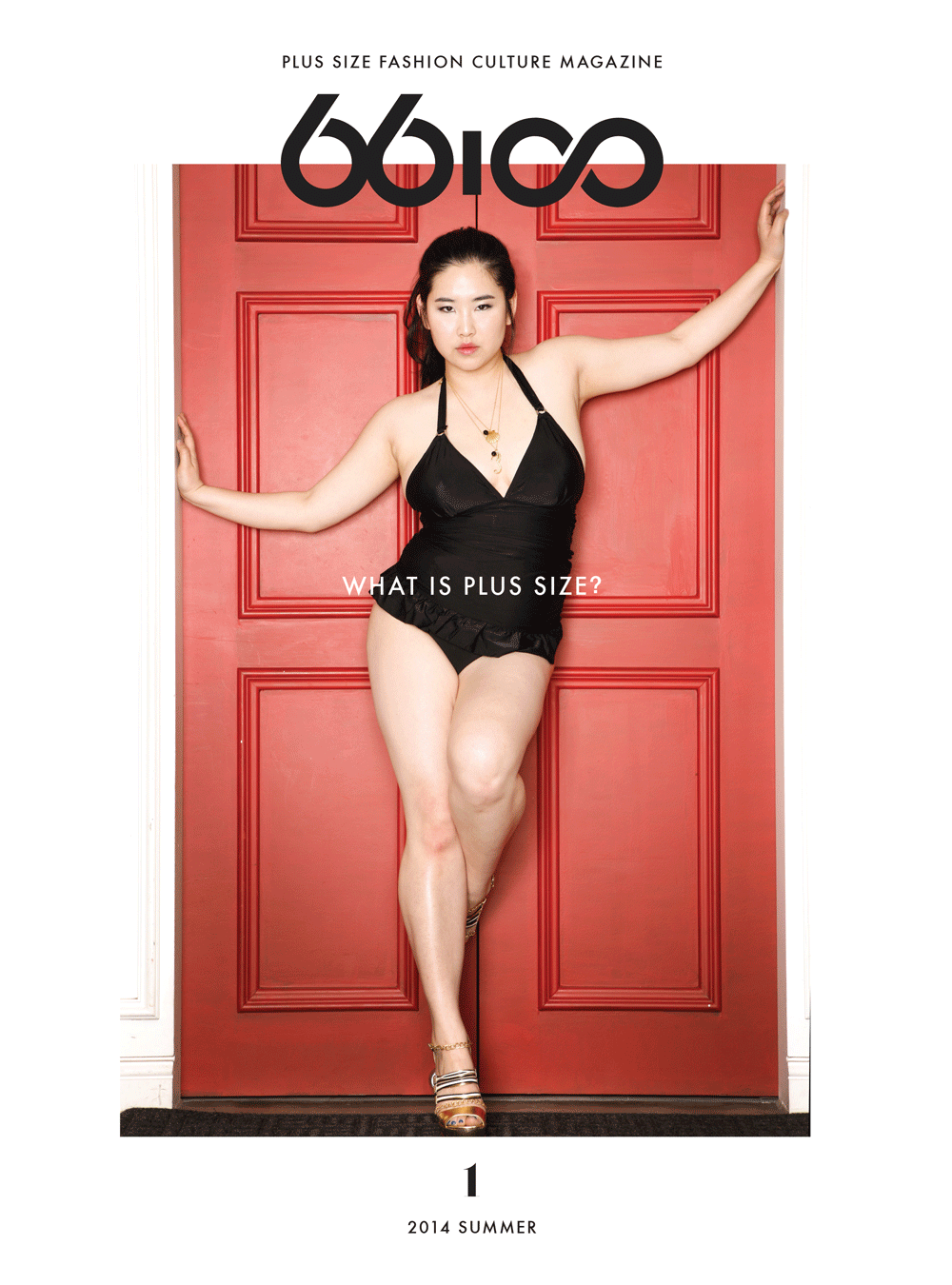
The Legendary founder of one of the first Korean plus-sized clothing outlets in Korea, founded by pioneering plus-sized model Kim Ji-yang.
But someone did notice, and someone did build the opposite — using the exact same mechanism, from her own body outward, on purpose. Park Ye-na was a middle schooler in Jeonju who couldn't find clothes in her own size and started selling secondhand pieces off a blog to close the gap herself. By 2012 that had become a formal shopping mall, 66Girls (육육걸즈), named plainly for the size it was built around. On the official ladder, 66 is nominally a Medium — the sequence runs 44 (XS), 55 (S), 66 (M), 77 (L). But because so much of the market never bothered stocking past 55, 66 functioned in practice as the effective ceiling of what most Korean women could actually find in a store — which meant a brand built around a technically middling size ended up correcting an entire market's compressed idea of normal. Park's own account of why she built it lands like the piece's whole argument handed back to itself: not a thin body as the standard, but her own ordinary one. By the late 2010s, 66Girls was doing 50 to 70 billion won a year, stocking S through 2XL, going head to head with the same free-size majority it was built to answer.
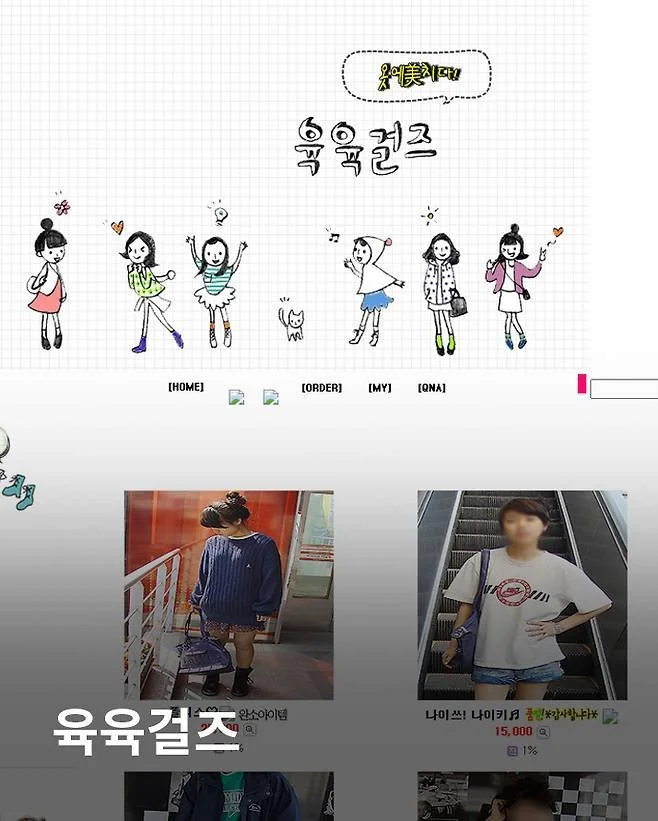
[SOURCE]
Even that correction didn't hold its shape. Within a few years, 66Girls' own customers were joking that its sizing had crept smaller, that it should rename itself "55Girls." The pull of 다수의 횡포 doesn't only act on brands that never tried to resist it. It keeps pulling on the ones that did, for as long as they keep operating inside the same market.
The people left outside that band aren't abstract. Kim Ji-yang, Korea's first working plus-size model, founded the brand and magazine 66100 — named for the smallest sizes still considered "plus" in Korea — specifically because anything above roughly a US size 6 had effectively no market to shop in. Their explanation for the gap was never logistics. It was a market that quietly decided, one Auction listing at a time, whose body would count as the default, then built a spectacular, city-reshaping economy on top of that decision without ever having to say so out loud.
The shoe you can always find
Go back to that shoe store one more time. The reason Korea can measure your foot to the millimeter and refuse to measure your waist was never really about your body. It was about whose body got to become the pattern — and who, twenty years ago, was willing to sell her own closet online to find out if anyone else wanted it too.
None of the pieces in this story are actually separate stories. Jeon Tae-il's protest at the Peace Market, bo-se's customs-law origins, a government betting its post-crisis recovery on broadband speed, a platform that let anyone build a storefront with the same upload button they'd use for a diary, a woman who liked a jacket and put it up for sale, a press corps that turned other women's revenue into nicknames, a data team decades later counting exactly how many tops came in exactly one size — that's one continuous machine, assembled over roughly fifty years, for turning one person's taste into national infrastructure. Korea didn't fail to build a fashion industry that fit everyone. It succeeded, spectacularly, at building one of the fastest, cheapest, most responsive clothing economies on earth — and free size is simply the leftover evidence of whose body that machine was calibrated to in the first place.
That's the actual mystery solved, and it isn't the one most people go looking for. It was never really "why are Korean clothes so small." It's "why did an entire country's fashion industry organize itself, at internet speed, around one woman's proportions, and why did it take this long for anyone to ask." The tag on that top was never lying to you, exactly. It just left out the second half of the sentence. Free size. One size. Hers.
As a tribute to the true OG shopping malls of the early 2000s era, here is a sampling of the largest, representative storefronts that built this. And tellingly, most of them are still running. And many thanks to this old DAUM blog 내일 옷 뭐입지? (DAUM was the OG blogging platform of that time, which has since been eclipsed by Naver), that has catalogued screenshots of all these old shopping malls, since they were extremely difficult to find.
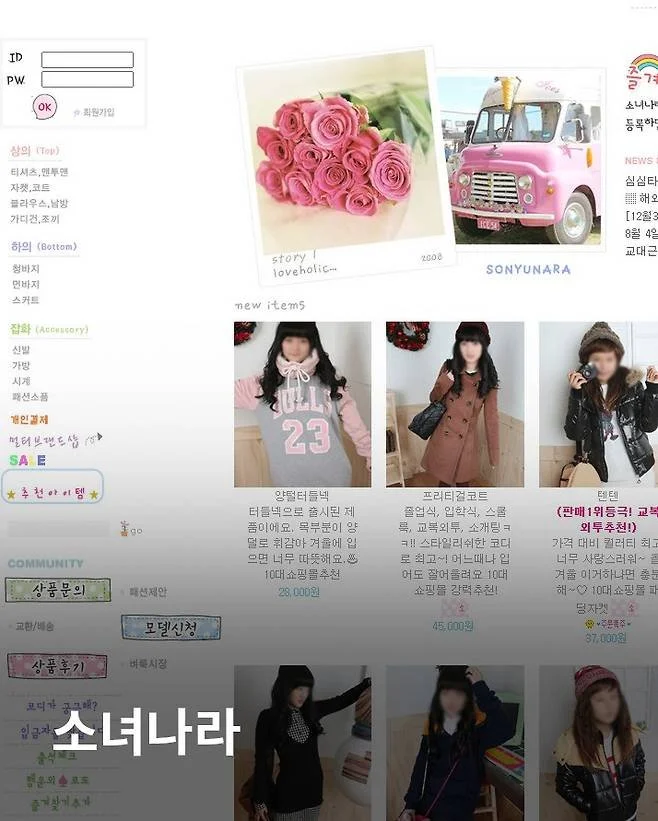
A leader amongst many of the cutesy online shopping malls that focused the fashion/beauty energies of many young, Korean women in the early 2000s. AN English rendering of the title might be “Girlworld.”
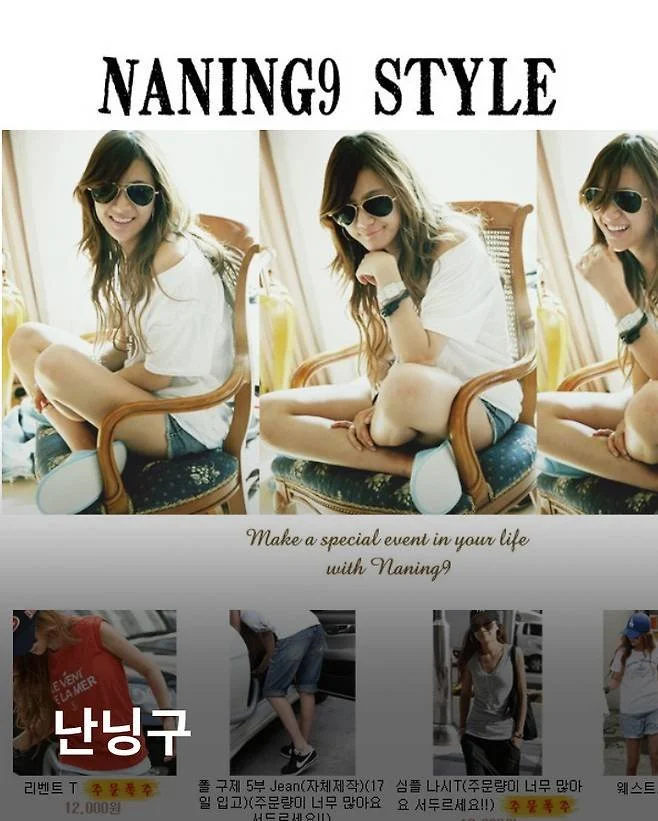
ANother majotr example of the typical shopping mall in the 2000s, which bridged the looks of a pedestrian catalog with that of a fashion magazine.
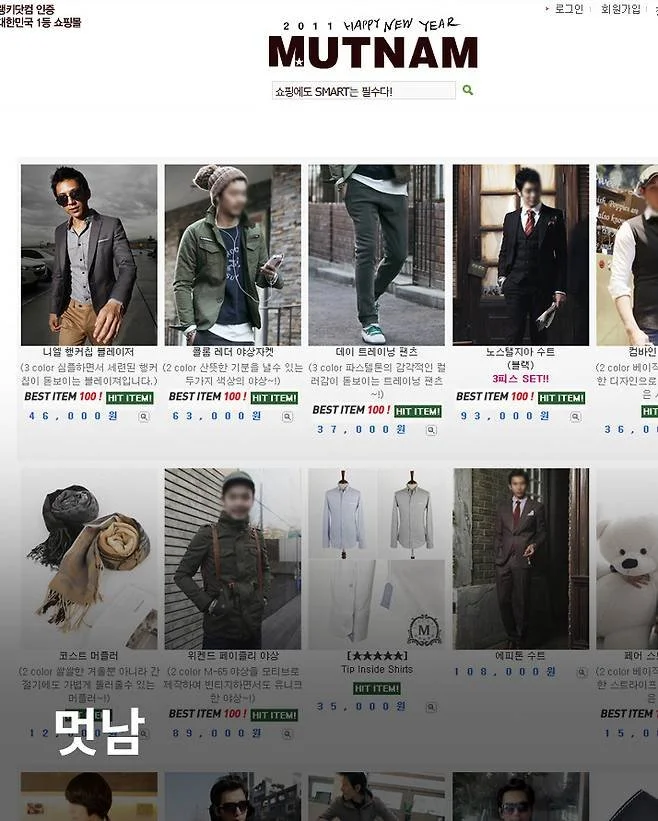
A shopping mall that specialized in menswear and is more typical of the clothing catalog aesthetic that characterized most.
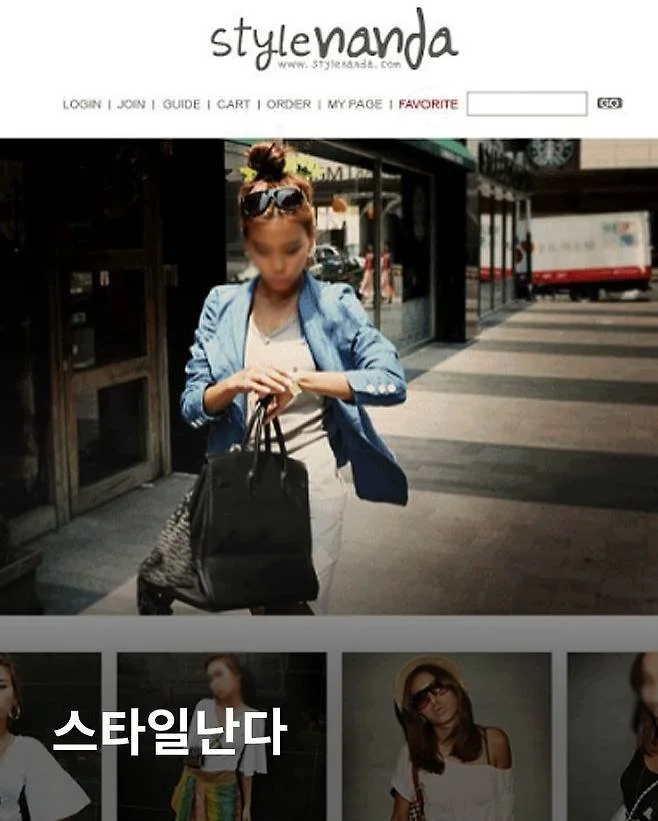
The Original Gangsta and most successfull case of the online shopping mall in Korea, and which still had an aesthetic impact felt to this day. It is also why young Korean women started doing more editorial/stronger makeup looks.