The Phantasmic Girls of Korea
A Hongdae State of Mind
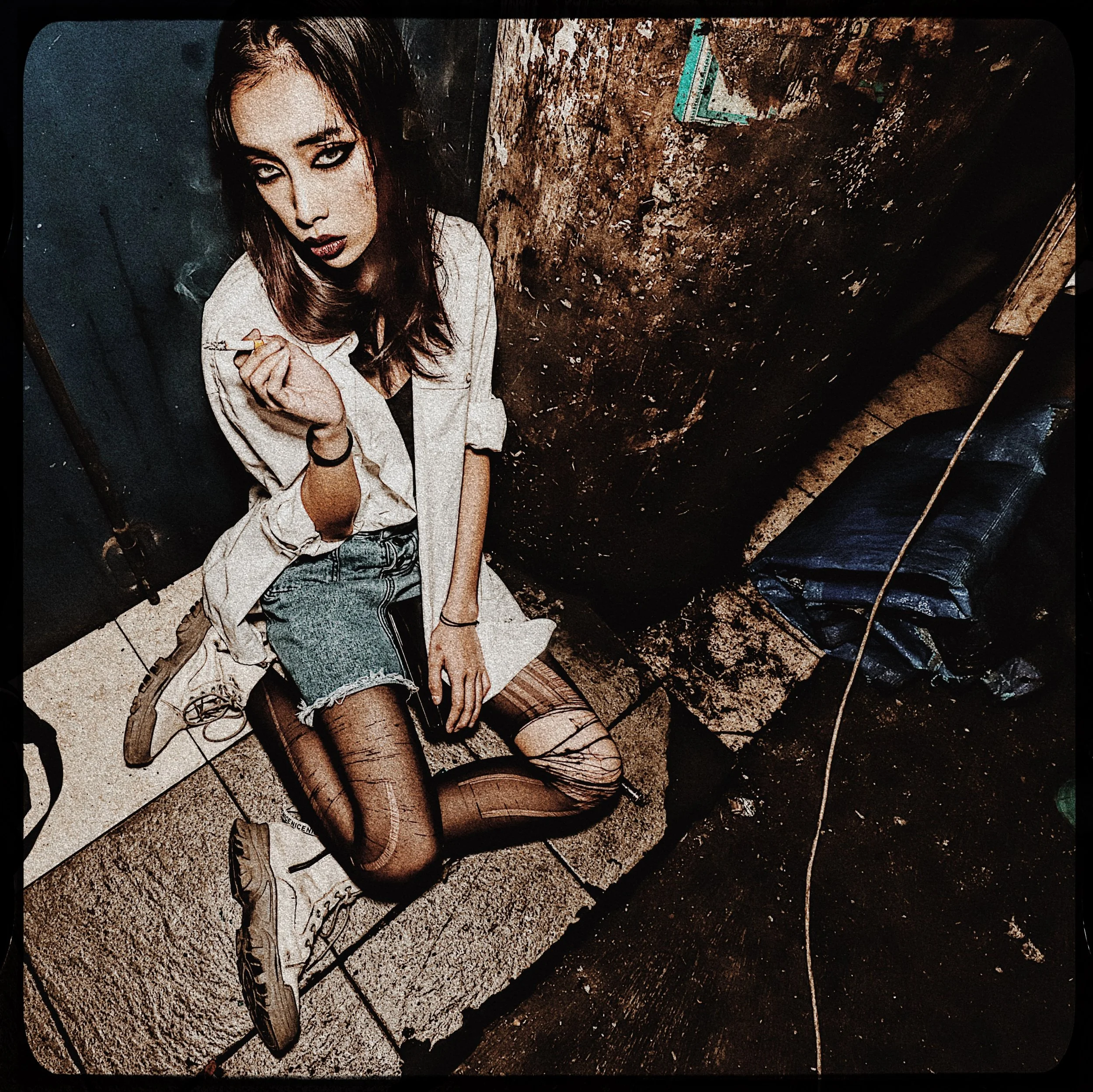
Model Vivi in Yogyakarta, Indonesia — not Seoul, though her head was already in Hongdae. She wasn't just performing this for the camera, this time. She'd been wearing this “Korean” look on her own, for a full year before anyone showed up to shoot it.
Ondonesian model Vivi isn't sitting in a back alley in Seoul. In her mind, she's a Korean girl in Hongdae. In reality, she's on the ground, smoking, in an alley in Yogyakarta, Indonesia — no studio, no backdrop, just the kind of corner nobody photographs on purpose. Industrial mess and muss all around,, a blue tarp shoved against the wall. Camera above her, looking down. She looks straight back up into the lens, cigarette between two fingers, not performing surprise at being caught, because she isn't caught. White boots. A denim mini skirt with a frayed hem. Ripped black stockings. The look has a name in Korean — 퇴폐미, the beauty of decay, 1990s grunge filtered through a Seoul sensibility — and she's executing one of the hardest registers in Korean street fashion to pull off convincingly.
She's a barista. She has no Korean heritage at all.
Here's the detail that actually matters: iin the summer of 2024, when I asked her to prepare "a Korean-inspired look," she sent back a single photo and three words — "Like this?!" — and that photo wasn't something she threw together for the occasion. It documented a shoot she'd already done, entirely on her own, a full year earlier. The boots. The skirt. The stockings. She'd already assembled that exact look and worn it, for reasons that had nothing to do with me, or a camera, or a research project. The aspiration was already a year old before anyone went looking for it. That's the whole story in one frame: a woman with zero Korean heritage, genuinely and privately reaching toward a specific, exportable version of the "Korean girl" — and getting there without instruction.
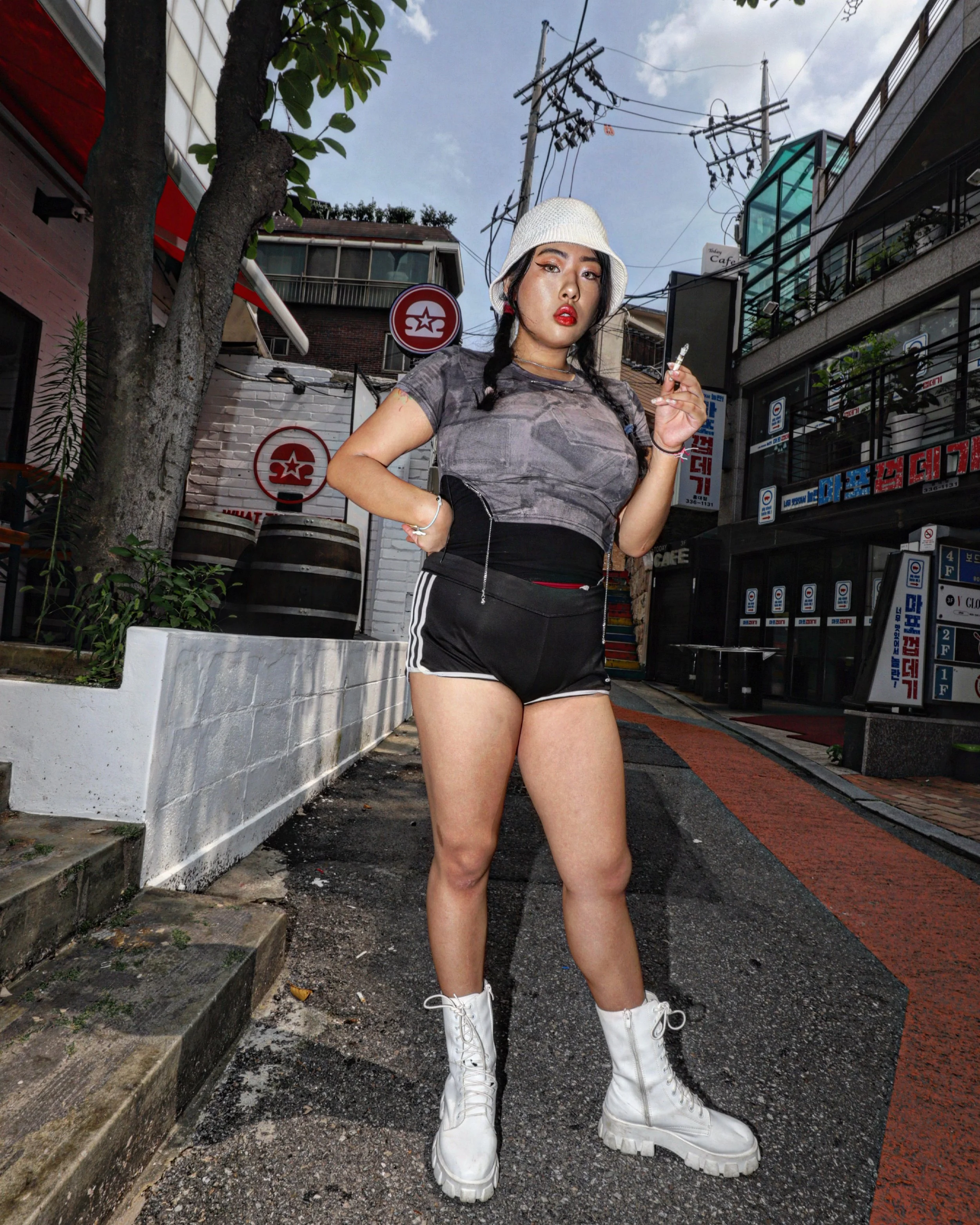
Seoul, the same summer as Vivi's Yogyakarta session. Model @ynana5663 sports the same white boots, same cigarette — both had been circulating through Korean street style and the wider internet long before either shoot. Korea put them into tighter, Asian circulation. Vivi picked them up down the line.
Vivi’s not an anomaly. She's proof of concept.
There's a term for what Vivi is doing, and it comes from a 1984 essay called "Fantasia," by film theorist Elizabeth Cowie. She calls fantasy a mise-en-scène of desire — not a story you watch from the outside, but a staged scene you can enter from more than one position at once, the way a daydream lets you be more than one person in the same story.
Worth pausing on the word itself for a second, since it's doing real work here: a phantasm isn't just a fancier way of saying fantasy. It's the older word for the scene underneath the daydream — not the story you consciously tell yourself, but the structure the story runs on. Same root as phantasmagoria, the 19th-century magic-lantern shows that projected vivid images onto smoke and screens with nothing solid actually behind them. That's the more precise claim hiding in the name. Borrowing Cowie's mechanism, I call the finished Korean product built for exactly this kind of multi-entry staging the Phantasmic Girl — not a fantasy someone has about Korea, but the projected scene itself, solid body optional. Something built to be stepped into.
Vivi stepped in.
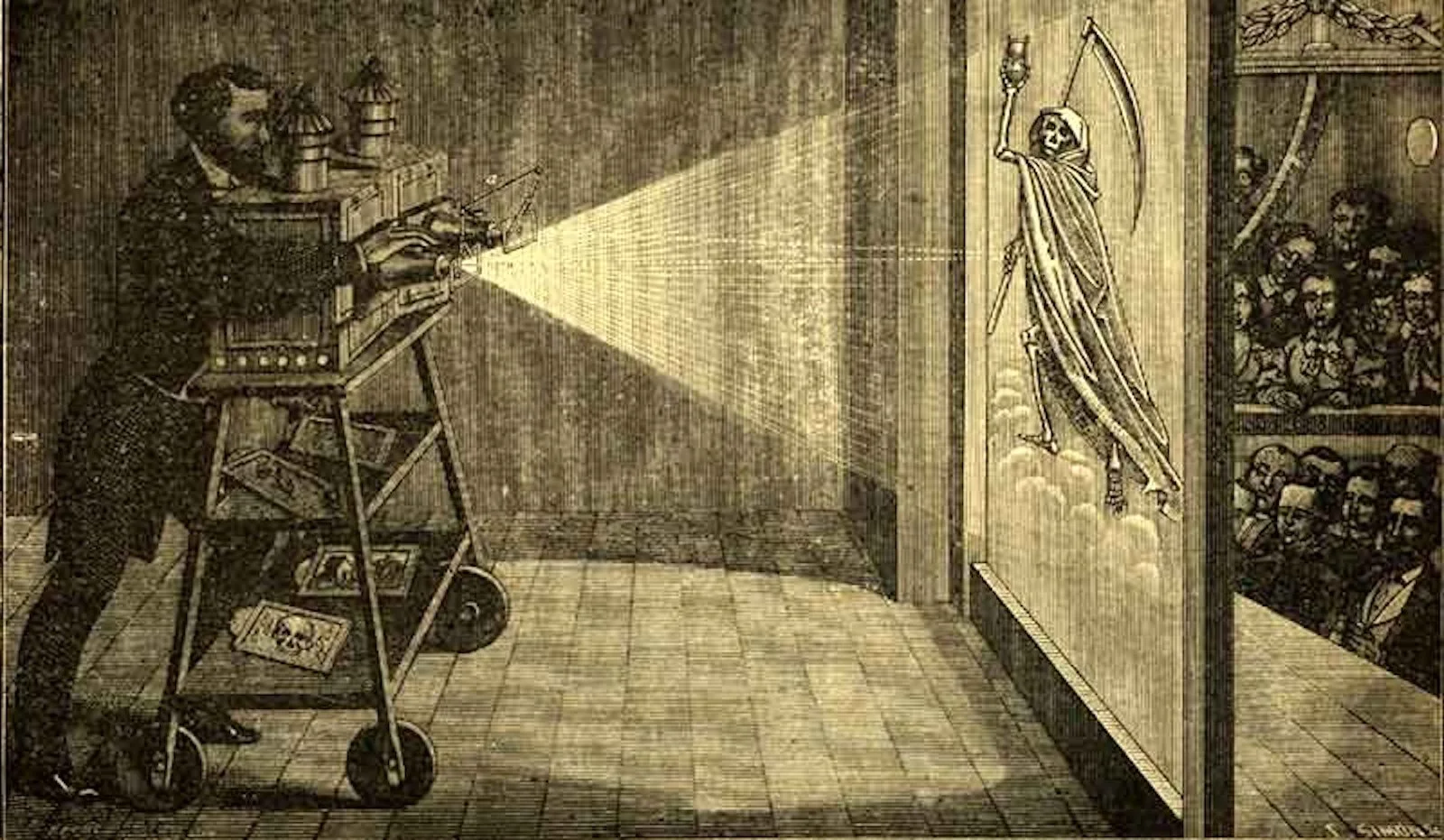
Étienne-Gaspard Robert's Phantasmagoria, 1798 — a hidden projector, a moving image with no body behind it. The machine stayed hidden behind the screen. Only the image was ever visible. The literal root of "phantasm": a vivid, moving presence with no solid body behind it, cast outward into the room and, more precisely, into the mind of whoever's watching. The Phantasmic Girl runs on the same mechanism — projected from an apparatus the audience never sees, sized to whatever each viewer needs her to be."[Source]
A Very Old Invention
Every culture invents "the girl." She's not a biological fact, she's a market category — someone decided there was money in her, and then built her accordingly.
Here's a fact that should stop you for a second: there's an entire academic field built to study exactly this, and you've probably never heard of it. It's called girls' studies, and it had to fight to exist, because for decades "girlhood" — despite driving billions of dollars in retail, media, and now K-pop revenue — was treated as too trivial, too consumerist, too pink to be worth serious academic attention. Gender studies took women seriously. Nobody was taking girls seriously, precisely because everyone assumed there was nothing under the pink to study.
Two scholars changed that. Catherine Driscoll argued, in Girls: Feminine Adolescence in Popular Culture and Cultural Theory, that "girl" was never a stable, biological life stage at all — it's a discourse (academic shorthand for a way of talking about something that actually shapes what that thing gets to mean, rather than just describing something that already exists on its own), endlessly remanufactured around whatever capital needs a girl market to be at a given moment.
Worth a quick historical reminder here, because the construction goes back further than you'd think: literary scholars have spent decades reading Lewis Carroll's Alice's Adventures in Wonderland (1865) as one of the earliest full case studies of exactly this. Alice isn't really a girl so much as a Victorian idea of one — endlessly picked apart in the criticism as a fabricated ideal of "innocence and eternity," a fantasy of girlhood built to carry adult society's own anxieties about class, propriety, and control.
America had its own version not long after, and it was just as manufactured. Illustrator Charles Dana Gibson spent the 1890s and 1900s drawing the "Gibson Girl" — tall, poised, impossibly composed — reproduced across magazines so relentlessly that an entire generation of American women adjusted their posture, their hair, their whole self-presentation to match a pen-and-ink drawing. Nobody thinks of that as marketing anymore. It was, completely.
Mary Celeste Kearney picked up the industry half of the same argument in Girls Make Media: how entertainment companies learned to package girlhood and sell it back to girls themselves as empowerment. Between them, the field makes one claim that changes how you have to read everything that follows: the girl was never discovered. She was invented — twice. Once as an idea. Once as a product line.
This article is girl studies, applied to Korea — the one country that took the field's founding insight and ran it further, faster, and more efficiently than Driscoll or Kearney ever had a case study for.
That's the whole story in one frame: a woman with zero Korean heritage, genuinely and privately reaching toward a specific, exportable version of "Korean girl" — and getting there without instruction.
The Girl Korea Built
Every culture invents "the girl." She's not a biological fact, she's a market category — someone decided there was money in her, and then built her accordingly.
Here's a fact that should stop you for a second: there's an entire academic field built to study exactly this, and you've probably never heard of it. It's called girls' studies, and it had to fight to exist, because for decades "girlhood" — despite driving billions of dollars in retail, media, and now K-pop revenue — was treated as too trivial, too consumerist, too pink to be worth serious academic attention. Gender studies took women seriously. Nobody was taking girls seriously, precisely because everyone assumed there was nothing under the pink to study.
Two scholars changed that. Catherine Driscoll argued, in Girls: Feminine Adolescence in Popular Culture and Cultural Theory, that "girl" was never a stable, biological life stage at all — it's a discourse (academic shorthand for a way of talking about something that actually shapes what that thing gets to mean, rather than just describing something that already exists on its own), endlessly remanufactured around whatever capital needs a girl market to be at a given moment.
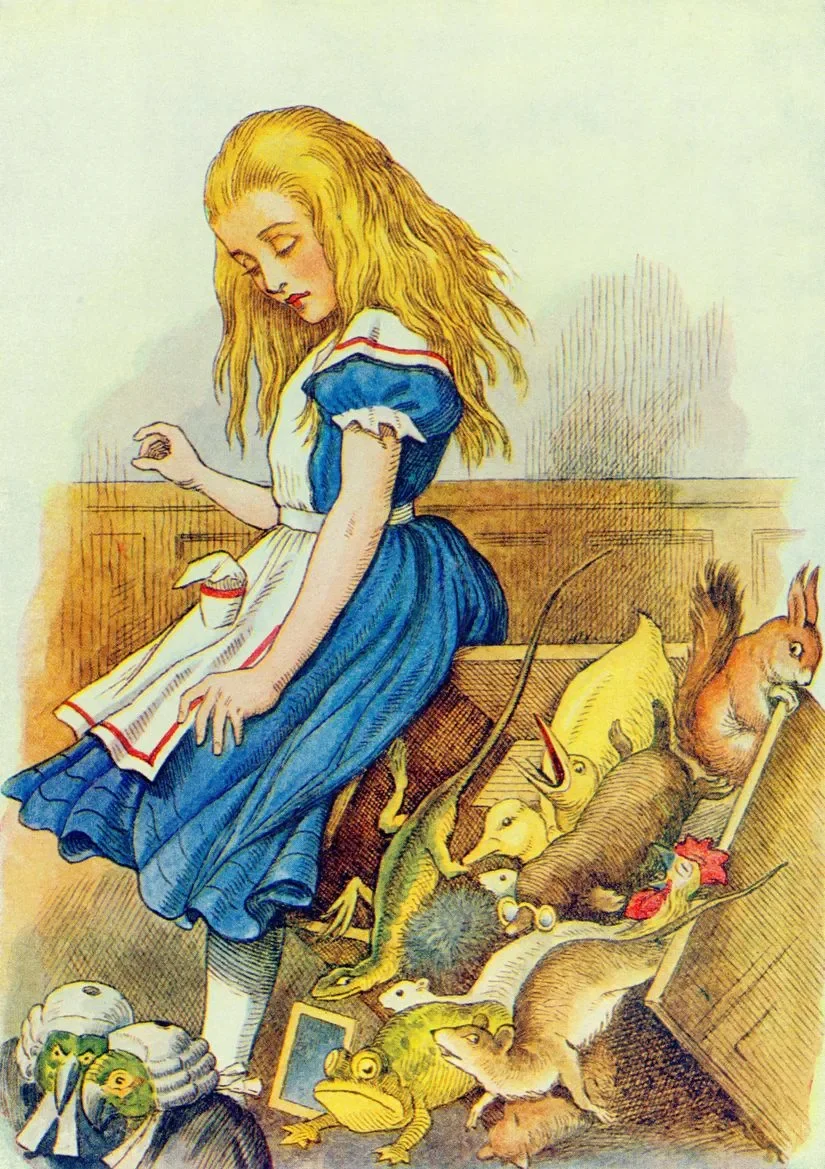
John Tenniel's original 1865 illustration for Alice's Adventures in Wonderland — the West's first full draft of "the girl" as fabricated ideal, sixty years before Japan called one ‘Modern.’
Worth a quick historical reminder here, because the construction goes back further than you'd think: literary scholars have spent decades reading Lewis Carroll's Alice's Adventures in Wonderland (1865) as one of the earliest full case studies of exactly this. Alice isn't really a “girl” so much as a Victorian idea of one — endlessly picked apart in the criticism as a fabricated ideal of "innocence and eternity," a fantasy of girlhood built to carry adult society's own anxieties about class, propriety, and control. "The girl" was already being manufactured a full sixty years before anyone in 1920s Japan called her “Modern.”
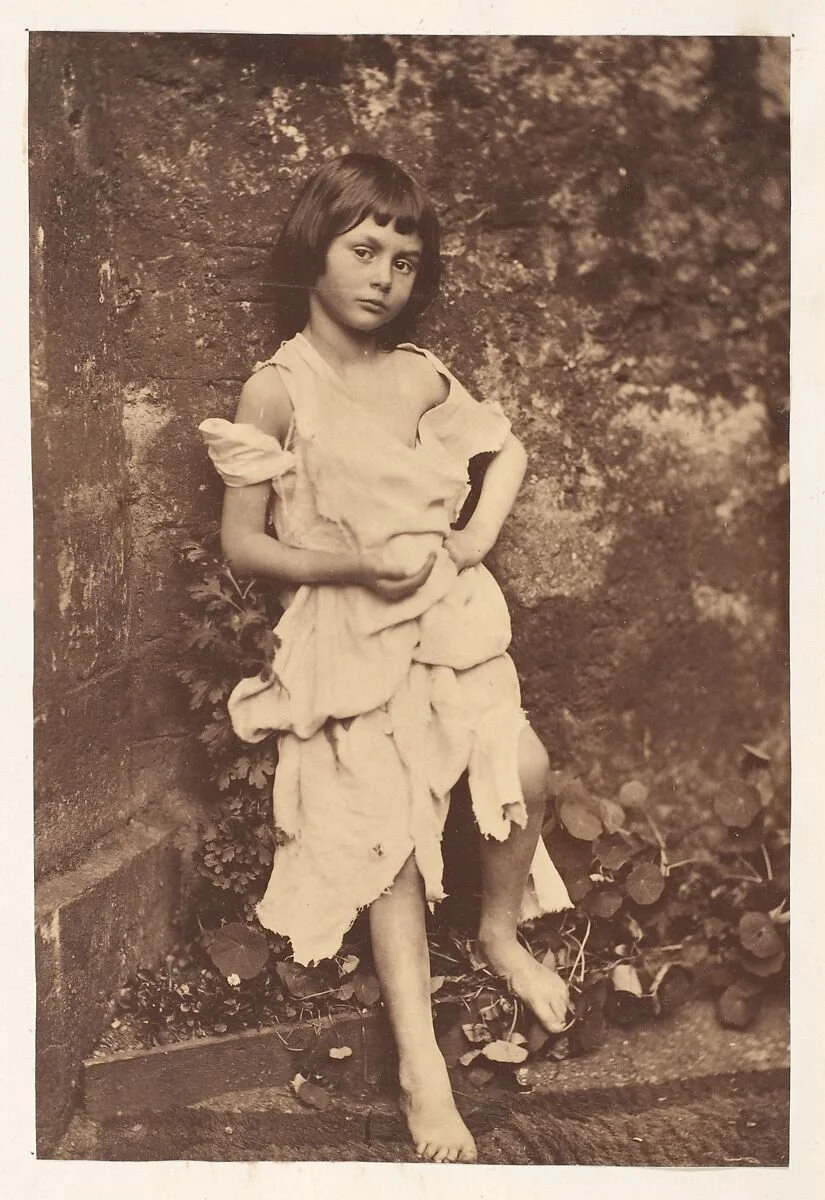
Lewis Carroll took this portrait of the actual child Alice Pleasance Liddell in 1858,and was the very real basis for the fantastic construction of her as the quintessential girl that was the basis for our understanding of a “girl” throughout the 20th centuruy and beyond. [Source: The Met]
Mary Celeste Kearney picked up the industry half of the same argument in Girls Make Media: how entertainment companies learned to package girlhood and sell it back to girls themselves as empowerment. Between them, the field makes one claim that changes how you have to read everything that follows: the girl was never discovered. She was invented — twice. Once as an idea. Once as a product line.
This article is girl studies, applied to Korea — the one country that took the field's founding insight and ran it further, faster, and more efficiently than Driscoll or Kearney ever had a case study for.
America built one to sell prom dresses and magazine subscriptions. Japan built one in the 1920s to sell face powder, and called her the Modern Girl — bobbed hair, Western dress, a cigarette held exactly the way Vivi holds hers a century later. A research group of historians (Tani Barlow and collaborators, writing as the Modern Girl Around the World project) later traced how that same figure showed up almost simultaneously across 1920s and '30s Japan and China — the first real evidence that "the girl" could travel as a transnational commercial product, decades before Korea ever got involved.
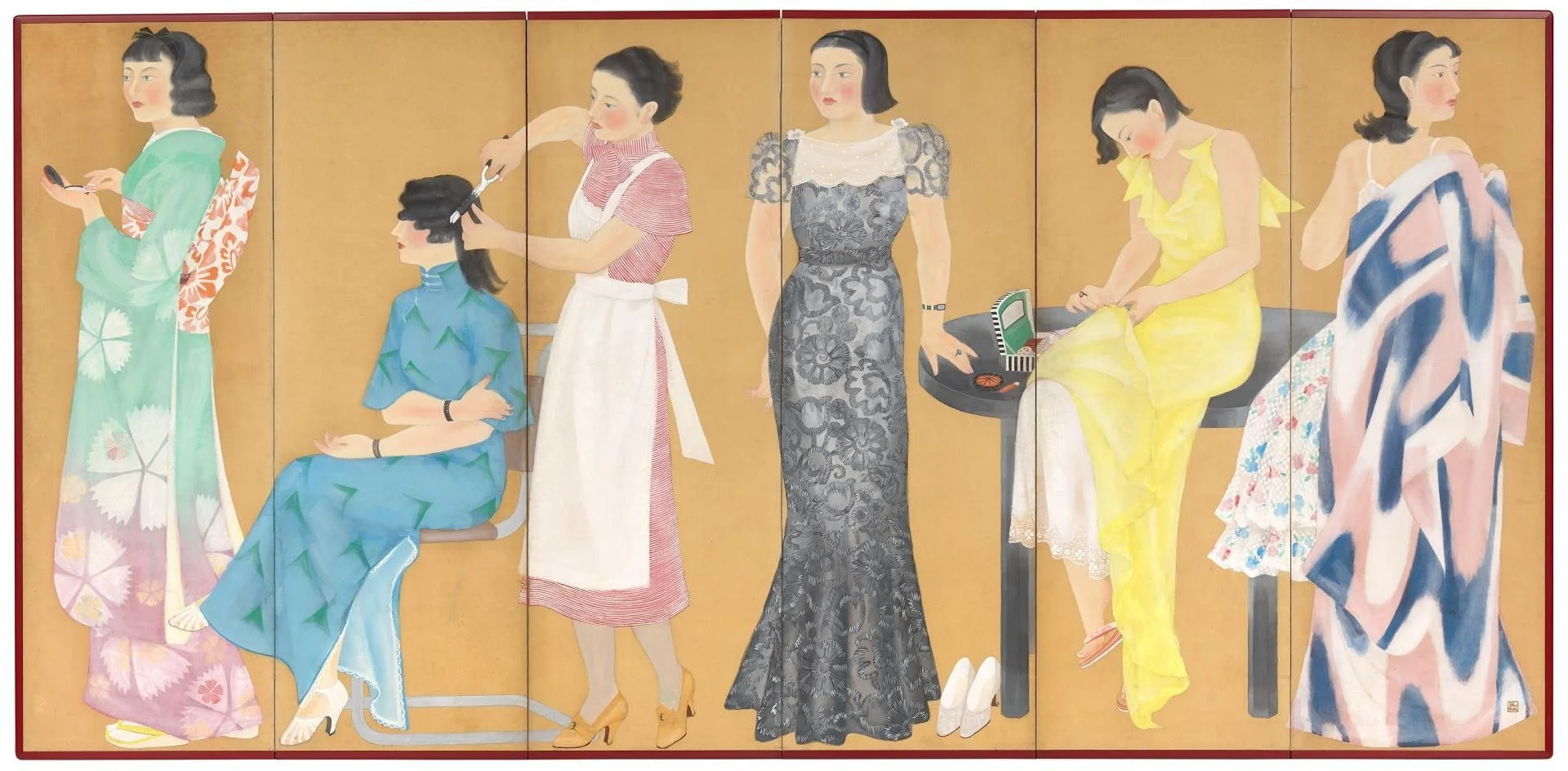
“Women preparing for a party (Yosoō hitobito) 1935 by Taniguchi Fumie. Estate of Taniguchi Fumie” [SOURCE]
Korea did something nobody else managed: it turned "the girl" into a full national industry, and got terrifyingly good at it.
Here's the part worth actually sitting with, because it's a real paradox and not just a phrase: Korean style went global by doing the opposite of this. Street fashion, K-beauty, the whole aesthetic export machine succeeds because it's endlessly hybrid — Fila sneakers, American streetwear silhouettes, Japanese layering, all absorbed and reassembled into something that reads as Korean anyway, belonging to no single source. The girl doesn't travel that way. She goes global through the reverse move: not addition, subtraction. State industrial policy, entertainment companies, and media all pointed at the same target across decades and narrowed it — fewer possible ways to be a girl, each remaining option polished until it's maximally legible and maximally exportable. Style expands outward. She gets concentrated inward.
I call the result the Hypergirl — not exaggerated, concentrated, the way espresso isn't a bigger cup of coffee, it's the same coffee with everything but the potency boiled off. K-pop's trainee system isn't one example of this concentration process among several. It's the machine that does the concentrating — the single most efficient, most exportable version of the girl the process has ever managed to produce.
This didn't start with K-pop. It started in garment factories in the 1970s, where teenage girls sewed clothes for export sixteen hours a day so the country could claw its way out of poverty. Those girls were tools of the economy, not products of it — anonymous labor, making real garments that shipped out under someone else's label. A young factory worker named Jeon Tae-il set himself on fire in 1970 protesting those conditions, one of the defining moments in Korean labor history. Korea has been using the girl as a tool of the national economy since those factory floors — the only real difference is that the K-pop girl, the Hypergirl, is both the tool of production and the product itself.
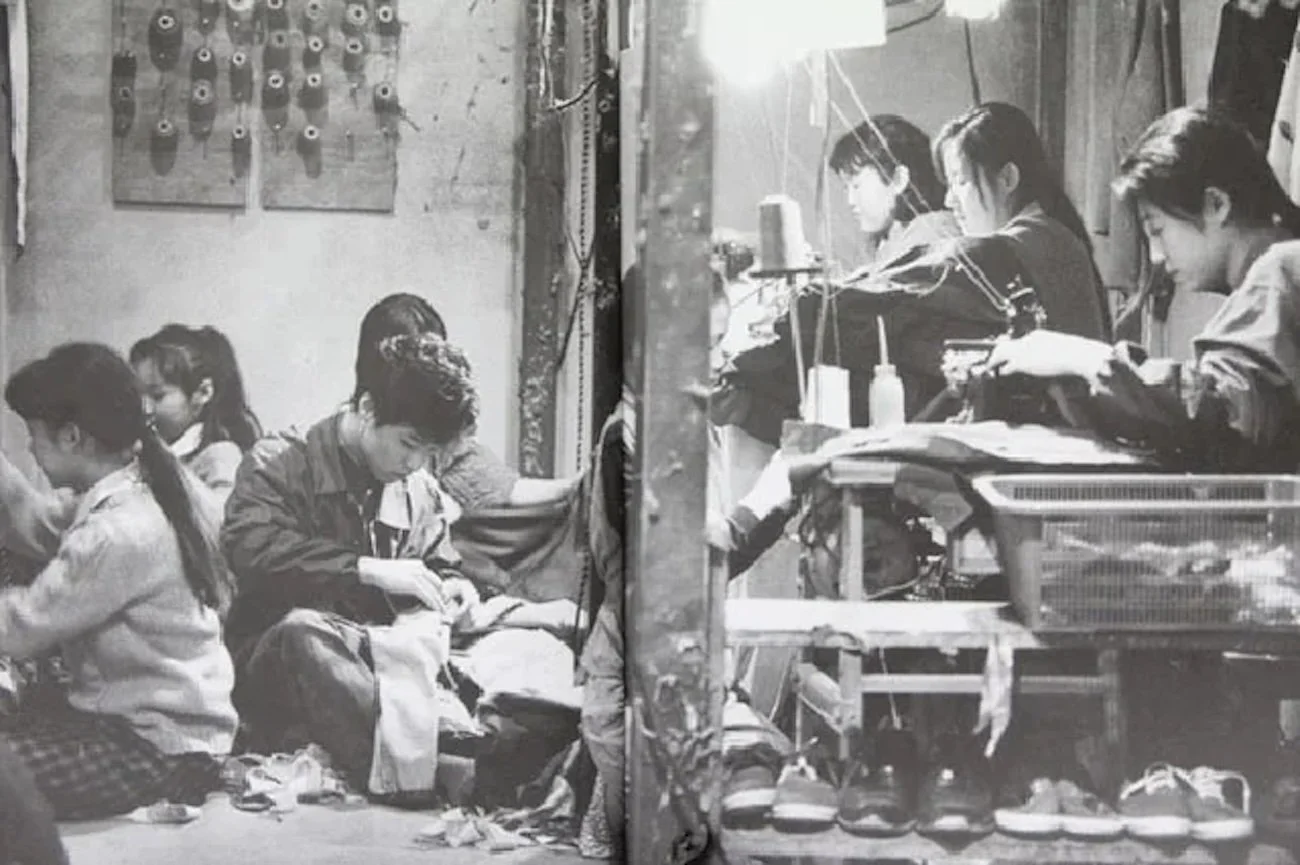
A scene from the 1995 film A Single Spark (아름다운 청년 전태일), which dramatizes the entire Peace Market story. [Source]
Fractal Femininity: What She Becomes
There's a name for what happens to a girl once she's run through that kind of industrial concentration.
Watch a K-pop video and you're not looking at one type of girl. You're looking at a catalog — the badass one, the cute one, the icy elegant one, the girl-next-door one — a menu where every option arrives pre-made. That's not incidental variety. That's the business model: manufacture every version of "girl" a fantasy could possibly want, own the whole menu, and let anyone on earth pick whichever one they need that day. I call this pattern fractal femininity, because a fractal is exactly this trick: an extremely simple, narrow rule that generates what looks like infinite variety the deeper you zoom in. A handful of "concepts," endlessly recombined, reads as boundless choice.
And once she's been reduced to a menu of interchangeable options, something else happens to what she actually is. Asian American studies scholar Anne Anlin Cheng calls it Ornamentalism — her argument, in the book of the same name, is that a certain kind of femininity gets treated less like a person and more like an ornament: synthetic surface standing in for a body that becomes almost beside the point. Cheng builds the case from Hollywood glamour shots of Anna May Wong and museum exhibitions of Chinese porcelain and silk — the West literally displaying Asian women the way it displayed decorative objects. The twist here: Korea took Ornamentalism and started running it on its own women, on purpose, as an export industry — no outside gaze required anymore. The factory learned to build its own mirror.
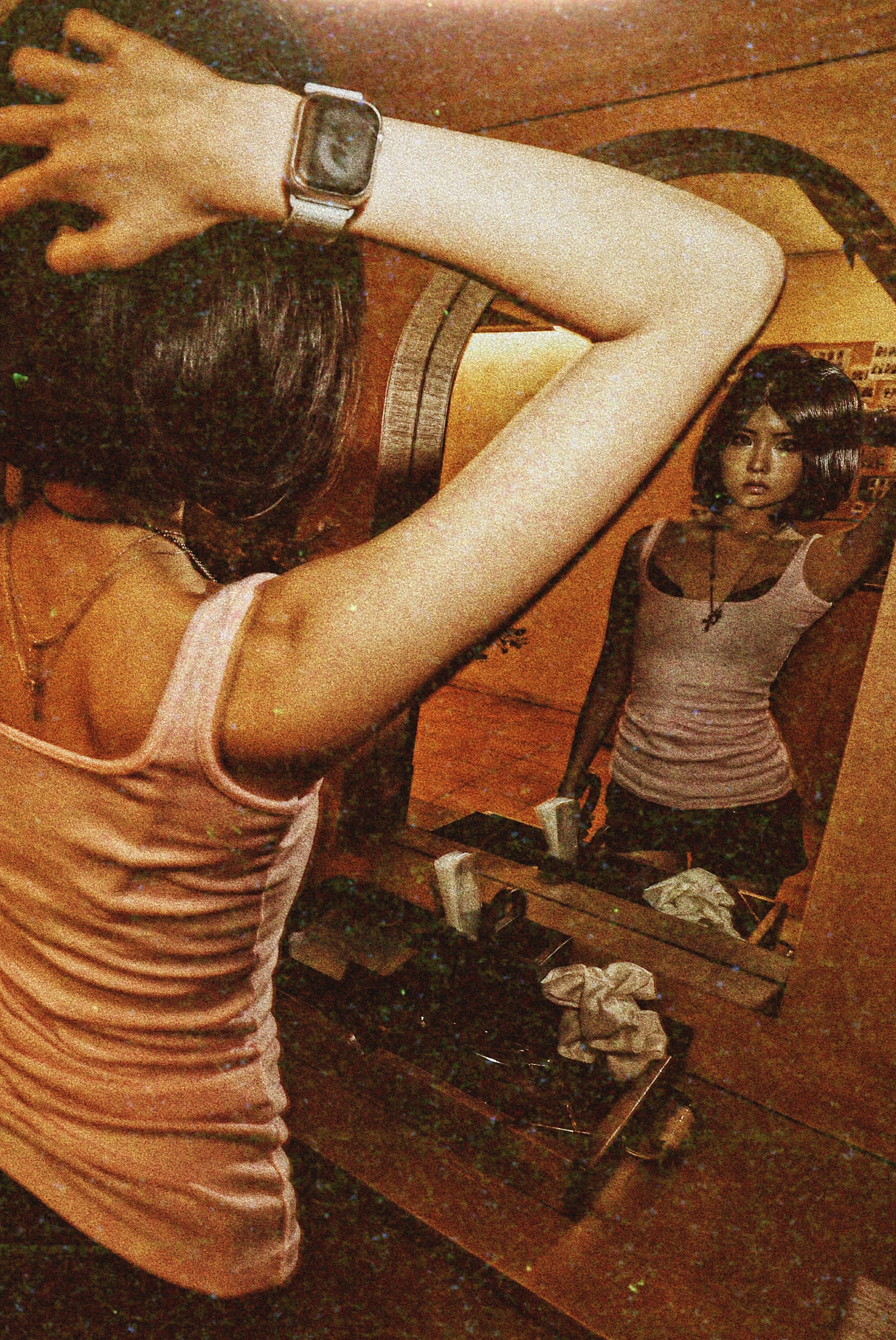
Model @sang_eun0506 primps for the camera in one of Seoul's ubiquitous self-photo studios — a commercial space built for exactly one purpose: turning oneself into an image. This is the factory building its own mirror, literally. No outside gaze required. Just a room designed to help you do the work yourself.
And here's the part that took the industry from successful to genuinely strange: she was built to belong to nobody, on purpose, so she could belong to everybody. Media scholar Koichi Iwabuchi coined a term for exactly this move back when he was studying Japan's own exports — mukokuseki, "without nationality," his word for the same trick Sony pulled with the Walkman and Sanrio pulled with Hello Kitty: strip anything that ties a product to its country of origin, and it circulates frictionlessly everywhere. Korea just ran the identical strategy on a person. Strip the markers, and a teenager in Ohio and a fan in Jakarta can both feel like she's theirs. Doesn't matter that she was manufactured by a Korean company, trained in a Korean system, marketed as Korean soft power. The content itself was engineered to feel like it belongs to no one in particular.
Korea built the fantasy to be occupiable, for the phantasm to have global legs.
Vivi is what happens when someone from the outside successfully embodies the phantasy.
She's Not the Only One
This is where most coverage of "koreaboo" culture gets it backwards.
The word gets thrown around as an insult — usually at women, usually implying something a little pathetic about wanting Korean things too much. Media researcher David Oh studied this stigma directly and named what's actually driving it: the patriarchal Western gaze, his term for a policing reflex dressed up as protecting Korean culture, when what it's really defending is the West's own assumption that it still sits at the center of the world's culture — a position that's visibly not holding. But look at what's actually happening: a fan who fully adopts the styling, the aesthetics, the self-presentation isn't imitating a costume. The fantasy worked exactly as designed — so completely de-nationalized that someone with no connection to Korea at all can step directly into it and mean it. Cultural theorist Stuart Hall named the mechanism decades before K-pop existed: encoding/decoding. His argument — audiences don't just receive a message the way it was sent, they decode it through their own social position, and can produce a reading the original encoders never planned for. A koreaboo isn't misreading the invitation. She's decoding it more literally (and bodily) than anyone expected her to.
Vivi didn't do this for an audience. She did it a year before there was one.
Then There's BTS
Here's the turn that makes this bigger than a fashion story.
The same industrial process — concentrate, fractal-menu it into a set of interchangeable "concepts," strip the nationally specific markers, ship it globally — didn't stop at girl groups. Korea ran the identical playbook on its boy bands. BTS are phantasmic boys in exactly the sense K-pop's girl groups are phantasmic girls — cycling through concept eras (the hip-hop-coded early years, the pastel near-androgynous "Young Forever" period, the polished global-pop "Dynamite" era) the same way a girl group cycles through badass-to-elegant-to-cute, each member occupying a distinct lane within the group the same way individual idols do in a girl group. Partial English lyrics. Universalized themes — self-love, mental health — instead of culturally specific content. The identical de-nationalization mechanism, just running on the other half of the roster.
Scholar Sun Jung named this before BTS existed. Writing in 2011, she coined "soft masculinity" for the specific hybrid K-pop idols were already running — part Korea's own scholarly seonbi ideal (restrained, cultivated, more brain than brawn), part Japanese bishōnen "pretty boy" aesthetics, part global metrosexual polish. Then, for the boy-band format specifically, she went further: "manufactured versatile masculinity" — multi-layered, strategically constructed, built for transnational appeal. She was describing a pattern in idols who came years before BTS. It fits BTS better than anything she had in front of her at the time.
This is not a claim that Korean men have been made feminine. That version of the idea has ugly history behind it — a century of Western caricature painting Asian men as inherently less masculine, less virile, less whole, relative to a white masculine default.
Our actual claim is narrower and stranger: the mode of gender production is the same. The industrial process that manufactures occupiable, fractal, de-nationalized fantasy positions for the girl produced de-nationalized fantasy positions for the boy too. Not because Korean men are secretly girls. It’s that Korea built one factory and ran two different products through it. What the production of the girl meant for the boy in Korea is that the same industrial process produced their emergent manifestations. The apparatus doesn't have a gender. It just runs the code.
The Part That Makes People Uncomfortable
If a fantasy this complete, this occupiable, this exportable actually exists — why does it make people so twitchy when someone occupies it too fully?
The instinct is to assume the discomfort is protective — guarding something authentically Korean from being taken. But look closer and the logic falls apart: a woman going fully koreaboo isn't actually extracting anything from Korea. She's demonstrating that Korea has become the standard other people measure themselves against, instead of the other way around. That's a genuinely disorienting thing to watch happen if your whole cultural self-image assumed you were the one setting the terms. The easiest way to avoid sitting with that is to mock the person doing the demonstrating.
That's also why caucasian koreaboos get read as the most "cringe" — the postcolonial power reversal is most visible, most legible, most impossible to look away from, precisely when it's a white body making it plain.
"Korea got here first. Koreaboo stigma, the anxious domestic arguments about what 'girl' even means anymore — all of it is just the rest of the world catching up."
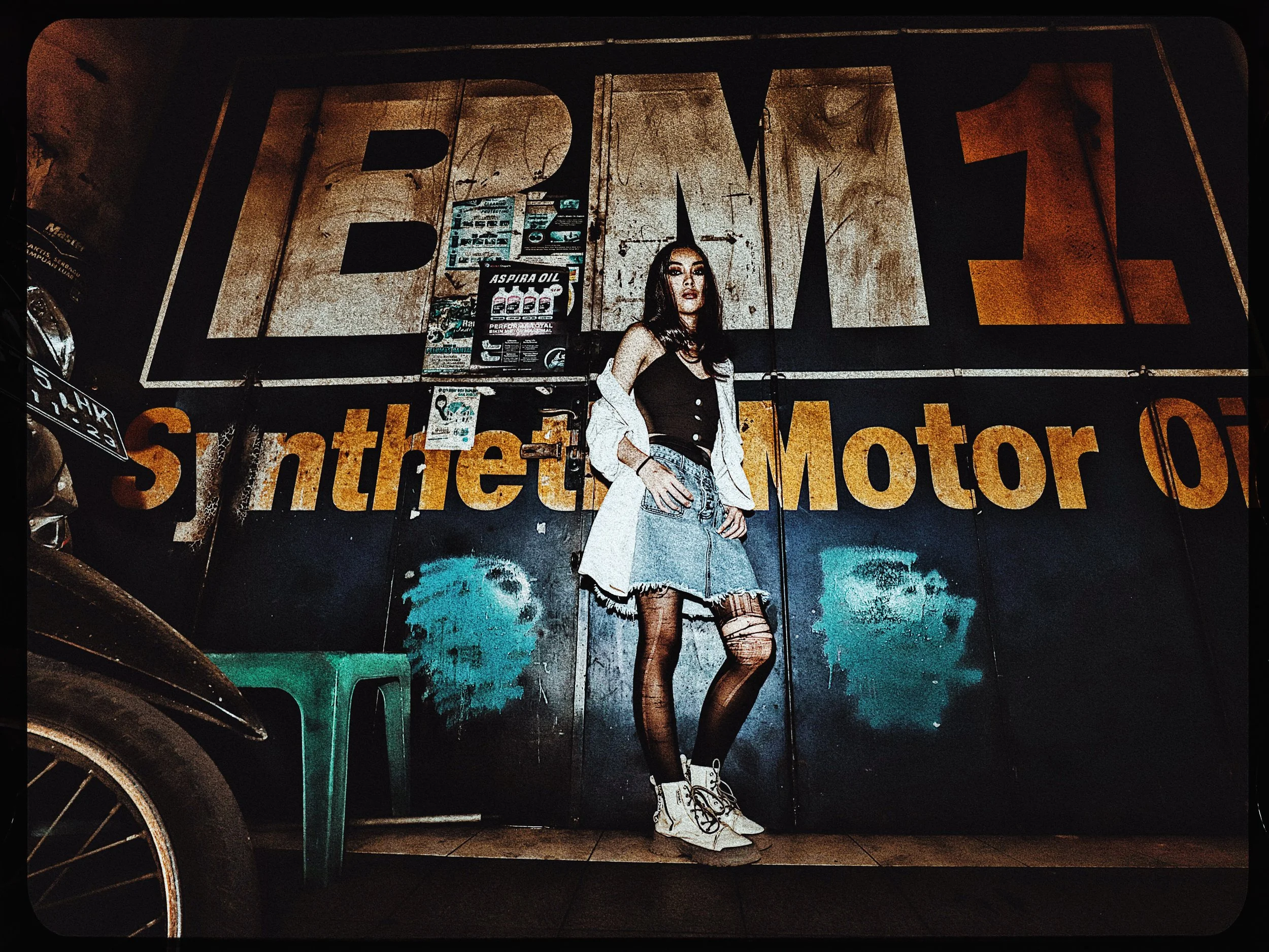
Vivi’s parting shot from Yogyakarta — Java's old royal capital and a major university town, where a commercial motor-oil sign ends up rhyming with Seoul's own back alleys anyway, the surrounding street-art scene pushing aesthetic standards enough that even a branded storefront wall picks up its visual grammar.