Korea's Curation Economy
What claw machines, café culture, and the death of algorithmic fashion have in common
Three things happened in Korean consumer culture over the past eighteen months that look unrelated until you see the pattern.
Claw machine arcades went from novelty to infrastructure—there are now more 인형뽑기방 (inhyeong-ppopgi-bang, literally "doll-grabbing rooms") per capita in Seoul than convenience stores in some entertainment districts. Vintage and secondhand fashion platforms saw double-digit growth while fast fashion stagnated. And Korean café culture, already the most oversaturated market on earth, kept expanding anyway—not because people needed more coffee, but because they needed more choosing.
The connection: the arcade, the vintage shop, and the café are all curation spaces. Places where the point isn't efficiency—buying the plushie online is cheaper, brewing at home is faster, Shein is more convenient—but the experience of deliberate selection.
This is the pattern the global fashion industry missed while predicting its own collapse. The 46% of executives expecting 2026 to get worse are measuring the wrong thing. They're tracking what people buy. Korean consumer culture already shifted to how people choose.
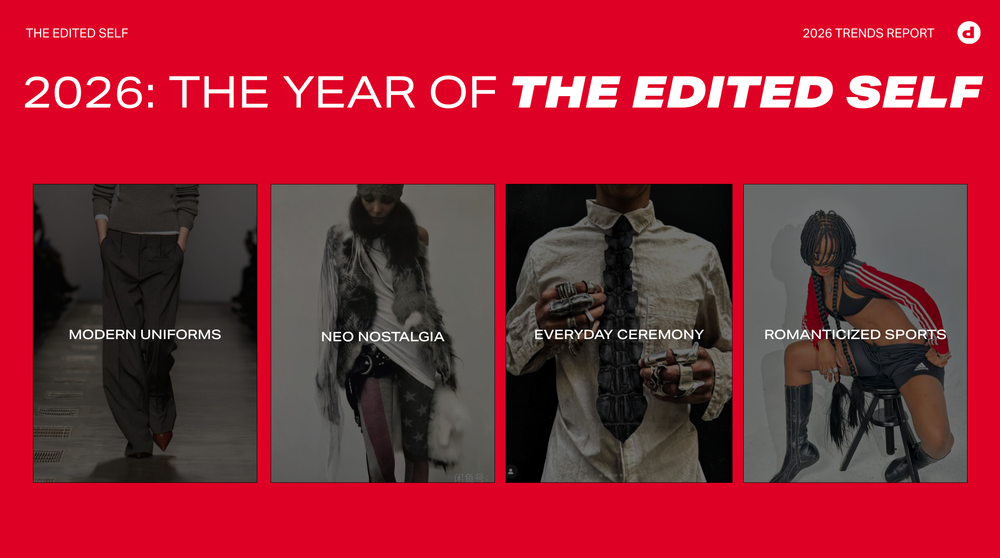
In December 2025, Depop—the world's largest Gen Z fashion resale platform—released data confirming what Seoul's streets have been demonstrating for years. They called it "The Edited Self"—a global pivot from trend-chasing to intentional curation. But Seoul didn't need the memo. Seoul was already there.
The Data Nobody in Fashion Wanted to Hear
Before we get into what the numbers mean, let's establish why this particular source matters.
Depop is a peer-to-peer fashion resale marketplace—think eBay crossed with Instagram, but specifically for clothing. Founded in London in 2011, it now has approximately 43.5 million registered users, and here's the crucial part: 90% of active users are under 26. This isn't a general population sample. This is Gen Z's actual shopping behavior, tracked in real time through search queries, purchases, and listing activity.
When Depop releases trend data, they're not speculating. They're not running focus groups or asking people what they think they'll want to wear. They're observing what millions of young consumers actually do when real money is involved. It's behavioral data at scale—the same methodological principle that makes photo-sartorial elicitation more reliable than interviews. People's actions reveal what their words conceal.
So when Depop's December 2025 report announced a fundamental shift in how Gen Z relates to fashion, the industry should have paid closer attention.
Here's what they found:
78% of respondents often or always repeat the same outfits or silhouettes. Not occasionally. Not when they're feeling lazy. As standard practice.
More than half described the habit as freeing. Repetition isn't failure—it's liberation.
42% said they feel overwhelmed by trends. Decision fatigue has reached the closet.
70% seek emotional comfort in clothing. Fashion as grounding mechanism, not status display.
71% of those affected by current events are drawn to styles from past eras. Nostalgia as psychological safety.
Only 1 in 3 said their primary outfit inspiration comes from social media. The algorithm's grip is loosening.
The report identifies four interconnected trends—Modern Uniforms, Neo Nostalgia, Everyday Ceremony, Romanticized Sports—but they all orbit a single thesis: consumers are choosing personal authorship over algorithm-driven churn. They want clothes that reflect who they are, not who the internet tells them to be.
Depop's language for this shift is precise: "clarity over clutter," "meaning over momentum," "quality over quantity." The Edited Self isn't about buying less (though that's part of it). It's about choosing more deliberately. Curating rather than accumulating.
And here's what the report doesn't say, but implies on every page: the enemy is the recommendation engine. The For You Page. The endless scroll of algorithmic suggestions that turned getting dressed into a content consumption activity. Gen Z isn't rejecting fashion. They're rejecting the systems that hijacked it.
The Claw Machine as Interface

She's been standing at the same machine for eleven minutes.
I'm watching from across the arcade floor in Shinchon—one of those claw machine rooms that have colonized every entertainment district in Seoul—and this woman in the cropped puffer and knee-high boots has cycled through maybe ₩15,000 trying to grab a specific Kirby plushie. Not any Kirby. That one. Third row, partially buried under a Sanrio reject.
She could buy the thing on Coupang for less. She knows this. Everyone in here knows this. The economics of claw machines are famously, deliberately, almost insultingly bad. Studies suggest the average success rate hovers around 10-15%, and operators can adjust difficulty in real time. You are statistically better off just purchasing what you want.
And yet.
The claw machine arcade boom in Korea over the past five years isn't a nostalgia play. These aren't retro gaming bars trading on 1990s childhood memories. They're something stranger: analog intentionality machines in a digital age.
Think about what a claw machine actually requires. You have to look at the available options—really look, scanning the entire field. You have to decide what you want. You have to develop a theory about how to get it. You have to execute, fail, reassess, try again. The outcome depends on your judgment, your persistence, and a little luck.
Nobody is serving you personalized recommendations. No algorithm is tracking your preferences to surface optimal choices. The abundance is right there, visually overwhelming, and you have to make sense of it.
This is curation in its most literal form. And it's expensive, time-consuming, inefficient by every metric that matters to platforms optimizing for engagement and conversion.
That's the point.
Look closer at what's actually in those machines. The prizes are global pop culture objects—Kirby, Sanrio characters, anime figures, cartoon ducks, Marvel knockoffs, random Western IP mixed with Korean and Japanese franchises. The claw machine doesn't produce content. It makes content available for selection. It's curatorial infrastructure.
This accidentally illustrates something I've been calling Cultural DJ Theory: Korea's role in global fashion and aesthetics isn't primarily as content originator but as content curator. The claw machine arcade is a spatial metaphor for how Korean style actually works. You walk into a brightly lit room filled with global cultural fragments, and you choose which ones to grab.
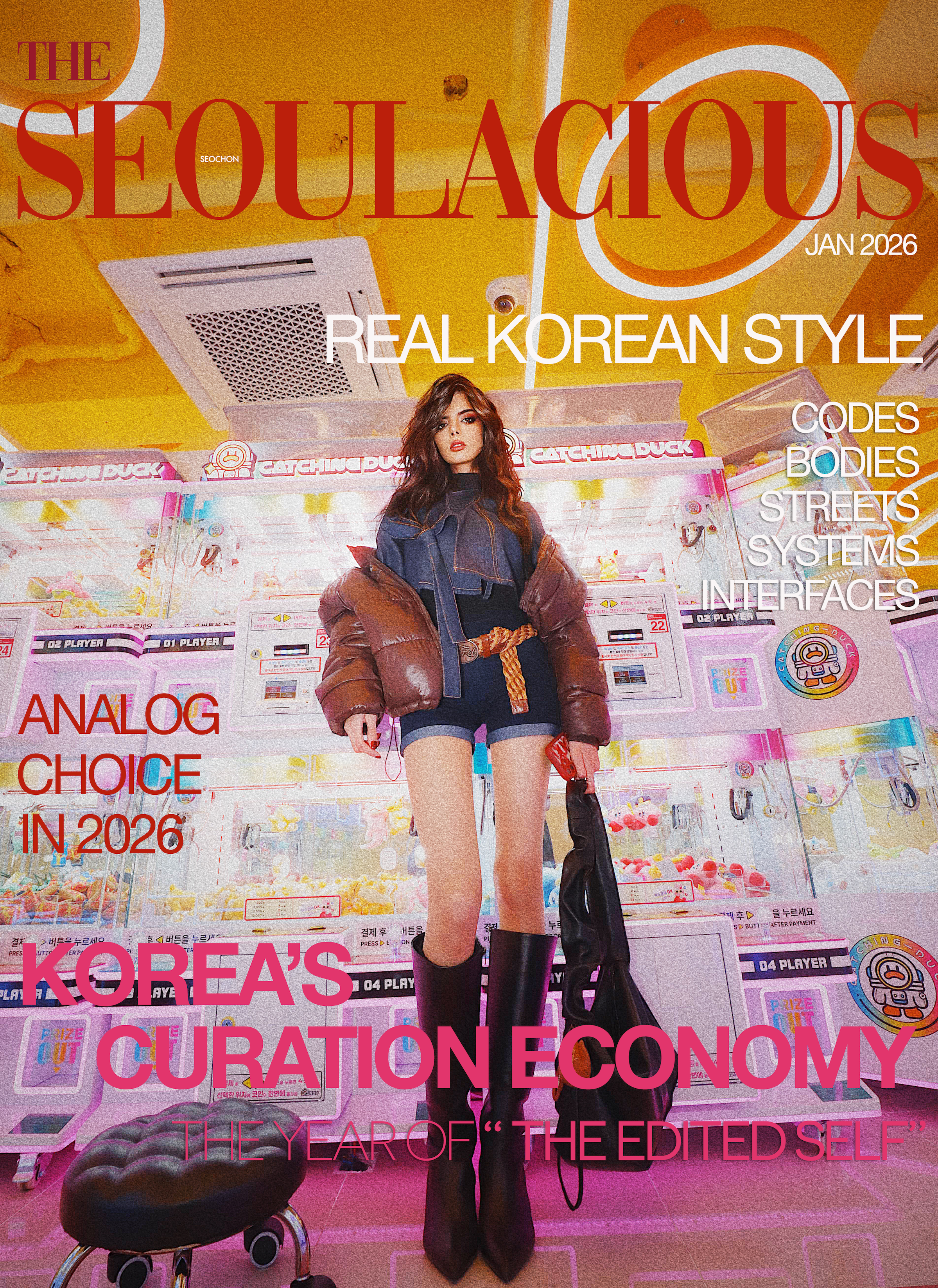
The cover shot for this issue puts a model inside that space—performing Korean style amid the visual noise of transnational pop culture. The puffer jacket, the denim, the knee-high boots: none of these are uniquely Korean objects. But the assembly is. The curatorial act of combining them, wearing them in this space, turning global raw material into personal expression.
That's what Depop's data is tracking at scale. The shift from passive trend consumption to active curation. Korea just happens to have built physical infrastructure for practicing it.
The Café Paradox
Here's a number that should make no sense: Korea has more coffee shops per capita than any country on earth, the market is objectively oversaturated, profit margins are brutal, and yet new cafés keep opening.
Seoul's coffee density is genuinely absurd. Some neighborhoods have cafés stacked on top of each other in the same building, each one themed, designed, curated to within an inch of its life. By any rational economic analysis, the market should have consolidated years ago. There's no way demand justifies supply.
Unless you understand that these places aren't selling coffee.
They're selling curation spaces.
Each café is a complete aesthetic environment—furniture, lighting, music, dishware, visual merchandising, spatial flow—that the consumer temporarily inhabits. The ₩6,000 Americano is an entry fee to a curated world. And crucially, the act of choosing which café to inhabit is itself the product.
You're not deciding between beverages. You're deciding which visual context to place yourself in. Which aesthetic identity to try on for an hour. Which curatorial vision aligns with who you want to be this afternoon.
This maps directly onto Depop's "Everyday Ceremony" trend: turning daily routines into intentional rituals. Korean café culture anticipated this by at least a decade. The insight was always there—that consumers increasingly want ordinary moments to carry aesthetic weight, that getting coffee can be a form of identity curation rather than mere caffeine acquisition.
And notice what Korean café culture isn't: algorithmic. Nobody's For You Page sent you to that specific third-floor hanok-conversion café with the vintage Scandinavian furniture. You found it, or a friend mentioned it, or you walked by and the window display caught your eye. The discovery process requires active navigation, not passive consumption.
The parallel to fashion is exact. When Depop reports that 78% of Gen Z repeats outfits and more than half find it freeing, they're describing the same psychological move. Commitment to a curated selection—whether that's your go-to café or your signature silhouette—provides relief from infinite choice. You're not rejecting options. You're asserting authorship over which options matter to you.
Korean consumers learned this in coffee shops before they applied it to closets.
The Industry Mismatch
Now look at what the fashion industry is actually tracking.
The Korean textile news from this month tells a grim story: Mexico imposing up to 50% tariffs on non-FTA countries including Korea. US-Korea FTA "yarn forward" rules strangling export competitiveness as domestic production capacity hollows out. McKinsey's State of Fashion report finding 46% of global executives expect conditions to worsen this year. The EU simultaneously easing and complicating ESG regulations. Supply chain disruptions from the Cambodia-Thailand border conflict rippling through Southeast Asian manufacturing.

Predictions are grim for the Korean textile industry, since production has generally moved offshore.
These are real problems. The production side of fashion is genuinely struggling—caught between rising trade barriers, sustainability mandates, labor cost pressures, and geopolitical instability.
But here's the mismatch: the industry measures production and sales. Units moved, revenue generated, supply chains optimized. These metrics capture what gets made and purchased. They don't capture what gets chosen.
And the consumer shift Depop documented is fundamentally about selection, not acquisition.
When 42% of young consumers say they're overwhelmed by trends, that's not a production problem. When 78% repeat outfits and call it freeing, that's not a sales opportunity. When people increasingly want "clothes that reflect who they are, not who the internet tells them to be," the solution isn't more efficient manufacturing or better-targeted advertising.
The solution is understanding that fashion's value proposition is shifting from product to curation.
This is where Korea's position gets interesting.
Korean fashion has never primarily competed on production. The manufacturing base migrated to Vietnam, Indonesia, Bangladesh decades ago. Korea doesn't have the scale for commodity fashion or the heritage luxury positioning of European houses. What Korea does have is curatorial infrastructure—the street style scenes, the café culture, the Dongdaemun design-to-retail speed, the K-pop styling apparatus, the claw machine arcades teaching millions of young people how to choose deliberately amid visual abundance.
Cultural DJ Theory again: Korea's competitive advantage isn't making the records. It's knowing which tracks to play, in what order, for what crowd. As global fashion shifts from consumption to curation, that advantage gets more valuable, not less.
The executives predicting doom are measuring the wrong thing. They're watching the production economy contract while the curation economy expands underneath it.
What "The Edited Self" Looks Like in Seoul
Come back to the cover image.
The model is standing in a Hongdae claw machine arcade wearing a cropped brown puffer over a denim jacket, denim shorts, knee-high black leather boots, carrying an oversized black leather tote. Behind her, rows of machines glow pink and yellow, stuffed animals and cartoon characters piled behind glass.
None of these garments are Korean. The puffer could be from anywhere. The denim is global commodity fashion. The boots are a silhouette that's been circulating through street style internationally for years. Even the space—the claw machine format—is Japanese in origin, filtered through global arcade culture before becoming Seoul infrastructure.
But the assembly is distinctly Korean. The proportions, the layering logic, the high-low mixing of luxury-adjacent pieces with youth culture kitsch. The confidence to wear a warm-weather silhouette (shorts, bare legs) with cold-weather outerwear (puffer, boots). The tote carried low rather than on the shoulder. These are choices that operate according to a curatorial grammar Seoul developed over years of street style experimentation.
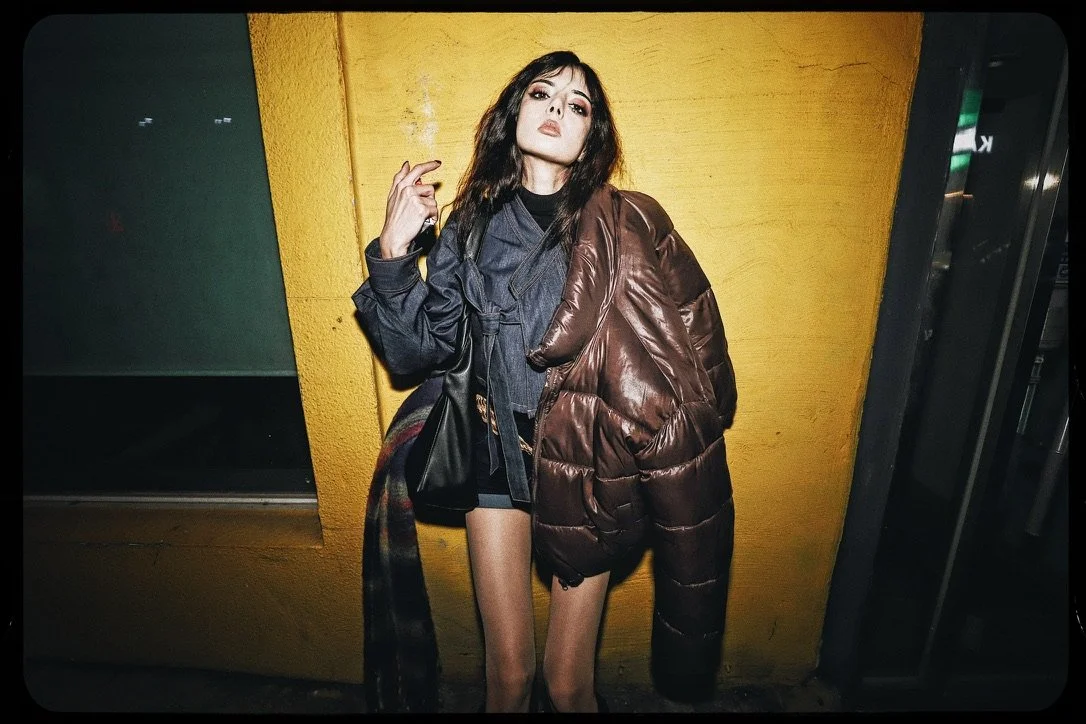
The fact that model @melina_.sd is wearing a (denim) hanbok from Ppobburi Hanbok (@ppobburi) is actually incidental to the Koreanness of the look, which is also mitigated by the fact that the ribbon is turned backwards from twiating and turning and constant churning of jacket/costume changes. The true mark of Korean style in 2026 is a pointed nonchalance about the provenance of the parts, with even the Korean element(s) being subject to the whims of circumstance. It is what it is, which is her style and the style of the prsent moment — whatever works.
This is what Depop's "Modern Uniforms" trend looks like when filtered through Korean style sensibilities. The outfit isn't chasing a microtrend. It's a repeatable silhouette—a personal code that signals taste through consistency rather than novelty. You could wear variations of this same assembly for months without it reading as repetition. It reads as signature.
I've been photographing Seoul streets for seventeen years, and what I've documented isn't primarily trend cycles. It's the development of curatorial grammars—the rules by which Korean style practitioners combine, remix, and deploy global fashion fragments into coherent aesthetic statements.
Photo-sartorial elicitation, the methodology I use for research, works precisely because it captures this curatorial dimension. When you ask someone to "dress in your notion of Korean style," you're not asking them to identify Korean brands or Korean-origin garments. You're asking them to perform a curatorial act—to assemble available elements according to the grammar they've absorbed.
What Depop is finally naming with "The Edited Self" is something Korean street style has been practicing visibly for years. The global consumer shift toward intentional curation has Korean precedents scattered across every neighborhood in Seoul, documented in thousands of street style photographs, embodied in the spatial logic of cafés and arcades and pop-up shops.
The methodology was always there. The industry language finally caught up.
The Year of the Grab
So here's how SEOULACIOUS is framing 2026.
The global fashion industry is scared, and they should be—every metric they trust is declining. Production is under pressure. Sales are softening. The algorithm-driven trend cycle that sustained fast fashion is hitting consumer backlash. The fundamentals, as the executives understand them, look grim.
But the consumer behavior shift happening underneath those numbers is actually good news for Korean style. Because Korea's strength was never producing fashion content at scale. It was curating it. Assembling it. Making sense of global abundance through local curatorial grammar.
The Edited Self isn't a threat to Korean fashion. It's a vindication of how Korean style has worked all along.
When young consumers worldwide choose clarity over clutter, they're choosing the way Seoul's style practitioners have operated for years. When they repeat silhouettes and call it freeing, they're adopting what Korean street style demonstrated in Hongdae and Gangnam long before the trend reports noticed. When they seek curation spaces over algorithmic recommendations, they're looking for what Korea built into its urban infrastructure: cafés, arcades, markets, streets designed for deliberate choosing.
SEOULACIOUS in 2026 will document this shift—not what's trending, but what's being chosen. Not what algorithms serve, but what people grab.
That cover shot of a model in a claw machine arcade isn't just a pretty picture with bright colors. It's a thesis statement. Korean style operates like that arcade: visually overwhelming, globally sourced, economically irrational by efficiency metrics, and completely dependent on the curatorial act of choosing. The machine doesn't play for you. You play the machine.
The claw machine is a terrible way to acquire plushies. It's a perfect way to practice choosing.
Korean style works the same way.
Credits:
Model: @melina_.sd
Modern (생활) hanbok: Ppobburi Hanbok @ppobburi)