
Think sharp. Look smart. Act sexy.
Be Seoulacious.
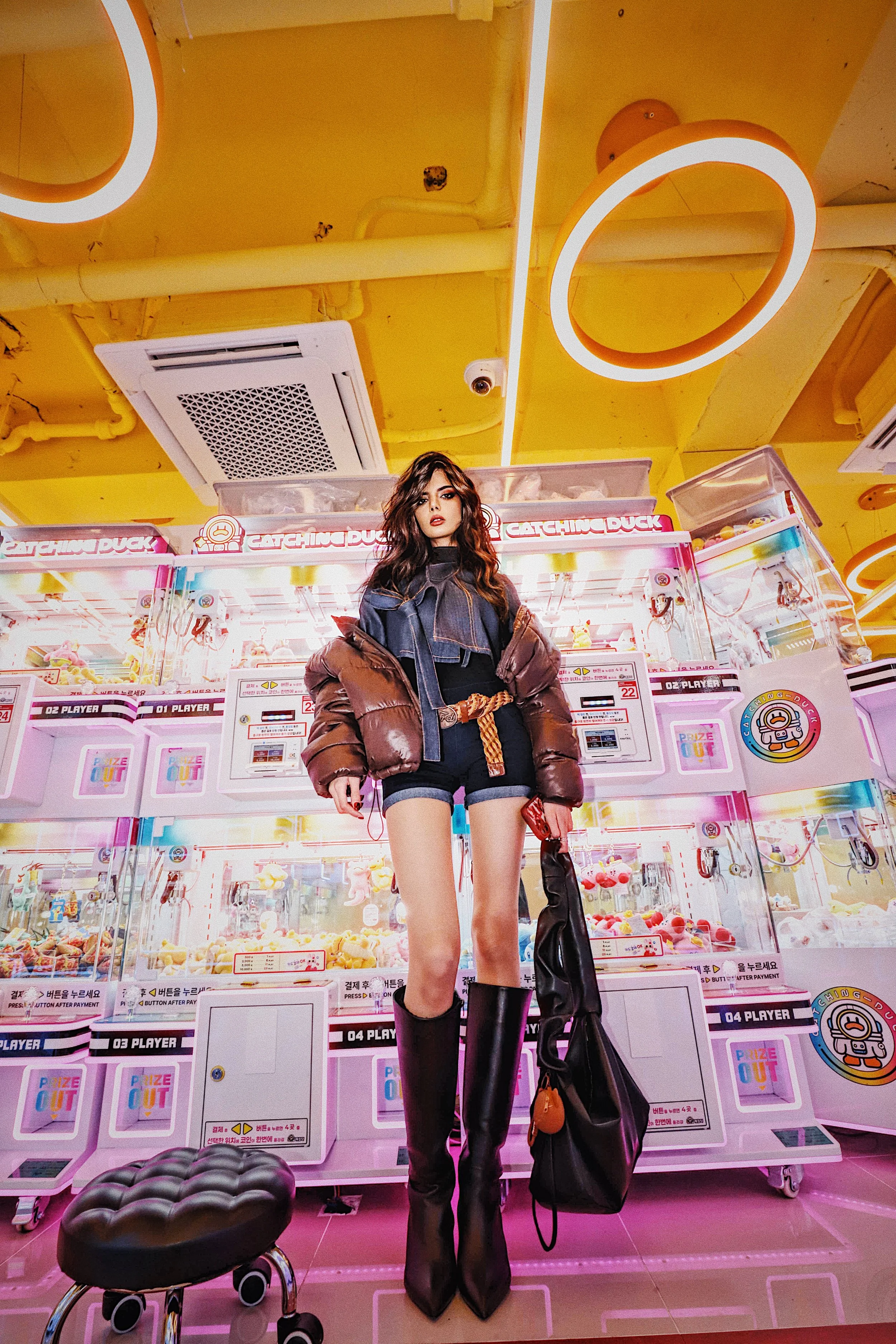
January 2026
“Korea’s Curation Economy”
Depop's 2026 "Edited Self" report confirms what Seoul's claw machine arcades and café culture have demonstrated for years: Gen Z is rejecting algorithmic fashion for intentional curation.
January 2026
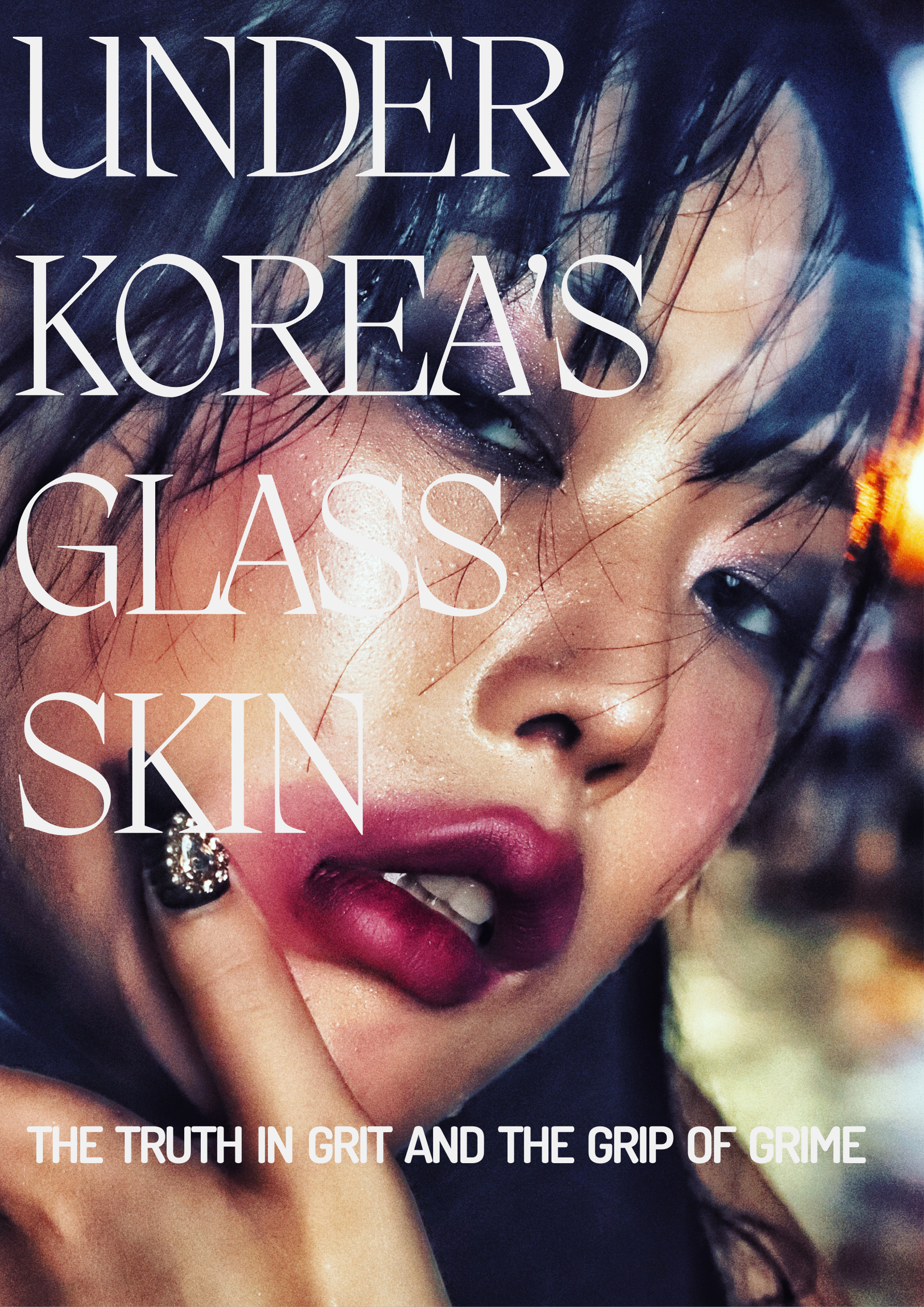
Under Korea's Glass Skin: The Truth in Grit and the Grip of Grime
Korea exports K-pop perfection and glass-skin beauty, but what actually makes Korean culture stick isn't the polish—it's the grime. This deep dive explores toepemi (decadent beauty) and jolbakmi (rough beauty), two Korean aesthetic concepts that reveal why friction creates cultural grip where smooth surfaces just make it slip. From PSY's "Gangnam Style" satire to Squid Game's desperate grime, from Euljiro's industrial decay to the neuroscience of why imperfection catches while perfection slides past—discover how Korean culture's truth lives in its texture, not its shine. Why did Cool Japan fail while the Korean Wave stuck? The answer is in the catch mechanism.
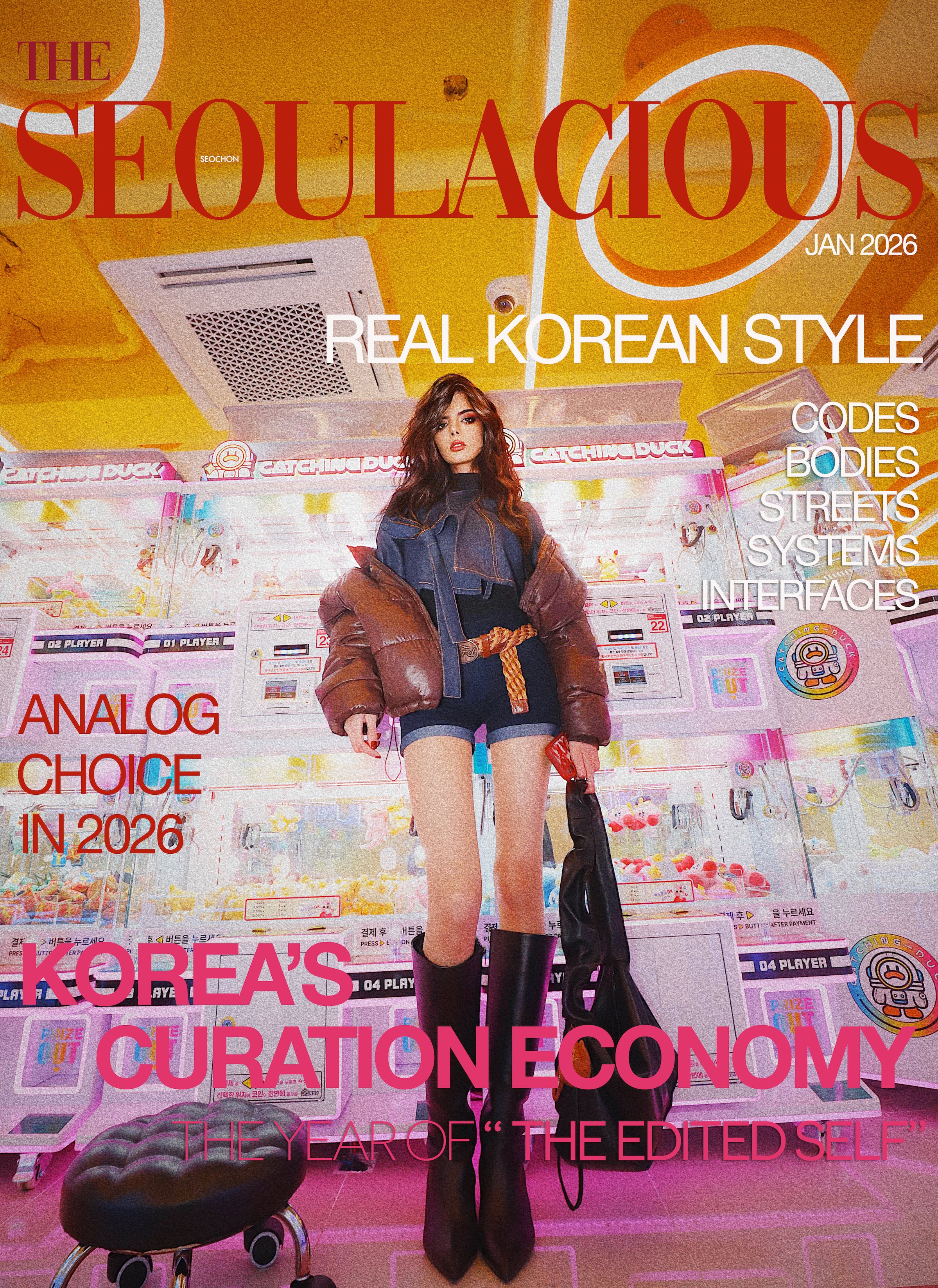
Korea's Curation Economy
Depop's 2026 "Edited Self" report confirms what Seoul's claw machine arcades and café culture have demonstrated for years: Gen Z is rejecting algorithmic fashion for intentional curation. With 78% of young consumers repeating outfits and calling it "freeing," the global shift from trend-chasing to deliberate choosing plays to Korea's core strength—not producing fashion content, but curating it.

The K-Fashion Paradox: How Korea Conquered Global Style While Its Factories Died
While Olive Young rings up 1 trillion won from foreign tourists and AI algorithms drive record e-commerce sales, Korea's textile manufacturing base is collapsing. The industry trade press has been documenting this split for years—here's what they're actually seeing.
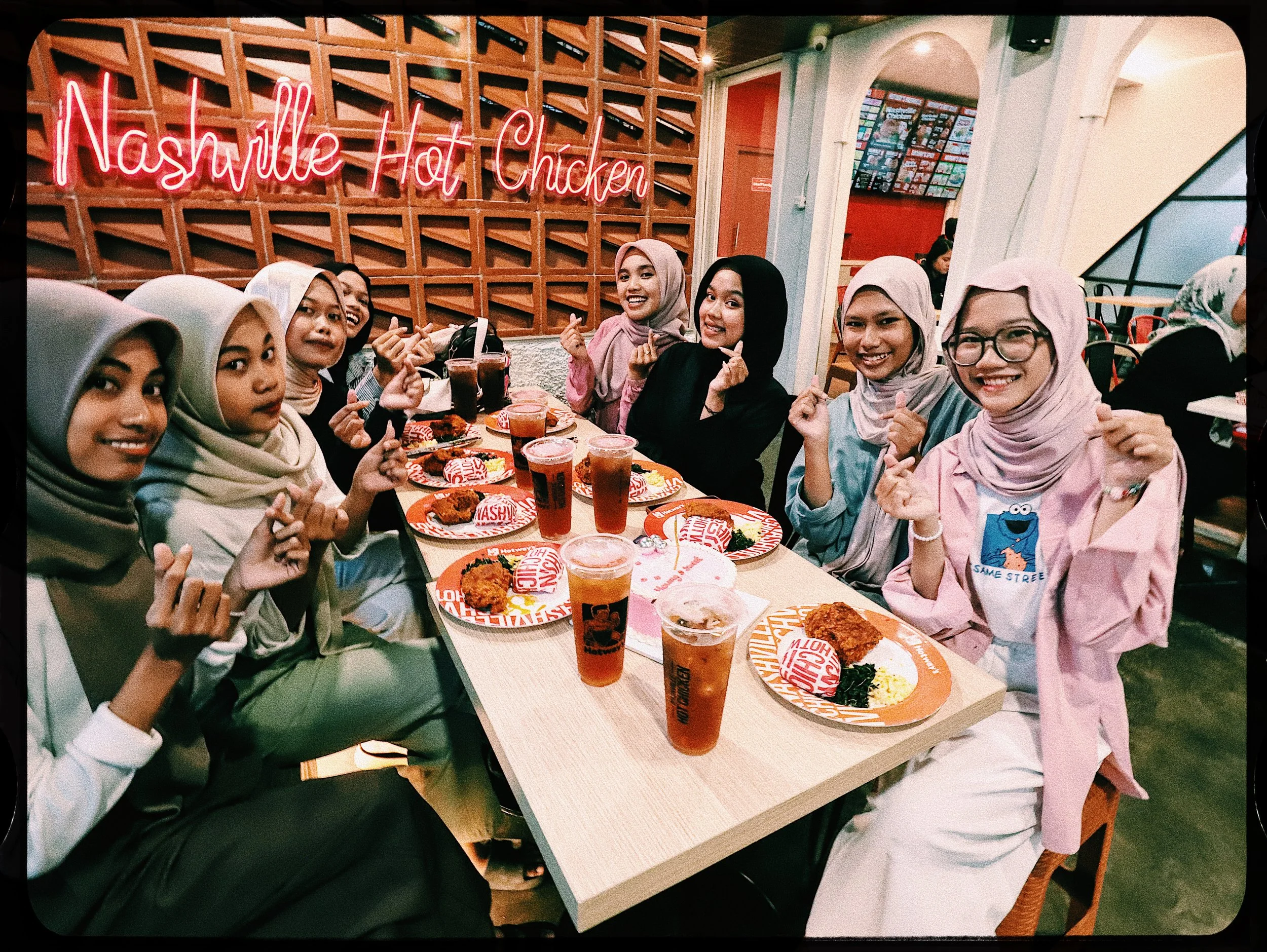
The "Korean Waved Hijab" That Isn't Actually Korean
Korean soft power is so effective that Indonesian Muslim women label Turkish draping techniques, Malaysian styling traditions, and global color trends as "Korean"—not because they're confused, but because Korea has become THE cultural authority for what modern fashion looks like. This reveals how 21st-century cultural influence actually works, and it's more powerful than simple content export.
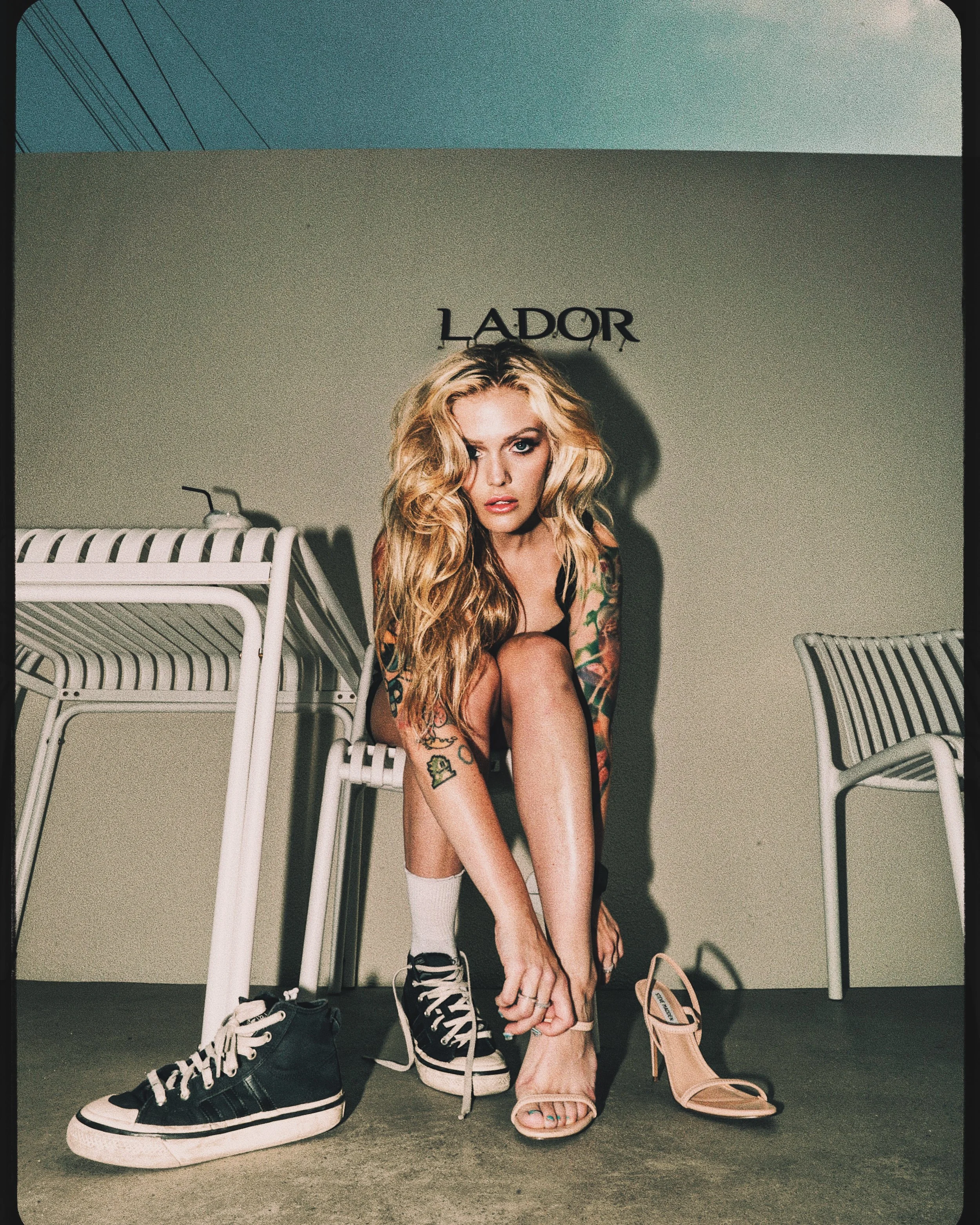
The Machine That Eats Neighborhoods Wholesale: How Korean Redevelopment Actually Works
Seoul's redevelopment system (재개발, jaegaebal) displaces entire populations every 30-40 years through forced demolition and wholesale neighborhood replacement. From the violent 1988 Sadang evictions documented in the award-winning film Sanggyedong Olympics to today's Seongsu-dong clearances, Korea's unique urban transformation machine prioritizes property values over community survival. This investigation reveals how the legal framework that demolished 200 neighborhoods for the 1988 Olympics continues to erase Seoul's most vibrant districts—including the 50+ workshops, cafés, and galleries that made Seongsu a global "hot place." Unlike Western gentrification, Korean redevelopment (재개발) doesn't gradually displace residents—it replaces populations wholesale, transforming industrial heritage and creative clusters into identical apartment towers. The system that filmmaker Kim Dong-won risked persecution to document in the 1980s is demolishing Seoul's urban interface singularities today.
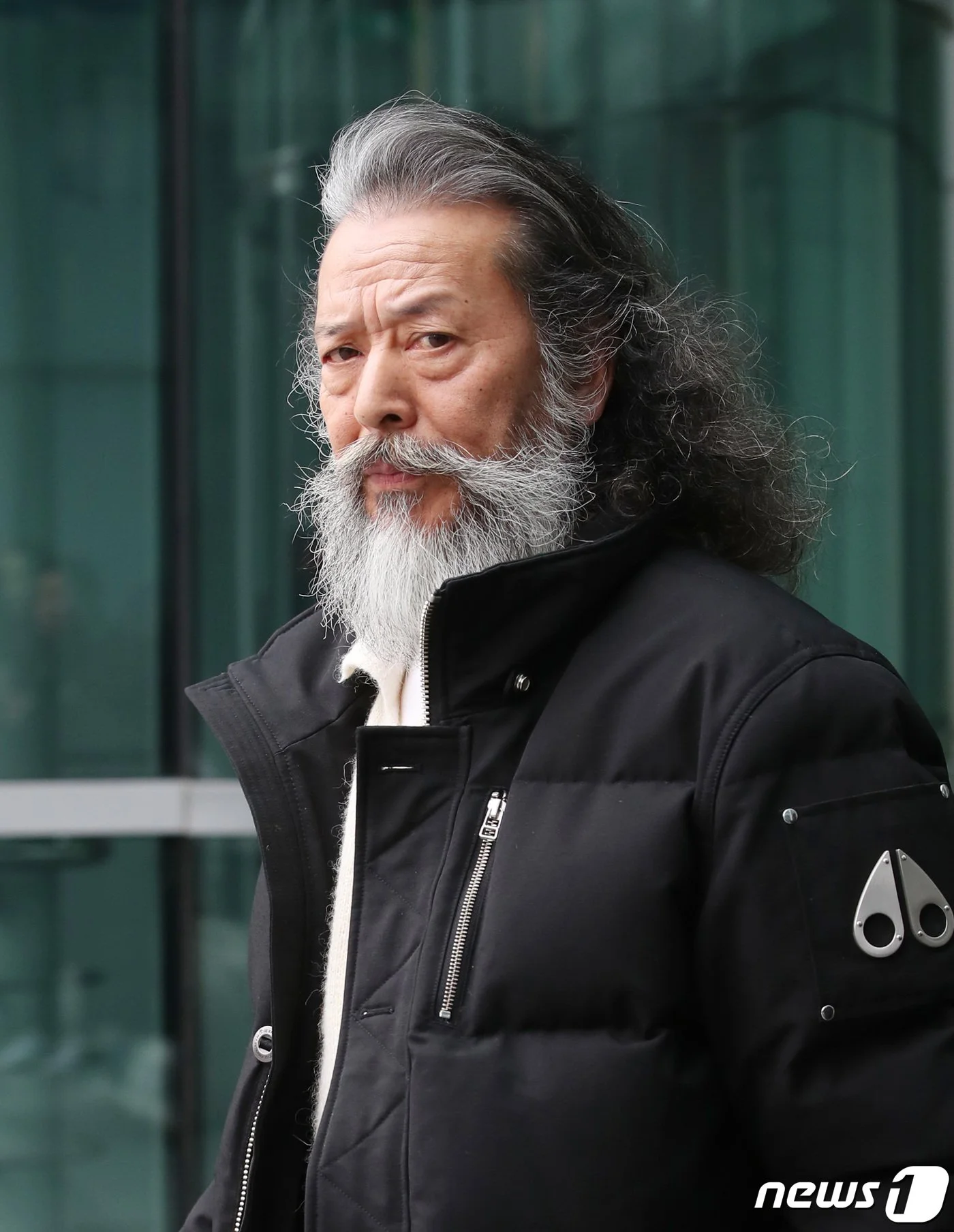
"The Hungry Profession": Inside Korea's Senior Modeling Money Machine
Korea's senior modeling industry generates 60-70% of revenue from training fees while models earn almost nothing. Even celebrity model Kim Chil-doo admits he needs taxi work to survive. Investigation reveals the economics behind the "open wallets" phenomenon exploiting wealthy retirees.
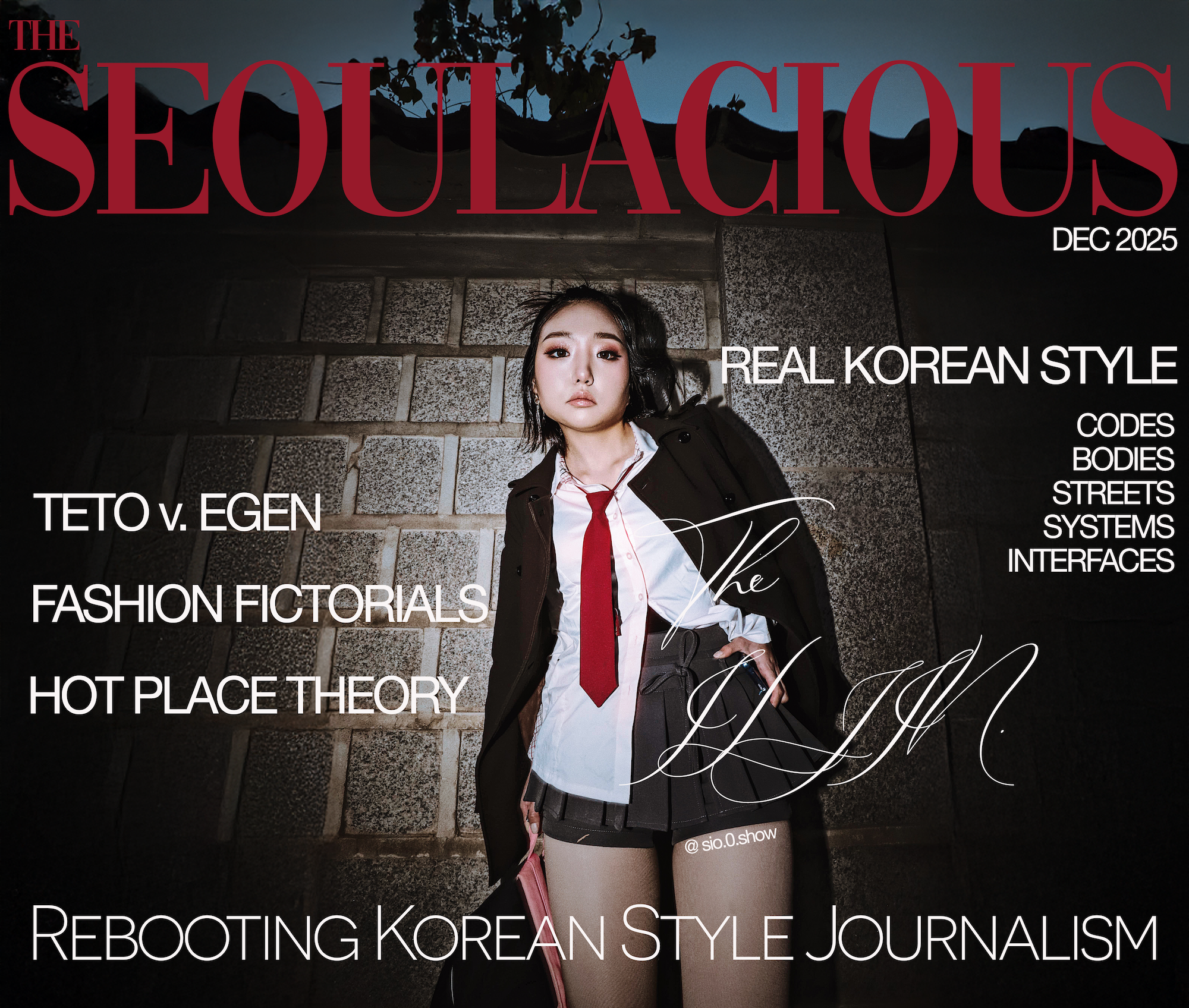
The fashion magazine died just as it learned to think
From Sassy to Teen Vogue, a constellation of publications proved that fashion journalism could be sharp, political, and transformative—then the economic model collapsed. But the experiment survived: treating readers as intelligent co-conspirators, refusing to separate style from substance, and holding power accountable through cultural criticism. SEOULACIOUS carries this torch to Korea, where critical fashion journalism is needed most and exists least.
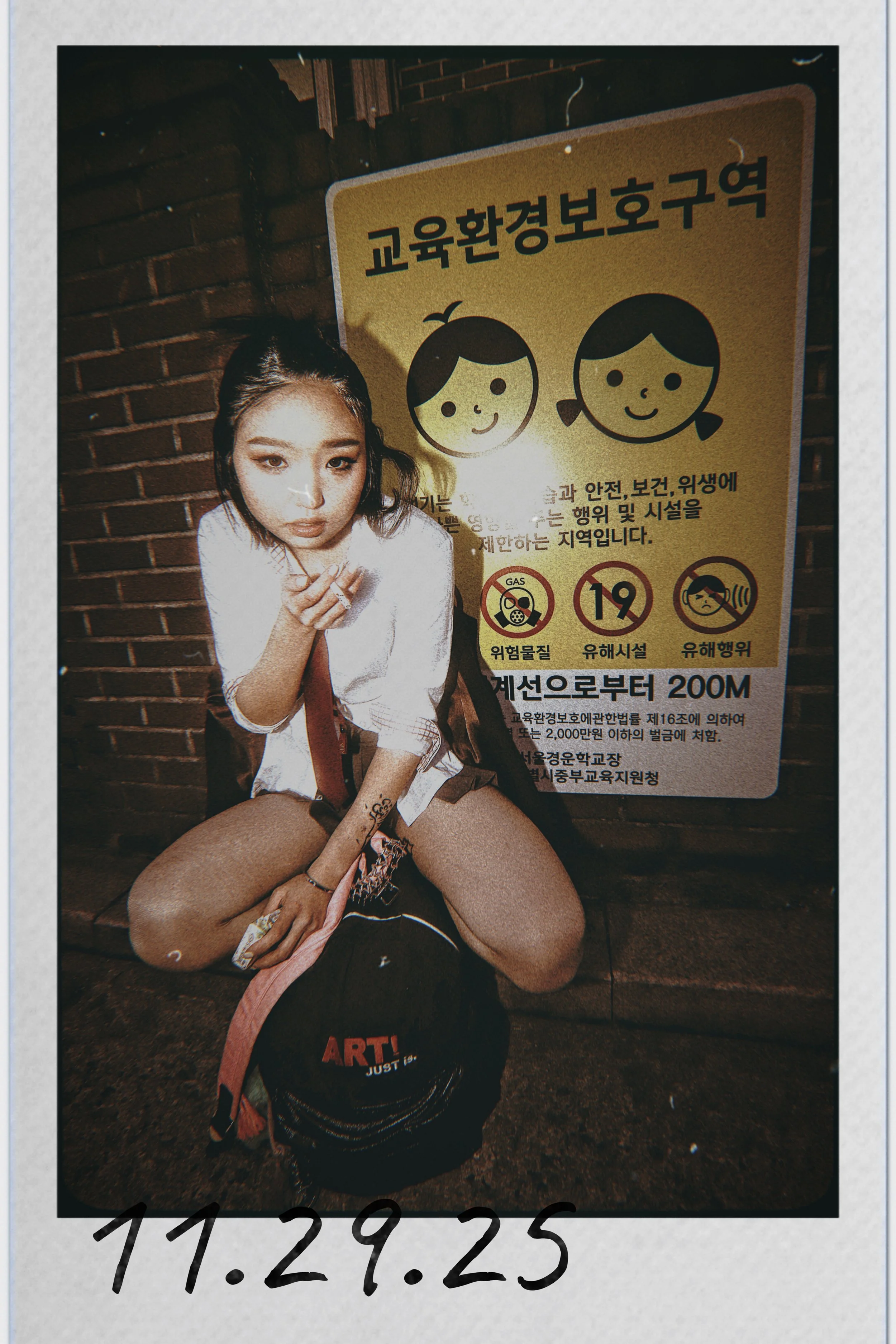
Fashion Fictorial: “The Photographs Remain”
A photo-narrative following an Iljin high school girl's day of escape through Seoul's Anguk-dong, from third-period truancy to late-night subway platforms. Documenting Korean youth rebellion culture, Instagram pose aesthetics, wariza sitting at KNOTTED cafe, school uniform transformations, and the tactical use of femininity in urban space. Features ethnographic detail on Korean street fashion, Bukchon hot places, photo selfie studios, and the performance of teenage identity in contemporary Seoul.
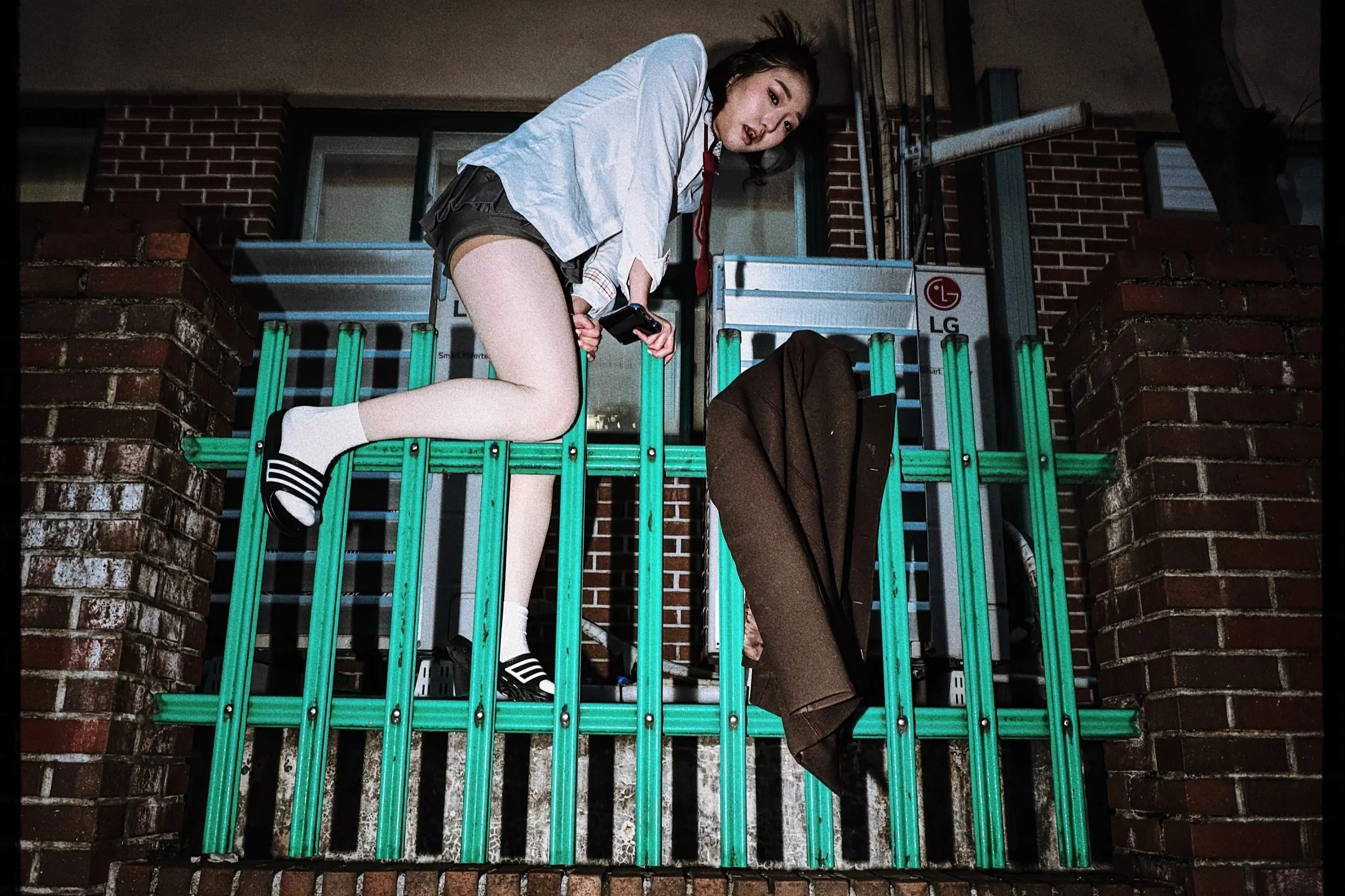
Who Owns the Teenage Girl? Inside Korea's School Uniform Wars
When K-pop giants NewJeans and ILLIT went to court over the "schoolgirl aesthetic," it exposed how Korean school uniforms evolved from conformity tools to billion-won IP. From 1990s Tokyo kogal rebellion to 2024 Seoul lawsuits, this deep dive traces how institutional garments became contested cultural capital—and what it means for the teenage girls actually wearing them.

Are You Teto or Egen? Korea's New Gender Energy Is Rewriting How We Perform Identity
Over 1.16 million Koreans have taken the test. K-pop fans are categorizing every idol. And Korean Gen Z just solved a problem about gender performance that Western culture is still struggling to articulate—all through a personality quiz that went viral on social media.

Seoul's Hot Places Are the Black Holes You Thought They Were: How They Make Invisible Forces Visible
Climate change. Global capitalism. Digital culture. The forces shaping our lives are too vast to see—until you walk into a Seoul café. How the world's most interface-dense city turns invisible hyperobjects into Instagram-worthy hot places, one converted factory at a time.

The Korean “Long Padding” Thing Is Already Over.
The Korean ‘long padding” trend has beenover for years. You just haven’t noticed yet since the coats are still out there, still in service. But new coats are shorter yet still serving their warming function.

The ₩82 Trillion Woman: Why Korean Fashion Finally Noticed Who Actually Buys the Clothes
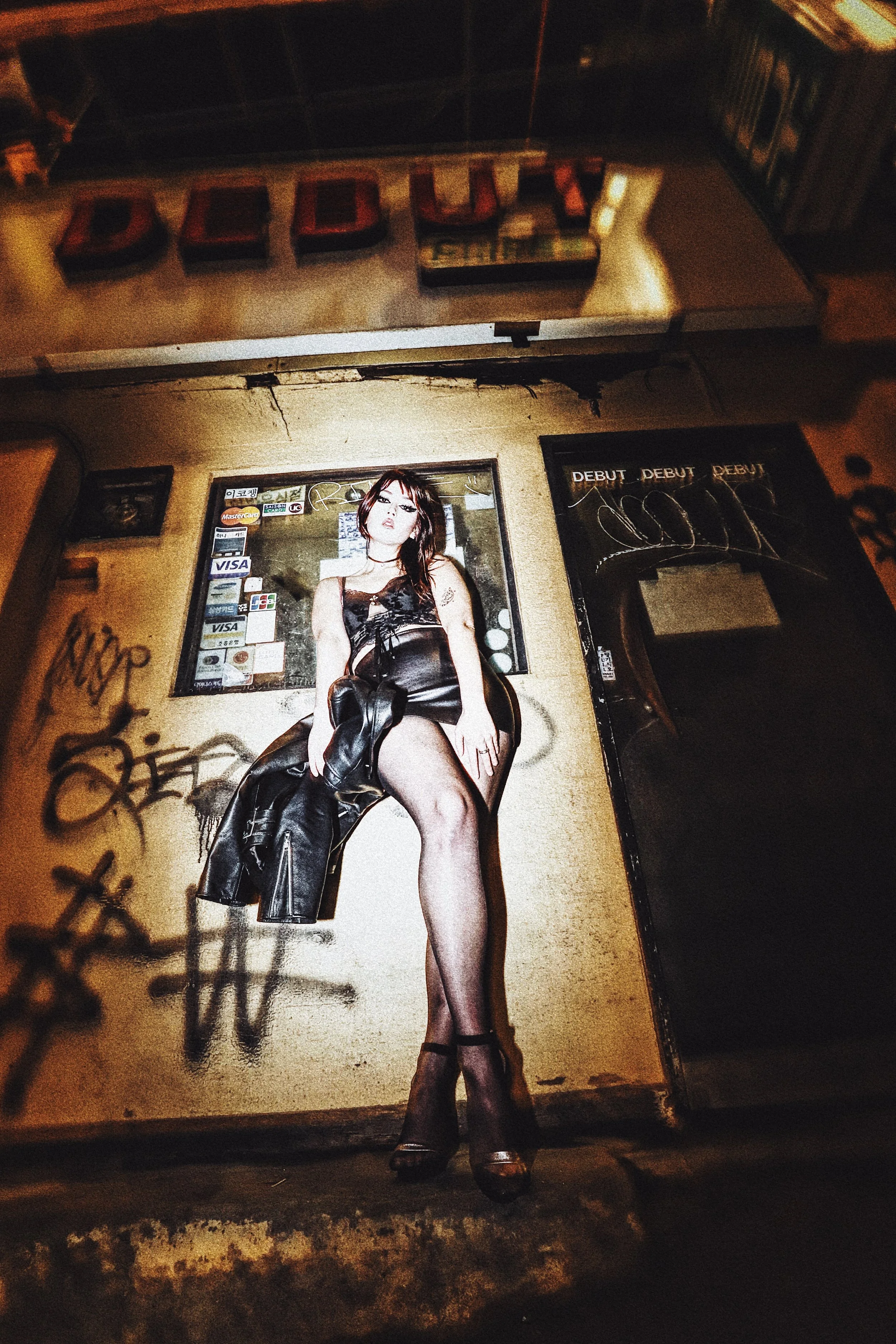
The Neighborhood That Korea Couldn't Name
For decades, Itaewon was the place respectable Koreans avoided—ground zero for American soldiers, sex workers, and everyone who didn't fit. But its foreign restaurants and Instagram-worthy cafés sparked "ladification" in the 2010s, drawing young women to spaces designed for aesthetic consumption. Then Netflix turned it into a symbol of freedom. Then 159 people died on Halloween. This is the story of how Seoul's most stigmatized neighborhood became its most celebrated, and why the transformation was always more symbolic than structural.

How a Dying Burger Chain Became Seoul's Most Subversive Fashion Brand
Lotteria's journey from bankruptcy to Seoul Fashion Week runway reveals how Korean companies transform fast food into high fashion, weird burgers into viral content, and minimum-wage uniforms into streetwear statements. Inside the radical rebranding strategy that turned Korea's most ridiculed burger chain into an unlikely blueprint for global cultural production.

The Power of “Pretty”: How Apple Went From Obscure Print Shop Tool to Korea's Most Coveted Object
This is the story of how a luxury foreign brand captured an entire generation of young Korean women by being expensive, starting from the most unlikely place: the cramped print shops of 1980s Euljiro.
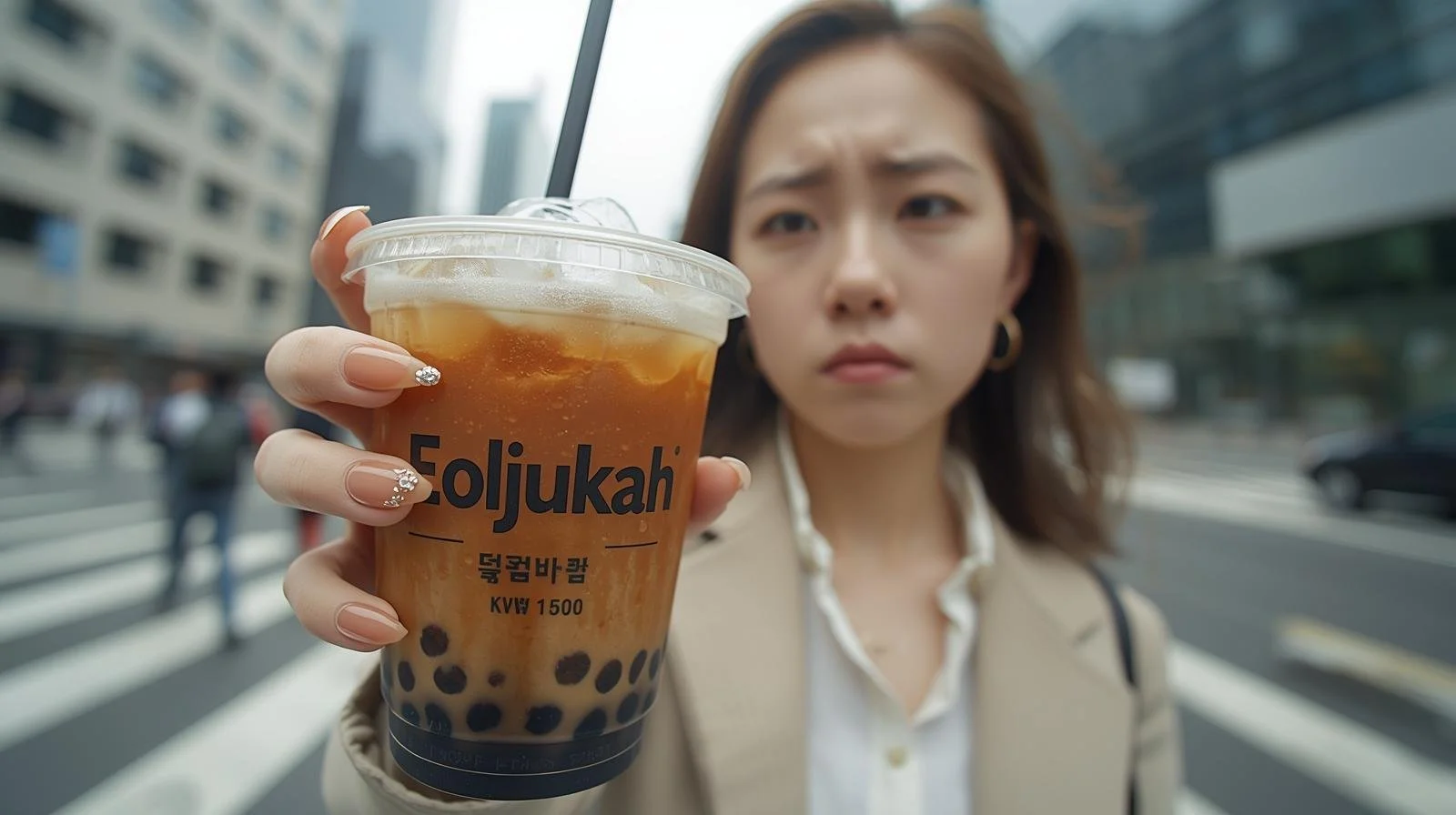
The Coffee Republic: Inside Korea's Female-Powered Café Revolution
From King Gojong's first sip in 1896 to today's Instagram café empires, Korea transformed into the planet's third-largest coffee market—driven by female consumers whose choices reshaped entire neighborhoods and sparked a national reckoning about gender, class, and what it means to be modern.

The Tattoo Artist Who Broke the Law 20,000 Times
When one in four Koreans had tattoos while tattooing remained illegal, something had to break—and on September 25, 2025, Korea's National Assembly voted 195-0 to end the 33-year absurdity that made BTS's tattoo artists criminals while their work shaped global aesthetics.
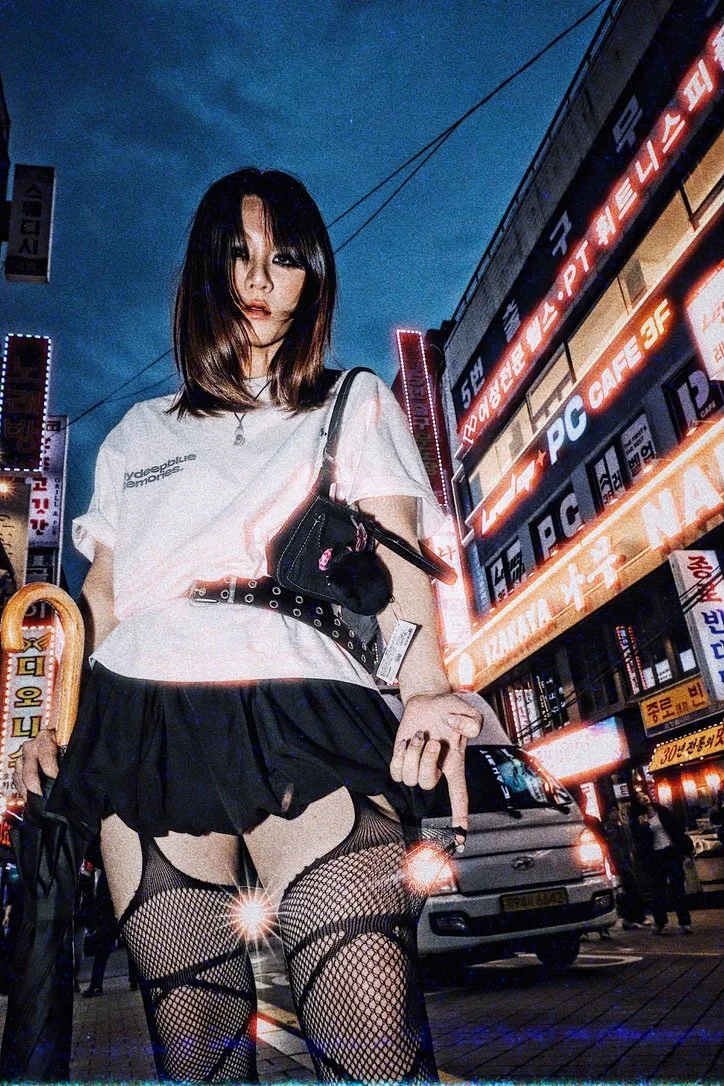
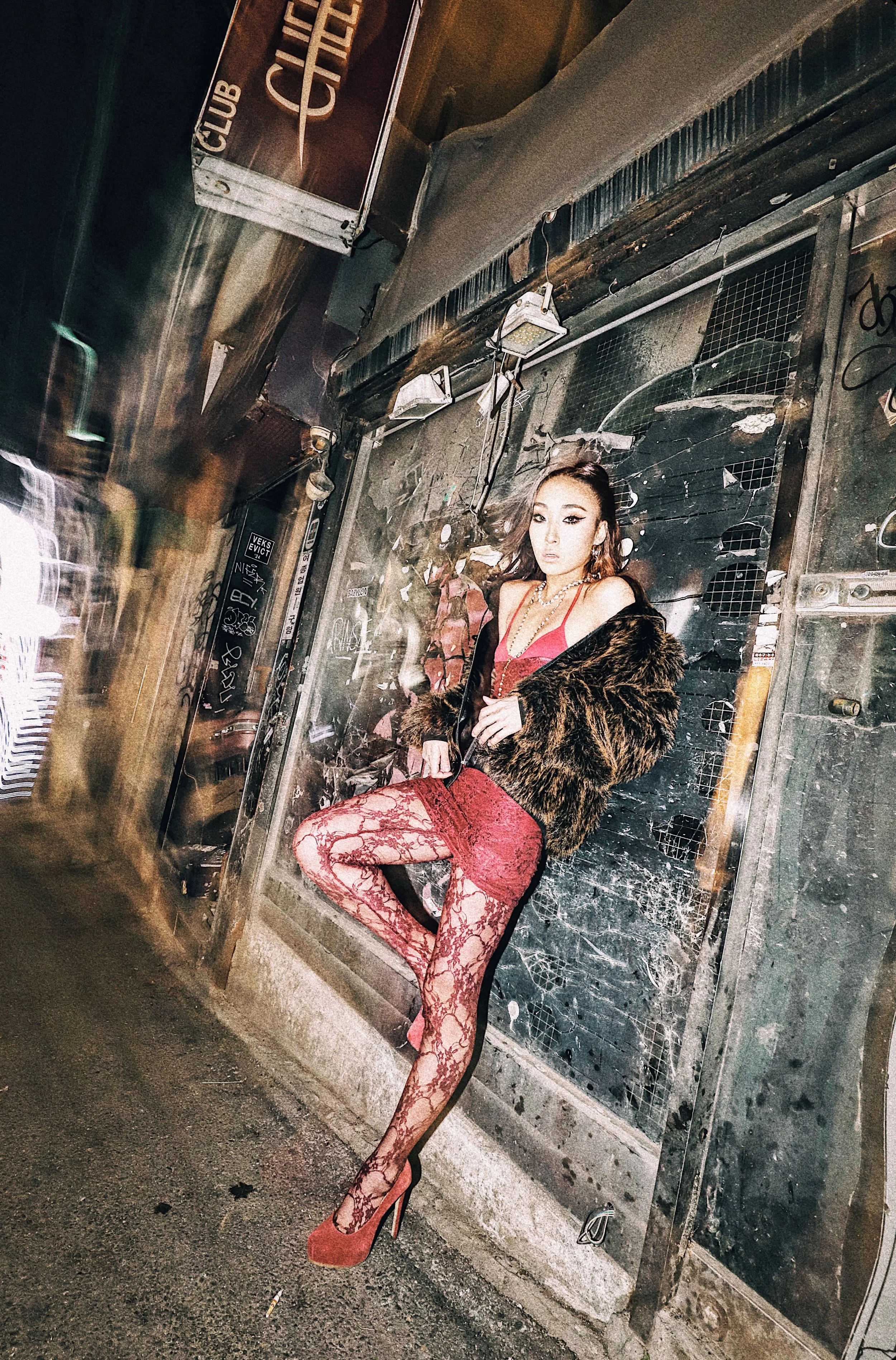
How Korea Made Garter Stockings Street Legal
The punk accessory from Balenciaga runways landed in Hongdae alleys—and nobody's asking permission anymore.
What you need to know about
The Neighborhoods of Seoul
Itaewon — from GI playground to global mecca.
Subscribe to our newsletter.
Sign up with your email address to receive news and updates.